
As artificial intelligence accelerates from laboratory experiments to real‑world applications, Microsoft Research has once again demonstrated its role as a global AI innovation engine with a series of pioneering results. In 2025, the lab published multiple papers in top journals including Nature, Science and Nature Machine Intelligence, presenting ten major scientific breakthroughs. These results span quantum computing, drug discovery, materials science, medical imaging and biosecurity, showcasing AI’s potential to address human challenges while emphasizing an open spirit of collaboration and sharing.
Microsoft Research Vice President Peter Lee said in an official statement: "AI is not the destination, but an accelerator — these breakthroughs will bring transformation to banking, healthcare, life sciences and energy." In the global AI race, these achievements underscore Microsoft’s strategic approach: advancing sustainable and inclusive innovation from basic research to real‑world deployment.
Founded in 1991, Microsoft Research has become a leader in AI, employing over 3,000 people worldwide and publishing more than 50,000 papers. In 2025, its AI work focused on a "human‑centered" agenda: using generative models to tackle climate change, medical bottlenecks and quantum challenges. Many of the ten highlighted breakthroughs emerged from collaborations with institutions such as the Mayo Clinic and the University of Washington, and numerous models were open‑sourced for developers worldwide. A common thread across these achievements is AI’s "acceleration effect": where traditional methods require months of experiments, AI models can simulate thousands of scenarios in hours, reducing costs and improving accuracy.
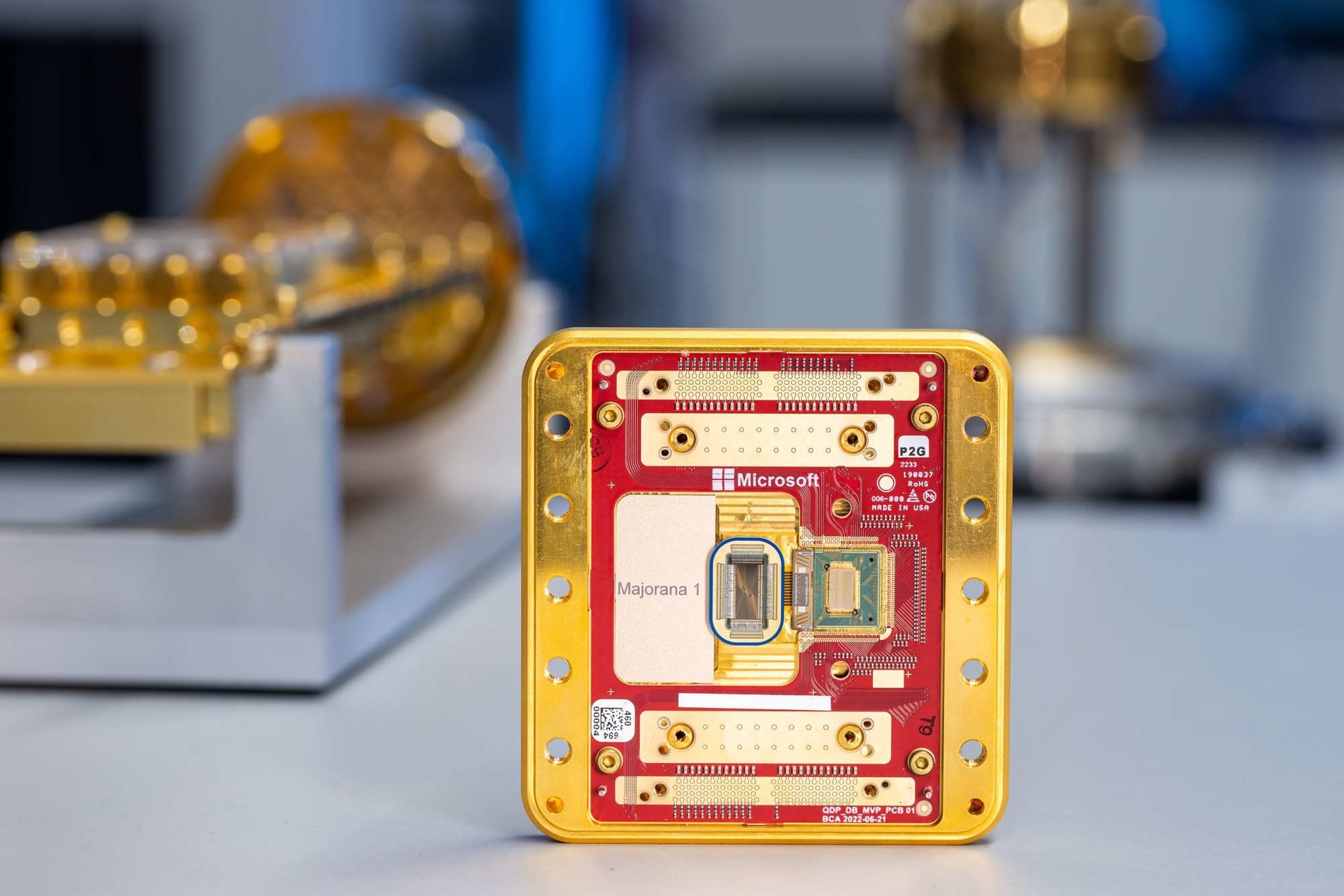
The first breakthrough centers on quantum computing: the Majorana 1 quantum processor, described as the world’s first quantum chip based on topological qubits. Microsoft researchers used a novel "topological conductor" material to observe and control Majorana particles, achieving more reliable and scalable qubits. The chip was published in Nature (DOI: 10.1038/s41586‑024‑08445‑2) and holds significant potential: it could enable self‑healing materials to repair bridges or aircraft components, catalysts to break down pollutants, or improvements to soil fertility to help address food security under climate stress. Quantum computing expert Chetan Nayak commented on LinkedIn: "Majorana 1 moves quantum from the lab toward industrial scale."
In drug discovery, the BioEmu‑1 model stands out. This generative deep learning tool can produce thousands of protein structures per hour on a single GPU and predict function‑related changes and stability. Where traditional simulation takes weeks, BioEmu‑1 achieves results at low computational cost and was published in Science (DOI: 10.1126/science.adv9817). Its applications include designing more effective drugs and impacting biotech and pharmaceutical industries — for example, accelerating targeted cancer therapy development and shortening the time from lab to clinic. A YouTube explainer titled "10 Mind‑Blowing AI Breakthroughs" described it as "the ChatGPT of the protein world."
Materials science benefits from a two‑pronged toolchain: MatterGen and MatterSim. MatterGen generates novel materials from design prompts, while MatterSim rapidly simulates properties to create a feedback loop. Trained on 600,000 inorganic material examples, the work was published in Nature (DOI: 10.1038/s41586‑025‑08628‑5). Potential applications include more efficient batteries, fuel cells and magnets to advance energy transition — for instance, new catalysts that reduce cement carbon emissions by 21%. Microsoft’s collaboration with the University of Washington on an algae‑based cement project further validates sustainability possibilities.
Medical imaging has also gained AI support: the RAD‑DINO model fuses text and X‑ray images to produce precise heatmaps that localize anatomical structures. Developed with the Mayo Clinic and published in Nature Machine Intelligence (DOI: 10.1038/s42256‑024‑00965‑w), it accelerates clinical analysis and reduces misdiagnoses. Another medical advance, FCDD (Fully Convolutional Data Description), generates MRI heatmaps for dense breast cancer screening with leading accuracy, published in Radiology (DOI: 10.1148/radiol.241629); these open‑source models are available to hospitals worldwide. Such tools can lower false positives, reduce patient anxiety and potentially save billions in healthcare costs.
Environmental forecasting and disaster response are additional focal points: the Aurora AI foundation model produces weather forecasts every second, trained on millions of hours of data and published in Nature (DOI: 10.1038/s41586‑025‑09005‑y). It predicts air pollution, ocean waves and tropical cyclones to support crop logistics and power‑grid protection. Microsoft’s AI for Good Lab developed a flood‑mapping model that uses radar imagery to see through clouds and produced a 10‑year global flood map, published in Nature Communications (DOI: 10.1038/s41467‑025‑60973‑1). These open‑source tools reveal flood frequency trends and support disaster preparedness.
Innovations in computing architecture include the simulated optical computer (AOC), which uses micro‑LED light sources to solve optimization problems and perform AI inference faster than GPUs, published in Nature (DOI: 10.1038/s41586‑025‑09430‑z). Potential applications include accelerating bank transaction settlement and MRI scanning with several‑fold gains in energy efficiency.
Finally, biosecurity addresses ethical concerns: two early‑stage projects led by Microsoft propose a layered access system to manage AI‑related biological risk, published in Science (DOI: 10.1126/science.adu8578). In partnership with IBBIS, these efforts aim to ensure AI does not facilitate toxin design.
The deeper impact of these breakthroughs lies in an "open‑source loop": Microsoft shares code and data to accelerate global innovation — for example, RAD‑DINO is already used in Mayo Clinic clinical trials. Amid 2025 concerns about an AI bubble, Microsoft’s "practical orientation" stands out: these achievements are not just papers but tools that advance Sustainable Development Goals (SDGs). Nonetheless, challenges remain: quantum and biological AI require strengthened ethical oversight to avoid dual‑use risks.
Looking to 2026, Microsoft Research plans to continue investing in inclusive AI, and Peter Lee pledged: "We will turn these breakthroughs into real‑world solutions." In this "golden age" of AI, Microsoft’s ten breakthroughs are not only technical milestones but a collective uplift of human ingenuity — from quantum dreams to green cement, AI is quietly reshaping the world.