
Reprinted from The Chinese University of Hong Kong, Shenzhen WeChat public account: From September 19 to 20, 2025, the Annual Conference for High School Principals (2025) was held at The Chinese University of Hong Kong, Shenzhen. The conference theme was "High‑Quality Development of High School Education in the AI Era." More than 2,000 participants attended in person, including national experts and scholars in education, secretaries and principals of ordinary high schools, teacher representatives, and officials from Shenzhen districts and related departments.
Xu Yangsheng, Academician of the Chinese Academy of Engineering, Foreign Member of the US National Academy of Engineering, and President of The Chinese University of Hong Kong, Shenzhen delivered a keynote titled "Education in the Age of AI". He pointed out that education will be among the first sectors impacted by the AI era. President Xu elaborated on the differences between artificial and human intelligence, outlined new talent requirements in the AI era and the educational priorities, and discussed how current secondary schools should nurture talent.
Education in the Age of AI
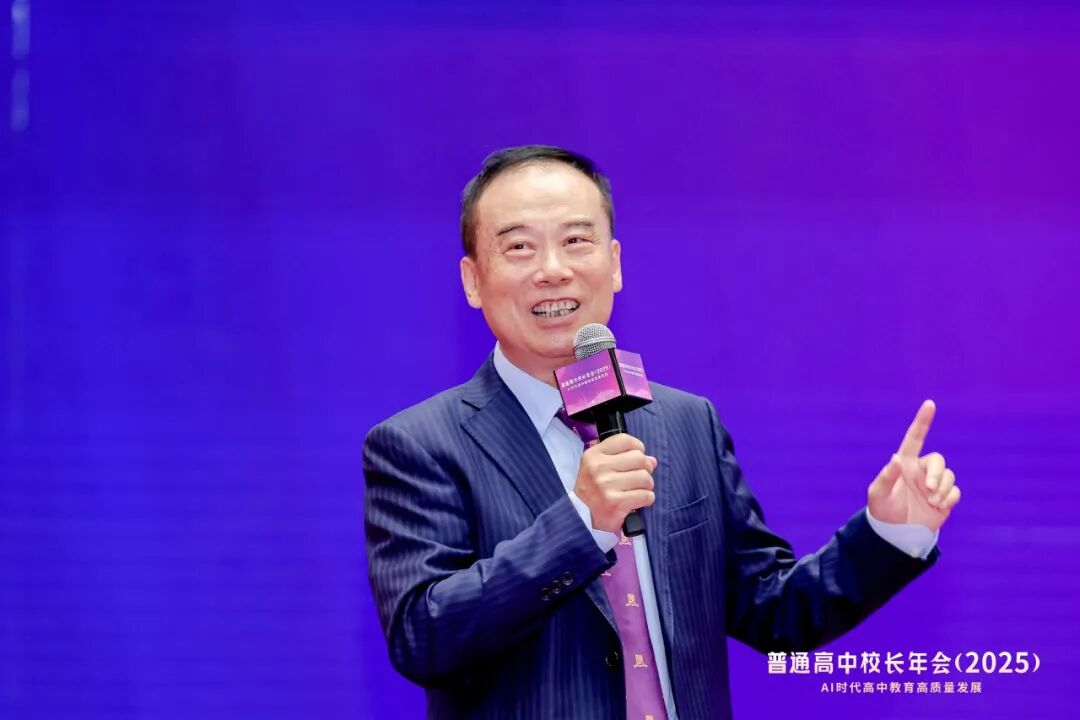
Xu Yangsheng, President, The Chinese University of Hong Kong, Shenzhen
Today there are high school principals from across the country present, and many parents, students, teachers and principals following online who care about education. I would like to share some reflections from my decades of experience.
I have been a secondary school teacher, a university teacher, a university president, and have taught students from about thirty countries, so I have some insights. I have also done research in artificial intelligence for forty years, so I have some thoughts to share with you.
Let's start with education. We are all educators; what is education? I define it as "cultivating talent for the society of the future." There are two key words here: the first is future—we must understand what the future will be like. The second is talent—we must define what constitutes talent. How do we cultivate future talent? Today I will speak around these three themes.
Education consists of teaching and nurturing people, which everyone knows. It may sound trite, but it isn't. For example, is school the best place to teach? Last week a friend in Silicon Valley discussed this with me. He said that schools are not the best places to teach. I was surprised and asked where the best place would be. He said to look online—many of the best courses are available free. So why send children to school? Thus schools are not necessarily the best places for instruction.
At the same time, are schools the best places to nurture people? That's also questionable. I know of families in the western US where a group of ten or so children form a workshop‑like community to raise their children, and they asked me how to nurture them. If a school doesn't know what to teach or what kind of people to nurture, then what is its purpose? As an educator myself, I find this a serious issue.
1. The AI era
Education will face the greatest disruption
The AI era has arrived. Where is the most direct impact? Education. Why? What is artificial intelligence? If you search online you'll find many definitions; in essence, AI tries to emulate human intelligence to perform tasks.
The essence of AI lies in three aspects: cognition, perception and action.
First, cognition: how we understand the world and make judgments—e.g. this is a white shirt, a white shirt is probably a shirt, shirts are often worn in summer. These are judgments, reasoning and decision‑making—cognition of the world.
Second, perception: information returned by our environment, such as vision and hearing. For example, seeing someone wearing a white shirt rather than a black one—this is perception.
Third, action: when you have perception and cognition and the will to engage, you act—walking, waving, etc.
When something can perceive, cognize and act together, we call it artificial intelligence.
In AI's development, cognition started earliest. Especially with the arrival of large language models, the cognitive aspect seems to work well and feels truly intelligent. Perception is somewhat weaker—though improving—compared to human senses. For instance, if you open a bottle of Maotai and ask it to smell whether it's the sauce‑aroma type, AI may not understand; this seems simple but hasn't been solved. If perception is insufficient, then emotions are even less developed. Action is also progressing slowly. I started working in this field forty years ago; progress has been very slow and today's state is in many respects similar to what it was decades ago.
There is talk about embodied intelligence, which is a good direction and worth pursuing, but many people exaggerate current capabilities. In reality, today's AI is like a loquacious person with disabilities. Building a society in which humans and AI co‑create is a future prospect; how far that is, it's hard to say.
AI may be one of the most important developments in human history; society may need to be restructured—social classes and occupations will be redefined and human thought and civilization will be deeply affected. Education, which cultivates people for all social strata and fields, will therefore be among the first sectors affected.
2. Differences between artificial and human intelligence determine our educational focus
What are the differences between AI and human intelligence? Many assume AI is already smarter than humans, so what remains for people? Friends, AI and human intelligence are not the same.
First, if a friend knows more than I do, does that make them necessarily smarter? Not necessarily. AI, however, tends to appear smarter the more it knows—it benefits from greater computing power.
Second, AI looks backward, humans look forward. AI handles past data well—combining, summarizing, organizing. AI is centralized intelligence; humans are distributed intelligence. What does distributed mean? For example, my hand has its own intelligence; my foot has intelligence. If scalding water spills on my foot, I feel heat—intelligence distributed throughout the body. Human intelligence combines feeling and reasoning; AI does not. AI emphasizes analysis and integration, while human intelligence is more complex and emphasizes intuition and experience. These are my conclusions.
As secondary teachers and principals here, consider whether we emphasize students' experiences. I once lectured that mind and brain are different; AI emphasizes the brain, whereas humans use both heart and brain. In Chinese culture the character for brain has the "moon" radical as a body part; the character for heart is exceptional. Ancient people thought the heart was not merely a bodily organ—there is a hint of something beyond the body. I won't delve deeper, but I want to stress that people use both heart and brain.
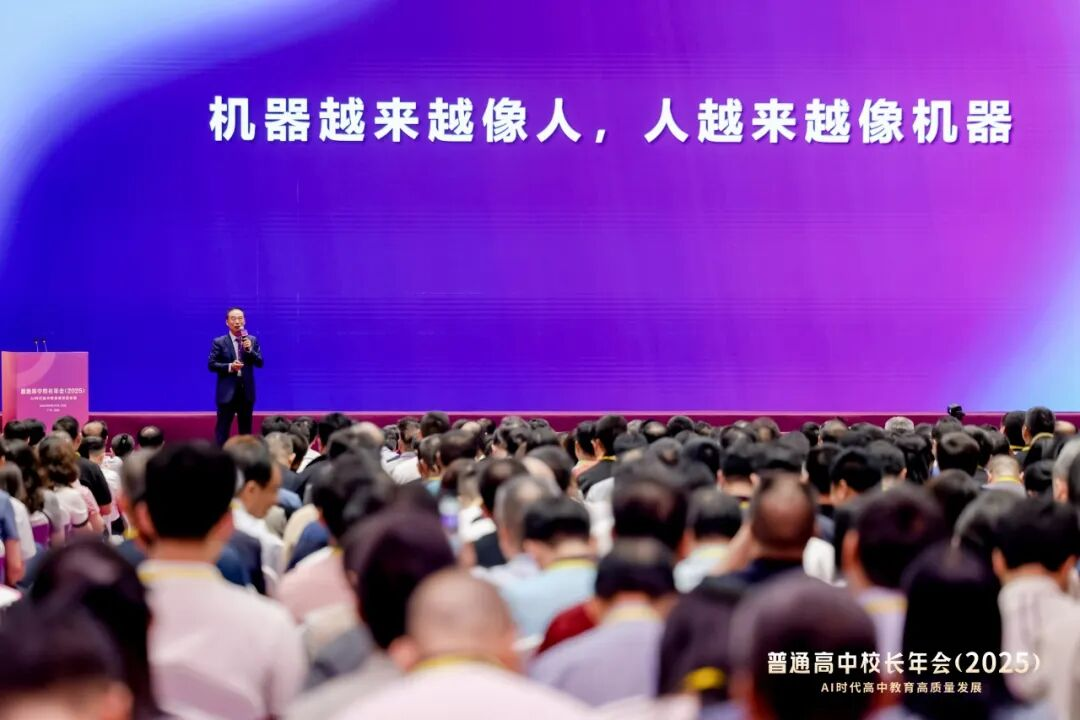
Humans use both heart and brain; AI does not. AI speaks to generality, while human intelligence is about individuality. Features of the AI era include changed ways of acquiring knowledge and a societal tendency toward homogenization—after a decade many people's speech and viewpoints may converge. Machines will increasingly resemble humans and humans may increasingly resemble machines. Recently I asked my driver to take me to meet a friend in Guangzhou. At 11 p.m. he drove into a large construction site—concrete and darkness. I asked what place it was; he said that was the location GPS directed him to. People now drive without thinking because of GPS. When people stop thinking, it's dangerous—thinking is what distinguishes humans from animals.
So humans become more like machines, machines more like humans, and these curves may one day cross—like a farmer becoming a city person, and city people in turn changing. You cannot outsmart AI in the ways of speed, memory or knowledge.
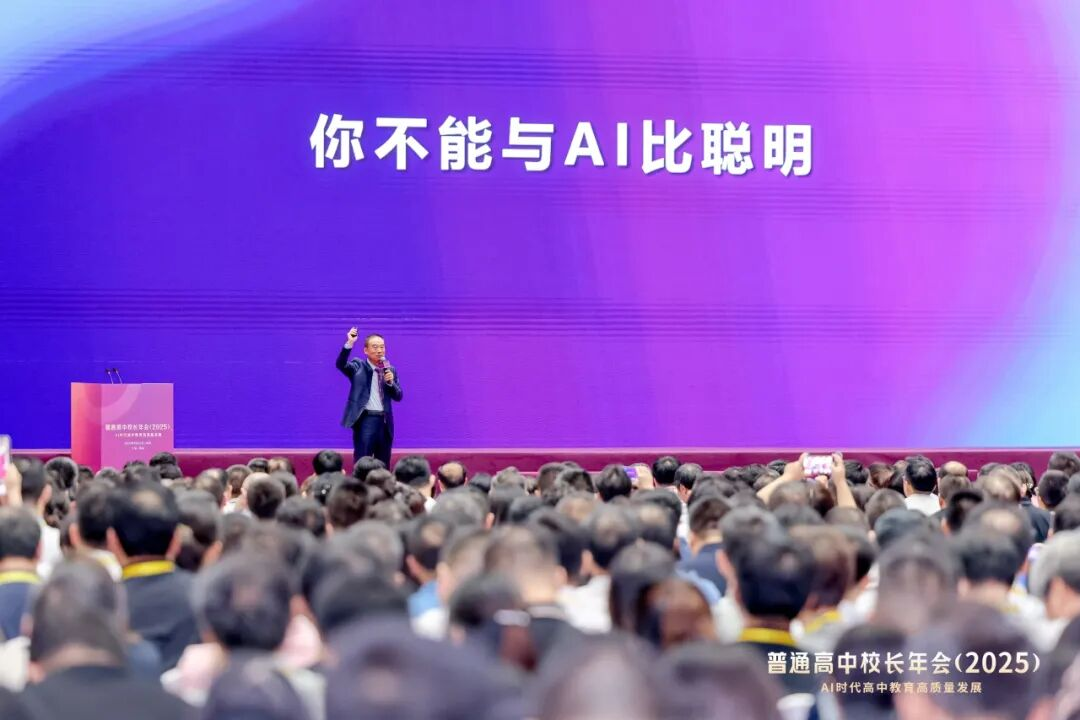
You cannot compete with AI on intelligence the way you would with a car in a race; you cannot match it in memory or raw knowledge.
So what can we compete on? On emotion, creativity and individuality—these should be the true priorities of education.
3. Talent requirements in the AI era
Earlier we asked what makes talent. In the AI era the first requirement is leadership—including language, communication, judgment and empathy; second is rationality—including questioning, analysis, logic and critical thinking; third is creativity—including imagination, art and exploratory skills; fourth is character—including courage, perseverance, worldview and humanistic literacy. Looking at current education and the college entrance exams I analyzed over recent years, roughly 70% emphasizes memory, 20% rationality, 5% creativity and 5% character. This is my observation and may not be precise.
Strangely, this is true in both humanities and sciences. Chemistry, biology and even physics exam papers are dominated by memory. Those who remember well do well on exams and are labeled excellent talents—so we are currently cultivating people who excel at examinations.
What, then, constitutes truly outstanding talent? I summarize four qualities.
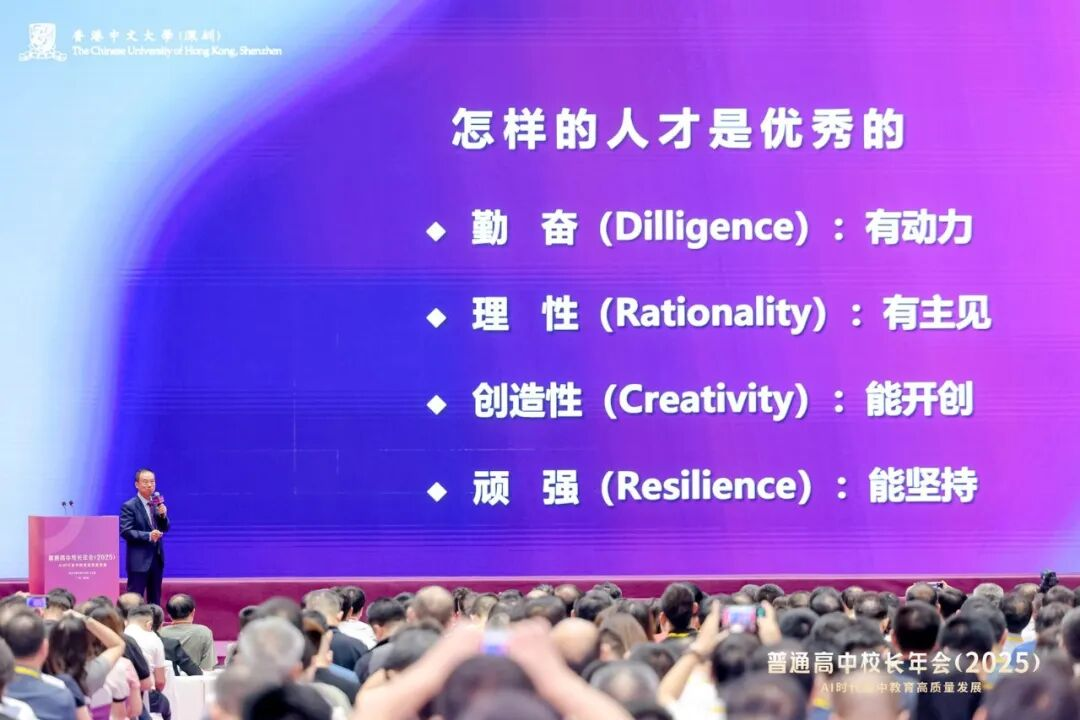
First, diligence—without diligence you lack drive. Second, rationality—having viewpoints, the ability to reason and analyze. Third, creativity. Fourth, perseverance. Chinese students tend to do well on diligence and reasonably on rationality; creativity and perseverance show larger gaps globally, based on my forty years of educational experience. These are rough impressions and not exact measurements.
In society, how important are these abilities to success? I estimate diligence about 15%, rationality 15%, creativity 30%, and perseverance 40%—the ability to persist is the most critical.
Many have asked me about traits of outstanding people I know. A clear common trait is persistence: whatever circumstances, they endure. Mainland Chinese students are diligent, but perseverance is often weakest. Observing students from the US, India, Southeast Asia, Europe and South America, their rationality and diligence may not surpass ours, but their perseverance is often stronger. They are less afraid of criticism and continue despite setbacks.
4. How should we cultivate talent today?
How should we cultivate talent? I propose four processes we practice at our school: learn, think, practice, realize.
First, learn. Learning is not easy; it requires curiosity and interest. Without interest, what you learn will return to the teacher. What we learn is the work of predecessors. Learning requires focus and learning how to learn. Learn how to learn—that's crucial because most knowledge is ultimately self‑acquired rather than directly taught. In my experience, over 90% of knowledge is self‑learned, so schools should systematically teach students how to learn.
Second, think—after learning, students must be able to think. A leader once asked me how to help children genuinely think. I said give them free time. Do they have an hour of free time before sleep? Many principals nodded. If there is no leisure, how can people think? Leisure time is the soil for thinking; without it, nothing grows.
Third, practice—today I emphasize this. AI education is, at its core, human education—education of practice and innovation. Without practice, AI education is hollow.
In the AI era, experience matters. The effectiveness of excellent education is judged by experience. Practice itself is a school—and sometimes more important than school. Chinese students often lack practice; without practice they return learned knowledge to the teacher. Learning that isn't internalized through practice won't lead to true realization. Only through practice does insight emerge. People teach knowledge; events teach lessons. Without lessons from experience a child cannot grow, which is why many of our children mature later.
I have several views on core directions for educational reform in the AI era.
First, teach less and educate more. We should focus on nurturing people, not on rote instruction. We all should ask ourselves whether we know too much or too little.
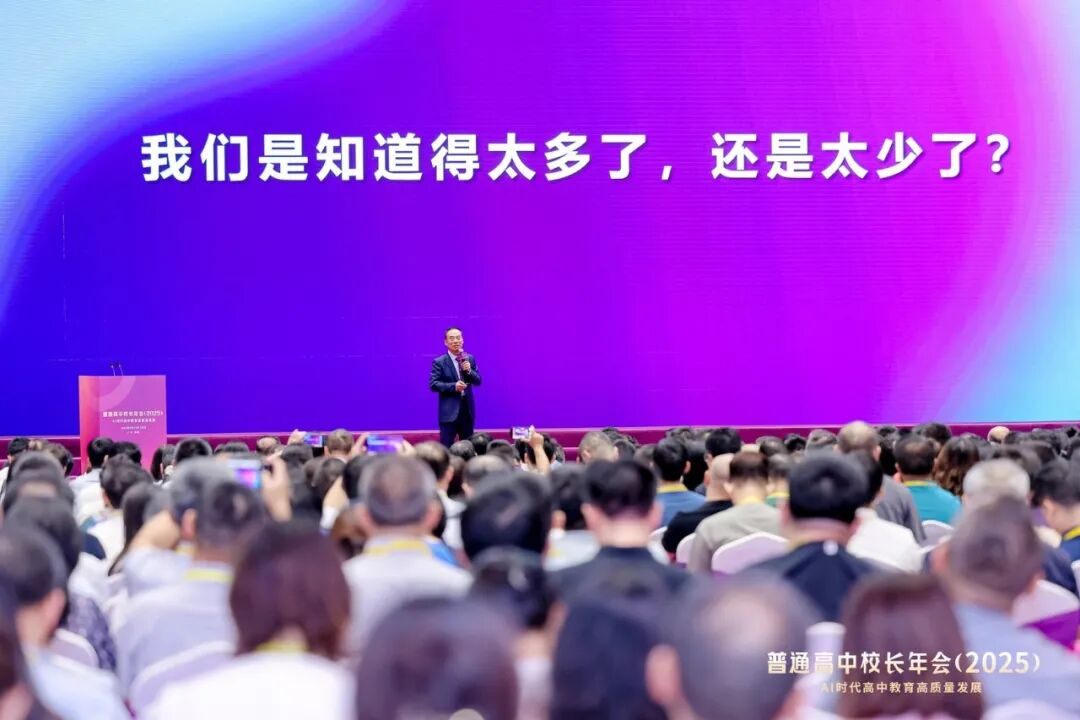
Students, reflect on this question at night. It's a question I often ask myself. At the end of the day I think: of all I have seen, how much was necessary? I estimate about 60% was unnecessary and 40% necessary. Most people are likely worse off—perhaps 80% unnecessary. Information and knowledge overload fills our minds.
A student once asked me what distinguishes wise people from ordinary people. I thought and concluded that wise people know little. Because they know little, they can focus; because they focus, they produce results. So we should not teach too much; teach core essentials. The mind has limited capacity—reading more can hamper innovation.
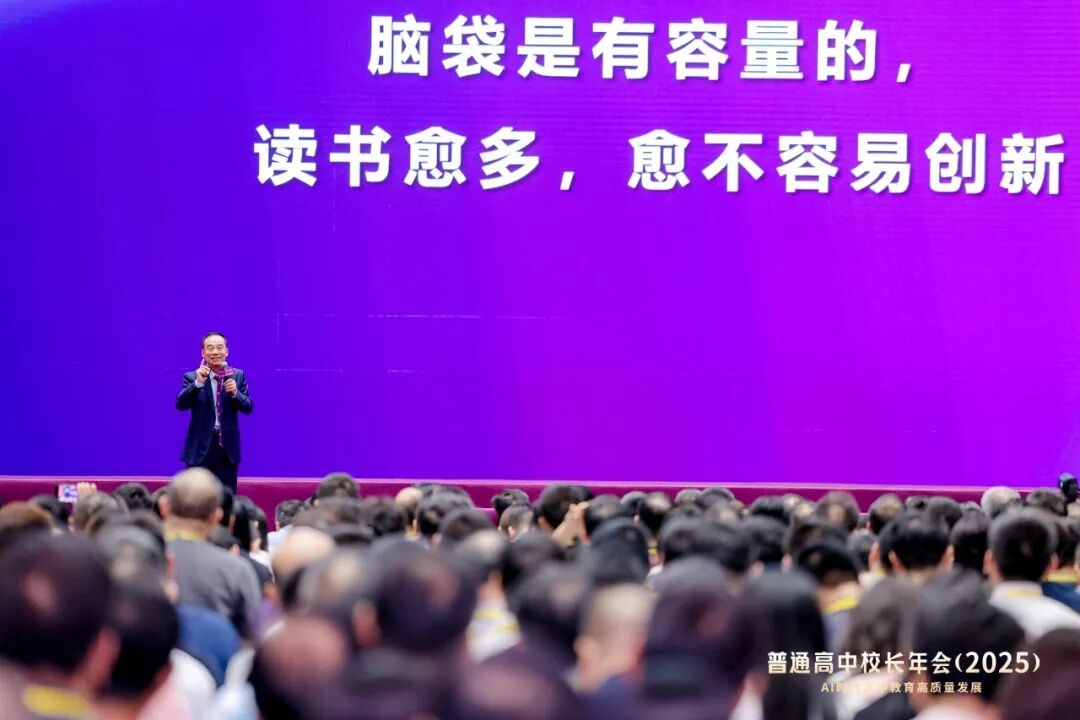
Why? I've pondered this for thirteen years and clarified it: the mind has limited capacity. When filled, it forms fixed "programs" that habitually handle new problems using old routines, treating all new problems as if they were previously encountered. For instance, when asked a question, a student will first search the web, assuming the question has been asked before. I supervise a PhD student who first asks me if there are references. References are work related to the topic and are useful, but if you are the first to explore a subject, there are no references, and students may struggle without prior literature.
This is significant. If a person assumes every problem has already been encountered, their willingness to innovate declines.
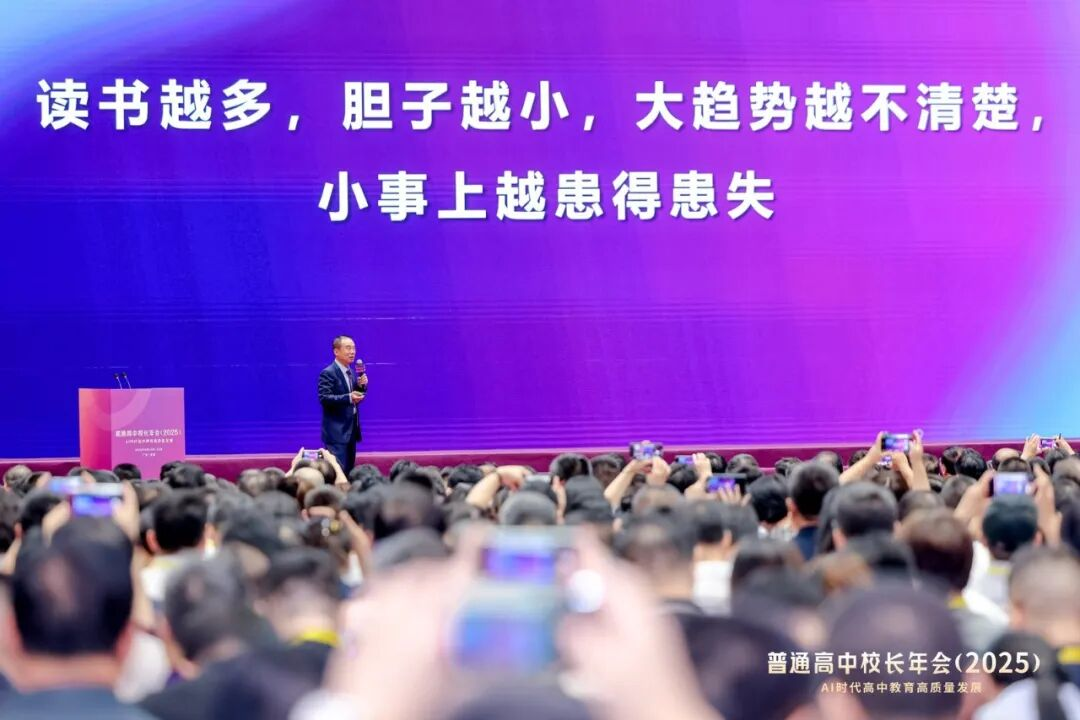
Also, the more you read, the less bold you become. You see more cases and become more cautious. I had two students: one became wealthy, the other became a successful professional. The wealthy one attributed success to luck, but it's not accidental. The more you read, the more case studies you know and the more cautious you become. Fear of failure grows and you become a careful observer rather than a brave practitioner. Thus reading should not be excessive.
Second, prioritize rationality over memory. Rationality is far more important than memory. Current education emphasizes memory; we must shift toward cultivating critical and scientific thinking. Some high schools do this well; others less so. I have visited a hundred high schools and can say some are among the best worldwide. Secondary schools should strengthen rational analysis in curricula and exams, enhance students' comprehensive analytical abilities, deepen math and science teaching depth rather than breadth, and promote interdisciplinary courses and reasoning and debate clubs.
Third, increase practical components—practice yields insight. Practice is more important than school. Without emphasizing practice in AI education, much will be lost. We must cultivate practitioners with grand vision. Look at online life: many observe and comment, but few practice. There are many critics and observers but few practitioners. Experience is the primary educational priority in the AI era.
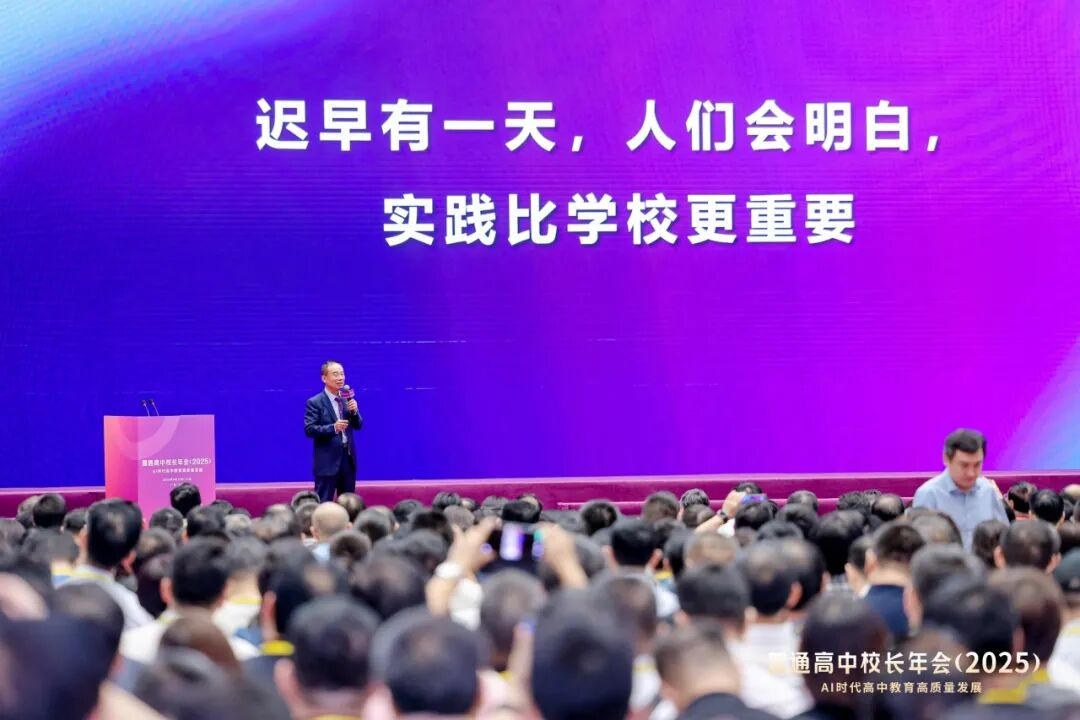
People teach knowledge, events teach lessons. Without lessons from experience, children do not mature. Our students generally mature later. Our university is international, with many students from different countries mixing with domestic students; they often seem more mature. Our children tend to consult parents for everything, unlike international students who make decisions on their own. I tell parents that our children are generally late to mature because parents are prematurely mature—deciding everything for their children. Parents worry about their child's future in primary school. This over‑parenting limits children's opportunities to act independently; practice will eventually be recognized as more important than school.
One colleague sent his child to volunteer teach in Africa before university; many thought it odd, but I fully supported it and believed the child would succeed in life.
Fourth, cultivate innovative talents and teach students to ask questions. Innovation cannot be willed at will; it is a culture. Does our society have it? Education reflects that culture. Why is innovation difficult in Chinese culture? I see three reasons: first, a long‑standing emphasis on practicality—people immediately ask about use. If you build a robot that climbs trees, people ask why a tree‑climbing robot is needed. Focusing only on practicality stops deeper inquiry and impedes innovation. Second, an attachment to inheritance—innovation doesn't always require tradition. Third, a lack of epistemological rigor—Western philosophy, from Socrates onward, asks "why?" Chinese thought often lacks such rigorous questioning, with exceptions like Zhuangzi. This hinders deep investigation and thus innovation.
The biggest challenge in the AI era is cultivating innovative talent. Principals here are the hope of China; the hope lies in people aged 10 to 30, and you are responsible for educating this generation. This is a grave task: whether we can nurture innovators will decide whether our country can truly be at the world's forefront.
Innovation requires three conditions: first, dissatisfaction. Lu Xun said "dissatisfaction is the wheel of progress." If one is satisfied with everything, why innovate? Innovation breaks patterns. Dissatisfaction means raising questions—can students ask questions? Questioning itself is an element of innovation. Second, imagination is an element of innovation—without imagination innovation is impossible; imagination is connected to the arts and interdisciplinary work. Third, freedom—the freedom to confront reality and imagine fully.
Fifth, strengthen arts education. I have said in many forums that the arts are remarkable.
I visited 100 high schools and about 25 meet art education requirements; European and American schools generally do better. The serious lack of arts education will affect the next generation's overall quality. If neglected, we will regret it. Lack of love is a life deficiency; a child missing this will carry a lifelong gap. Two things make life worth living: love and beauty—these are life's fulcrums and are closely tied to art. Without art, life's fulcrum collapses and emotional life collapses. In the rational world, art is the source of creativity, so art is vital. In the future perhaps half of life will relate to the arts.
Sixth, integrate arts and sciences and promote interdisciplinary development. This may sound like a university message, but it's for high schools too. Humanities and sciences are two sides of the same world, not separate realms. Current teaching treats them as separate, resulting in science students lacking humanistic literacy. We must help science students appreciate humanities and support humanities students who face real employment challenges—society is such that humanities students can be disadvantaged. AI does not distinguish between humanities and sciences; it is interdisciplinary.
The school's purpose is to provide a complete education and cultivate a whole personality. From this viewpoint, humanities and sciences should not be divided; when I attended primary and secondary school they were not separated.
Seventh, observe the world to form a worldview. I'll tell a short story. When I taught in Hong Kong, a group of students came to talk about worldview. I asked one student where he was from; he said Panyu. I asked which province Panyu is in; he didn't know. Another said her mother said she was from Zhongshan; she didn't know why it's called Zhongshan. I asked if they had been to the Chinese mainland; they said their travel permit recorded a visit 15 years ago. I told them the mainland has changed dramatically in 15 years. I asked where else they had been; many had not traveled beyond their district. I said next time don't speak of a "worldview" but a "Shatin view"—meaning a narrow perspective.
Students, worldview matters, but how does worldview come about? A worldview comes from observing the world: broaden students' horizons, cultivate global vision, empathy and the ability to examine the world; use a global perspective to view China and use Chinese spirit to guide the world.
To summarize my points: Education in the AI era is human‑centered, practice‑oriented and innovation‑driven.
Finally, a few closing remarks.
First, humanity is grand because it created AI, and mature because it understands AI's limits.
Creating AI may be one of humanity's greatest contributions. None of us can fully predict what will happen next. Previously we thought of evolution in biology; now the Earth and perhaps the universe evolve. These are outcomes related to AI data and analysis. The future remains uncertain. Are we past the midpoint of AI creation? We are only at the beginning; understanding AI's limits and how to confront them tests human wisdom and maturity.
Second, a civilization's true contribution is not its population size, skyscrapers or technological advancements, but the kind of people it cultivates.
You here carry a heavy responsibility. The world moves quickly; educate our children so they move forward with souls.
Thank you.
[END]