
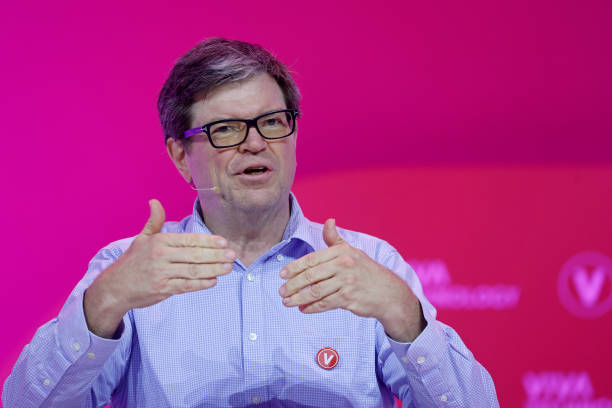
On November 11, 2025, a major development shook Silicon Valley: after months of intense internal personnel upheaval and leadership disputes at Meta, Meta's chief AI scientist and deep learning pioneer Yann LeCun plans to depart to found his own AI startup. The Financial Times first reported the news, which was quickly followed by TechCrunch, Reuters and Gizmodo, triggering wide discussion across the global tech community. The 65‑year‑old French‑born American computer scientist and Turing Award laureate—often called the "father of convolutional neural networks"—would be leaving what could signal a major shift in Meta's AI strategy and inject new dynamics into the AI startup wave. FT cited people familiar with the matter saying LeCun will formally leave Meta within the coming months to launch a startup focused on fundamental AI research, with specific areas including computer vision and autonomous learning systems.
LeCun's planned departure did not come out of nowhere but reflects the combined pressures of internal restructuring at Meta and massive AI investments. Meta CEO Mark Zuckerberg has been heavily betting on AI since 2023, with the company’s AI spending in 2025 expected to reach $60 billion, but long return cycles and high costs have prompted internal turmoil. PYMNTS reported that LeCun's exit is part of a "large‑scale reorganization" of Meta's AI division; several senior executives had already left, including former vice president of AI research Joelle Pineau. LeCun joined Facebook (Meta's predecessor) in 2013 as chief AI scientist, leading the FAIR (Facebook AI Research) lab and overseeing foundational AI research from computer vision to natural language processing. His departure is viewed as a sign that Meta's AI ambitions have been set back, especially as competitors such as OpenAI and Anthropic release new models while Meta’s Llama series has struggled to commercialize despite being open‑sourced.
LeCun's career is textbook‑worthy. Born in France in 1960, he earned his PhD in computer science from Pierre and Marie Curie University in 1987, studying under Gérard Debru and focusing on neural networks. From 1988 to 1996 at Bell Labs, he developed LeNet‑5, a convolutional neural network for handwritten digit recognition that was successfully applied to U.S. bank check processing, reportedly reducing error rates by 95%. This innovation laid the foundation for modern computer vision and was cited by the Stanford AI Index as a key milestone in the revival of deep learning. In 1998 LeCun joined New York University (NYU), serving as a leader in the computer science department and promoting the use of CNNs in competitions like ImageNet. He shared the 2012 Turing Award with Geoffrey Hinton and Yoshua Bengio, recognized as one of the "deep learning triumvirate."
At Meta, LeCun's contributions were notable. Under his leadership, FAIR adopted architectures such as ResNet and EfficientNet and advanced self‑supervised learning (SSL) approaches like SimCLR (2020), enabling models to learn features from unlabeled data and reportedly reducing training costs by about 30%. In 2023 he led research on energy‑based models (EBMs) aimed at endowing AI with commonsense reasoning and challenging the limits of Transformers. Despite Meta's large AI investments (infrastructure spending exceeded $20 billion in 2025), LeCun publicly criticized internal "publication restrictions," saying they hindered academic freedom. FT reported that he has been in contact with multiple investors and that the new company may emphasize "open AI."
The impact on Meta is clear. The New York Post reported that LeCun was one of the highest‑profile departures among Zuckerberg's high‑paid hires, with compensation in the millions plus equity incentives. If his new company succeeds, it could further fragment Meta's AI talent pool. In recent years many FAIR researchers have moved to OpenAI, xAI and Anthropic. Gizmodo analysts note that while Llama 3.1 is open source, it may lack LeCun's visual expertise, potentially delaying Meta's progress in multimodal AI competing with products like Gemini. Zuckerberg wrote in an internal memo that "Yann's contributions are irreplaceable, but Meta will continue to invest in AI innovation," yet analysts warn that despite a large AI budget, Meta faces a "talent drain crisis." Fortune highlighted that LeCun's departure could fuel a renewed surge in Silicon Valley AI startups: 2025 startup funding has already topped $100 billion, and his new firm could start with valuations near $1 billion.
Industry reaction has been mixed. OpenAI CEO Sam Altman posted on X: "Yann's entrepreneurial spirit is admirable; AI needs more pioneers like him." NVIDIA CEO Jensen Huang quipped: "Welcome to the startup club, Yann—but don't forget the GPUs." Venture capitalists such as a16z partner Andrew Chen said LeCun's new company may focus on energy‑based models and challenge Transformer dominance, pushing AI from "data‑hungry" paradigms toward more efficient learning. The Decoder reported that academia hailed his move as a potential revival for NYU's AI ecosystem, and his startup is expected to attract talent from Stanford and MIT, forming a third pole in AI research.
LeCun himself has not publicly commented, but he has removed his Meta role from LinkedIn, prompting speculation. The new company might be called "LeCun Labs," positioned as an "open foundational AI research" organization similar to DeepMind's early model. On Reddit's r/MachineLearning, some users said his exit "marks the end of Meta's AI golden era," while others are optimistic it will spur Meta to accelerate the Llama series development. In interviews, LeCun has previously predicted that "AI will become as ubiquitous as electricity," and his startup could hasten that vision.
LeCun's departure is not only a personal decision but also a turning point for the AI ecosystem. Meta faces pressure to show returns on massive AI spending while a new wave of Silicon Valley startups is rising. Reuters analysis suggests LeCun's startup will intensify competition for talent, with AI hiring markets potentially growing 30% in 2026. As a pioneer of deep learning, how LeCun's next move will reshape the AI landscape remains to be seen; the tech world is watching closely. The episode also serves as a reminder to giants that innovation requires freedom and that talent is core.