
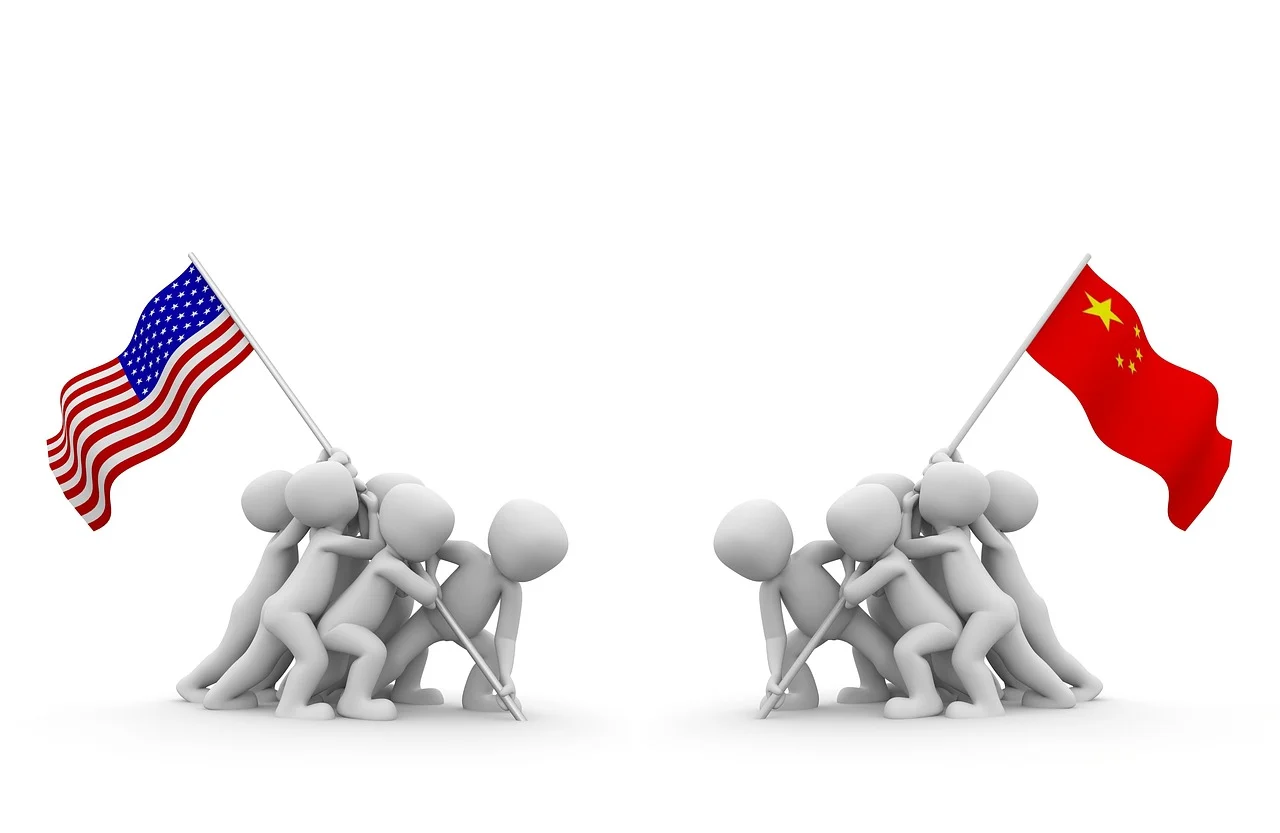
Beijing/Washington, October 10, 2025—Against the backdrop of escalating U.S.‑China trade tensions, the U.S. Department of Commerce has further tightened export controls on advanced artificial intelligence (AI) chips and training hardware, classifying these technologies as "sensitive" and directly affecting the China business of U.S. chip giants such as NVIDIA and AMD. At the same time, China’s Ministry of Commerce responded quickly, announcing on October 9 the toughest controls in history on rare‑earth elements and related magnets, adding five rare‑earth elements and strengthening reviews for the semiconductor and defense sectors. This round of tit‑for‑tat measures not only intensifies global supply‑chain strains but also casts a shadow over the Trump‑Xi summit scheduled for late October. Experts warn the moves could trigger a new wave of technological decoupling, affecting electric vehicles, defence and high‑performance computing.
U.S. escalation: AI chips become a new battleground
The U.S. Bureau of Industry and Security (BIS) has long used export controls to limit China’s access to advanced semiconductor technologies in order to protect national security and maintain technological leadership. Since October 2022 the U.S. has repeatedly updated rules to subject high‑performance computing chips and AI model weights to strict review. On January 15, 2025, BIS revised regulations further with a two‑pronged approach: expanding controls to cover advanced computing equipment — including AI training chips with a performance density exceeding 4,800 — and for the first time introducing export restrictions on AI model weights to prevent the use of U.S. technology in developing military AI systems.
By October 2025 U.S. actions grew more frequent. On October 7, the Congressional Select Committee on the Strategic Competition between the United States and the Chinese Communist Party published a report revealing that Chinese chipmakers purchased $38 billion worth of chip‑making tools from the U.S. and its allies in 2024, far exceeding expectations and highlighting gaps in existing controls. The report urged the Commerce Department to broaden bans to include not only AI chips themselves but also the equipment and technical software used to make them. As a result, companies such as NVIDIA and AMD face new obstacles to exports to China. For example, NVIDIA’s H100 and the forthcoming Blackwell‑series GPUs — core hardware for AI training — have been forced into supply‑chain adjustments since BIS’s April 2025 rules took effect, and NVIDIA’s China revenue is now expected to drop by more than 30% in 2025. AMD’s MI300X accelerators have similarly been classified as "sensitive technology," requiring detailed end‑use reports before export and subject to review periods that can last months.
This round of controls is not isolated but part of a broader U.S.‑China tech confrontation. The congressional report said China has circumvented controls via the Foreign Direct Product Rule (FDPR), for example by routing purchases through Singapore or South Korea. To close these gaps, BIS plans to introduce interim rules before the end of October banning foreign fabs that use U.S. software or equipment from exporting advanced chips to China. That would directly hit Chinese AI firms such as Huawei and Baidu, which rely on imported hardware to train large language models. Analysts say the U.S. measures aim to slow China’s progress in AI; estimates put China’s AI compute capacity at about 70% of the U.S. level, but shortages of high‑end chips could widen that gap.
China’s swift counterstrike: rare‑earth controls target defense and chip pain points
Facing U.S. pressure, China’s Ministry of Commerce issued Notice No. 61 of 2025 on October 9, announcing a comprehensive upgrade of controls on rare earths and permanent magnets, to take effect in phases from November 8. The announcement adds five rare‑earth elements — holmium, erbium, thulium, europium and ytterbium — bringing the total number of controlled rare earths to 12, and places dozens of refining technologies on the restriction list. More strikingly, China introduced a mechanism similar to the U.S. FDPR: any overseas manufacturer using Chinese materials, technology or equipment must obtain a Chinese export licence, even if the transaction does not involve a Chinese company.
The notice explicitly targets the semiconductor and defence sectors. Semiconductor products containing more than 0.1% Chinese rare earths and related production equipment will be reviewed on a case‑by‑case basis, including advanced chips at 14nm and below and memory chips with more than 256 layers. From December 1, companies tied to foreign militaries will face automatic licence denials, and applications for military use will be rejected outright. This directly threatens U.S. defence supply chains: rare earths are key components in the F‑35 fighter, Virginia‑class submarines and Tomahawk missiles, and China controls about 90% of processed rare earths and 93% of magnet manufacturing worldwide. Analysts at the Center for Strategic and International Studies (CSIS) say the move will exacerbate U.S. defence production bottlenecks; Chinese ammunition production is estimated to be five to six times faster than the U.S. pace.
Chinese officials stress the controls are intended to "safeguard national security and global supply‑chain stability" and pledge to promote compliant trade through multilateral dialogue. Analysts view the measures as a calibrated response to U.S. chip bans. The timing is sensitive: the announcement comes as a 90‑day trade truce that began on May 11 nears expiry and ahead of Trump’s planned visit to South Korea and an anticipated meeting with Xi. White House officials told The Washington Post the move is seen as "Beijing’s attempt to manipulate global tech chains," and U.S. agencies are assessing the impact.
Context: from tariffs to tech decoupling
U.S.‑China technology friction dates back to the 2018 tariff conflict under the Trump administration and has since evolved toward broader decoupling. In December 2023 China banned the export of rare‑earth extraction technology; in April 2025 the U.S. responded with new AI chip rules, after which China restricted seven rare earths. A 90‑day truce brokered in May in talks in Switzerland and London eased tensions briefly, but licence delays and mutual accusations of breaches have reignited strains. The Congressional Select Committee warned China’s chip self‑sufficiency has risen to 35%, but high‑end reliance on imports remains; U.S. restrictions have an effect but also spur accelerated domestic substitution in Beijing.
Global impact: corporate pressure and supply‑chain reshaping
The confrontation touches many parties. NVIDIA shares fell 2.3% on October 9, AMD slid 1.8%; memory giants Samsung and SK Hynix are assessing impacts, and advanced chip costs could rise 10%–15%. The electric vehicle industry is particularly exposed: shortages of rare‑earth magnets will raise costs for manufacturers such as Tesla and BYD. In defence, the U.S. Department of Defense reportedly relies on China for up to 80% of some rare‑earth components, and new controls could delay F‑35 deliveries.
In response, the U.S. invested $400 million in MP Materials in July and signed a domestic supply agreement with Lynas. China is promoting rare‑earth recycling under its "dual‑carbon" goals. CNBC described this as a new chapter in a "global legal war," with Beijing building an "economic arsenal."
Experts are divided. A senior CSIS researcher called the mutual restrictions a "lose‑lose" outcome and urged coordination within a G7 framework. Scholars at Johns Hopkins warned the controls could harm U.S. competitiveness and raise tensions in the Taiwan Strait. Reuters analysts said the summit could present an opening, but without concessions the global semiconductor market could contract by about 5% in 2026.
Conclusion: dialogue or confrontation?
As the world’s two leading technology powers, this round of controls highlights the fragility of interdependence. While Chinese officials emphasize cooperation, geopolitical realities make optimism scarce. Whether the Trump‑Xi meeting can defuse tensions remains uncertain; observers say short‑term supply‑chain turbulence is likely, and long‑term diversification is the only sustainable path. The world should be alert: this "new cold war" may reshape the 21st‑century technology landscape.