
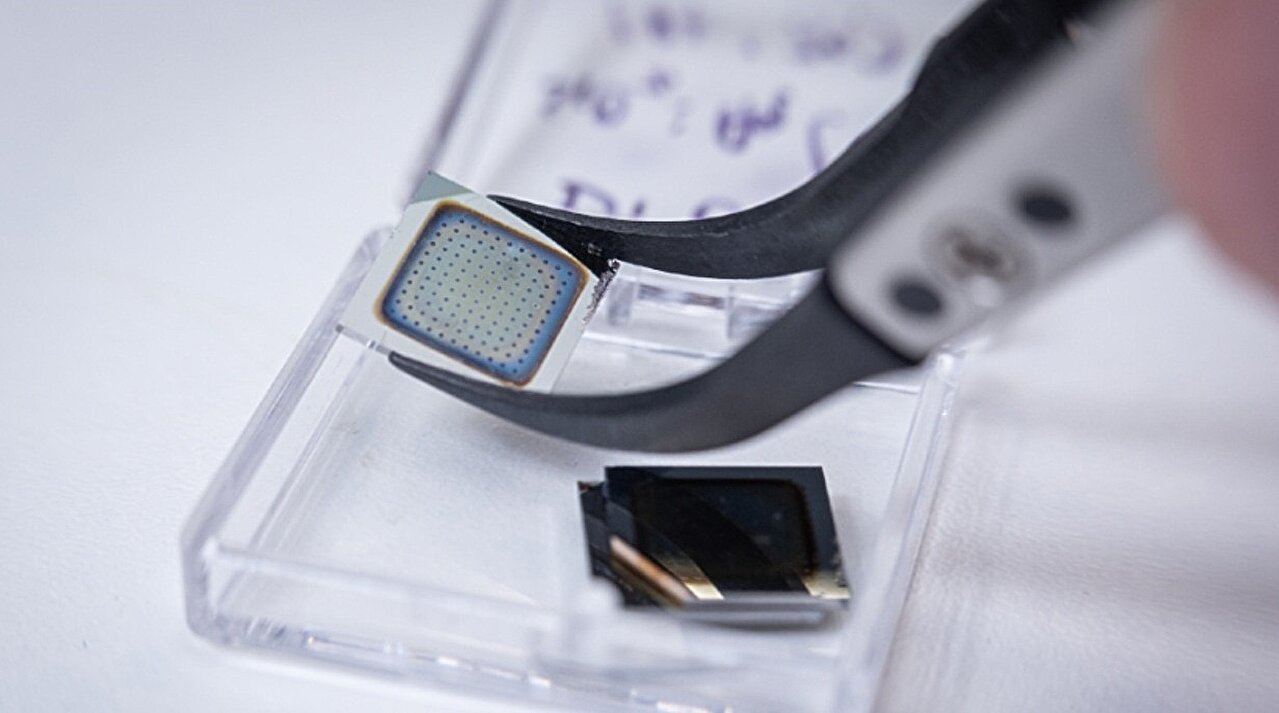
As AI and robotics accelerate toward "brain‑like computing," an international team led by Loughborough University has announced a major breakthrough: they developed a miniature electronic circuit called the "transneuron" that can emulate different neuronal functions for vision, planning and motor control within a single device. This innovation marks a key step toward practical neuromorphic computing, achieving match rates of 70–100% and moving beyond the rigid designs of conventional AI. The research paper was published on November 18 in Nature Communications (DOI: 10.1038/s41467‑025‑62151‑9). Team leader Professor Sergey Saveliev said, "The brain is not a mysterious device but a system that can be reproduced electronically. This work brings us closer to building more efficient, more human‑like robots." The result could pave the way for energy‑saving AI hardware and accelerate developments in brain–machine interfaces and consciousness studies. Interesting Engineering noted that the device's flexibility, "once thought unique to the brain," could reshape robotic perception and decision‑making.
The rise of neuromorphic computing stems from concerns over the energy efficiency of conventional computers. Current AI systems rely on silicon‑based chips and often require millions of fixed artificial neurons to handle simple tasks, producing high energy consumption—a single GPU training a model can consume power comparable to thousands of households. The brain is different: it performs complex tasks such as facial recognition or motor control on roughly 20 watts. Loughborough's transneuron aims to bridge that gap. The device is a nanoscale electronic chip that emulates neuronal signaling using small electrical pulses; its core component is the memristor, a nanoscale device that can "remember" past signals. Under electrical current, silver atoms form and break microscopic bridges to enable dynamic adjustment. Unlike traditional transistors, memristors are synapse‑like and plastic, able to "learn" response patterns as inputs change.
The findings are striking: a single transneuron can switch among three brain‑region functions. The team fed electrical signals into the device and measured output pulses, comparing them with real neuronal patterns recorded from macaque brains. Visual neurons produce stable pulses, motor‑control neurons are irregular, and premotor (planning) neurons show rapid bursts. By tuning parameters such as voltage, the transneuron accurately reproduced these patterns with 70–100% match. Crucially, it also has computational ability: it adjusts pulse frequency according to input changes and can distinguish simultaneous versus asynchronous dual inputs—tasks that traditional systems require multiple neurons to perform. The team also tested environmental responsiveness: the device is sensitive to pressure and temperature and can simulate artificial sensory systems. Professor Saveliev explained, "By fine‑tuning circuit settings, we make the same device behave like different brain neurons. This opens the door to building electronic chips that implement complex brain functions."
The research team is interdisciplinary and led by Loughborough physics professors Alexander Balanov and Sergey Saveliev. Balanov handled theoretical modeling, while Saveliev is the corresponding author with expertise in theoretical physics. Experimental physicist Pavel Borisov produced the memristors, Sergei Gepshtein of the Salk Institute provided visual‑perception data, and Joshua Yang of the University of Southern California contributed engineering expertise. Collaborators include Rivu Midya (now at Texas A&M University). Dr. Gepshtein commented, "Today's AI runs rigid logic on standard computers while the brain relies on irregular pulse networks. The transneuron brings us closer to truly brain‑like hardware." Professor Yang added, "This paves the way for robotic artificial neural systems that can perceive, learn and control efficiently." The paper DOI is 10.1038/s41467‑025‑62151‑9 and is open access.
The implications are far‑reaching. First, it promotes energy‑efficient computing: the brain uses around 20 watts to handle complex tasks while AI systems require kilowatts. The memristor design of the transneuron reduces hardware needs; Professor Balanov said, "It can make computers faster and more power‑efficient, adapting in real time like living systems." Second, the robotics potential is substantial: a single device emulating multiple brain regions could enable a "cortex on a chip," allowing robots to perceive environments and plan actions. Indian Express reported that this could be used for medical implants or neural interfaces to replace or augment damaged brain areas. Third, it offers neuroscience insights: the device can act as a sandbox for simulating inter‑regional brain communication and even exploring aspects of consciousness. Dr. Borisov said, "It brings us closer to electronically reproducing parts of the brain." Technology Networks noted its relevance for brain–machine interfaces such as those pursued by Neuralink.
Challenges remain. Memristor stability must be improved: silver bridges can degrade, limiting long‑term lifespan. The team acknowledges that simulating complex brain networks will require integrating many devices; current work is at the single‑neuron level. Environmental factors like temperature fluctuations can affect accuracy. Professor Balanov warned, "This is a small step, but a significant one. Future work must address scalability." Ethical issues also arise: brain simulation could raise privacy concerns, and the EU AI Act requires audits of high‑risk hardware. The News International reported the team plans to collaborate with the Salk Institute to expand toward multi‑neuron networks.
From a broader perspective, the breakthrough strengthens momentum for neuromorphic computing. In 2025 global investment exceeded $10 billion, and IBM and Intel's TrueNorth chip has already seen commercial use. Loughborough's transneuron may become a key element in the "post‑Moore" era, driving a shift from silicon toward memristor‑based systems. Professor Saveliev envisions, "It will bring faster, more energy‑efficient robots and even electronic brain interfaces." In the climate crisis, efficient AI can optimize energy use; in medicine, it could aid brain injury recovery.
The emergence of the transneuron is a modest milestone for brain‑like AI. From lab to reality, it reminds us that mimicking the brain is not merely copying but potentially surpassing. In the future, robots may no longer be clumsy but move with human‑like agility. Loughborough's "small device" may herald a new era.