
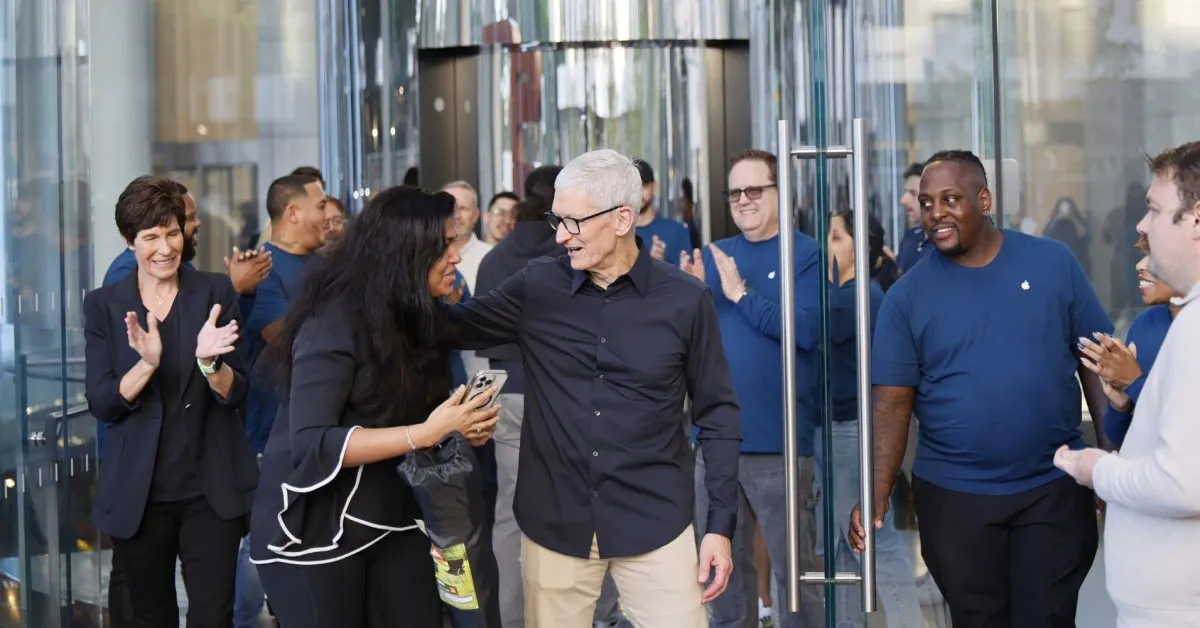
February 5, 2026, Apple CEO Tim Cook used this phrase to employees: "new categories of products and services" will be driven by artificial intelligence. Cook did not name any specific upcoming device or service, but the wording itself indicates that Apple's internal assessment of AI's potential has shifted from feature enhancement to a strategic level that could reshape product boundaries.
In his remarks, Cook repeatedly connected AI to two long‑standing Apple priorities: first, a commitment to user privacy; second, deep integration of hardware and software. Over recent years Apple has continued to invest in chips (such as its in‑house Apple Silicon), operating systems, and on‑device intelligence. His comments imply that the next wave of AI‑centered products will not only rely on cloud compute but may also emphasize on‑device private computation and protections such as differential privacy.
Cook did not specify whether the new categories will be wearables, home devices, or entirely new form factors, but his use of the plural "categories" is notable: it suggests Apple's internal discussions may span multiple hardware and service layers rather than a single niche. Examples under consideration could include AI‑driven personal assistants, cross‑device creative tools, or new subscription‑delivered services.
Facing external questions about whether Apple is behind in AI, Cook's remarks read more like an internal positioning: the company will advance at its own pace rather than chase short‑lived trends. For younger users this approach is both an advantage and a challenge: the advantage is Apple’s tendency to turn mature AI capabilities into "plug‑and‑play" product experiences; the challenge is that waiting times may be longer than with other vendors.
From an industry perspective, Cook's comments point to several foreseeable directions: first, Apple’s services revenue mix may see new growth points as AI services enable differentiated subscriptions; second, the developer ecosystem will likely be further mobilized as Apple could release more toolchains for models and apps; third, balancing privacy, controllable compute, and user experience will remain a core competitive asset for Apple.
Although Cook did not provide a timeline or prototype details, his emphasis on caution and long‑term vision in the employee communication is enough to shift attention from "will a certain feature exist" to "how will Apple turn AI into a sustainable system of products and services." For Apple ecosystem followers and young users interested in AI applications, this means we may see new‑category experiences in the coming years that combine innovation with Apple’s design principles.
The February 5, 2026 remarks were not a dramatic product reveal but a strategic signal: Apple is preparing for the next stage of AI‑driven change, intent on maintaining its privacy commitments while experimenting with new product forms. What market participants and developers need to do is look for the details that will reveal how Apple will realize these "new products and services" step by step.
▶️ Enjoy this article? Creating content is hard work!
Follow our YouTube channel:
AI Rosetta
Your likes, subscriptions, and shares are our greatest support! 🙏
More AI news at: https://www.airosetta.com