
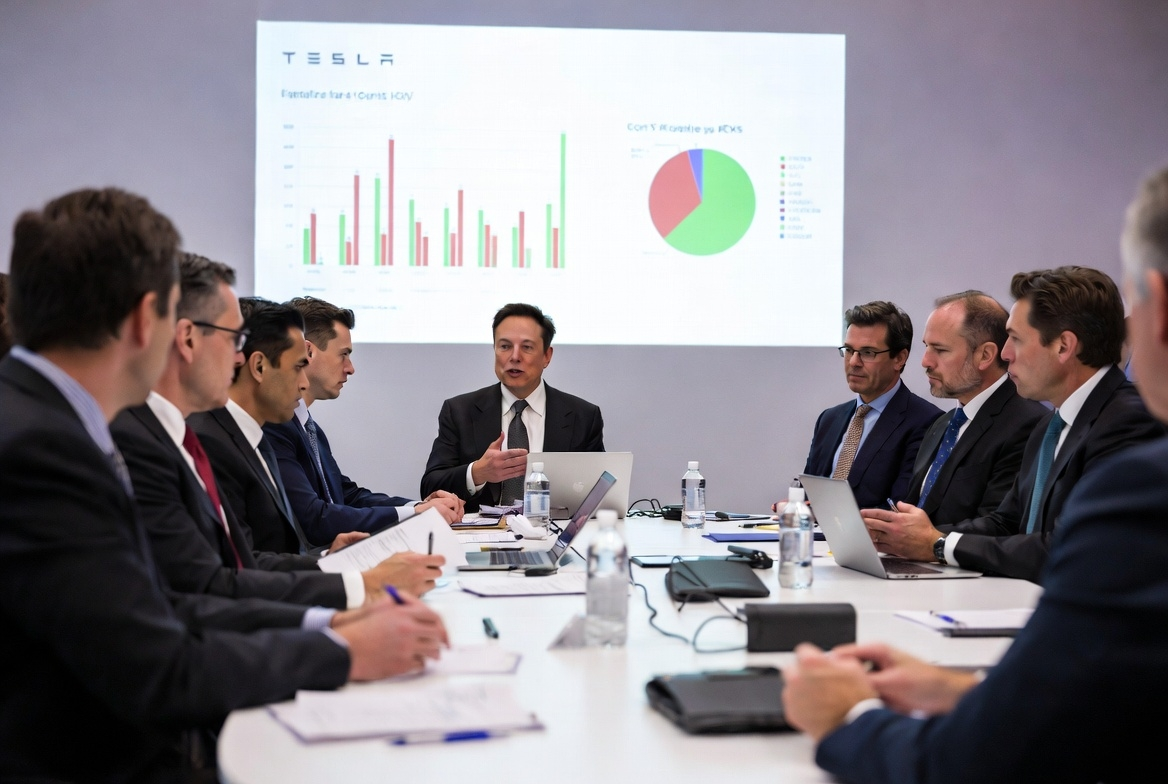
On November 6, 2025, amid intensifying competition in artificial intelligence and electric vehicles, Tesla's annual shareholder meeting produced major news: shareholders, by an overwhelming majority (over 75%), approved CEO Elon Musk's largest‑ever pay package, with a potential value of up to $1 trillion. The decision ended more than a year of disputes over Musk's compensation and injected what supporters call a vote of confidence into Tesla's AI transformation and robotics business. Musk posted on X after the meeting: "Thanks to shareholders for their trust. This will ensure I am fully committed to Tesla's future—from an army of robots to a Mars mission." However, the sky‑high incentive has also prompted governance experts to warn about amplified risks from concentrated power. At a market capitalization already above $1.5 trillion, the vote could reshape compensation norms for global tech giants.
Plan details: a performance‑linked "trillion‑dollar wager"
The pay plan the Tesla board proposed in the first half of 2025 replaces the 2018 package (which a Delaware court struck down in January 2024). The award grants Musk roughly 423.6 million shares in equity, split into 12 tranches, with total value that could reach $1 trillion depending on the share price. The core mechanism is fully performance‑linked: each tranche vests only when both market‑capitalization and operating milestones are met, over a 10‑year period.
Specific targets include:
- Market‑capitalization milestones: starting from the current $1.5 trillion level and stepping up to $8.5 trillion (more than twice Apple's current market value). For example, the first tranche requires $2 trillion market cap, implying a share price around $601; the final tranche requires $8.5 trillion, with a hypothetical share price near $2,289 (assuming dilution effects).
- Operating metrics: adjusted EBITDA rising from $50 billion to $400 billion; product delivery targets including 20 million electric vehicles, 10 million Optimus humanoid robots, 1 million Robotaxi vehicles in commercial operation, and 10 million FSD (full self‑driving) subscription users. The last two tranches also require Musk to present a CEO succession plan.
Musk's stake would rise from 13% to 25%, but he must remain in office for 7.5–10 years to fully realize the award. The board said the design "ties the genius to long‑term performance." ARK Invest founder Cathie Wood publicly supported the plan: "Musk is the most productive person on Earth; this plan maximizes shareholder value." The vote showed about 75% shareholder approval, well above the required threshold; three directors (Ira Ehrenpreis, Joe Gebbia, Kathleen Wilson‑Thompson) were re‑elected, and the board was authorized to invest in Musk's xAI company (passed despite some abstentions).
Controversial background: from court defeat to shareholder counterattack
The plan traces back to the 2018 package (then valued at $56 billion), once hailed as the largest CEO incentive ever. In 2024, Delaware Chancellor Kathaleen McCormick found procedural flaws—citing a lack of board independence and Musk's dominance in proposing the plan—and the ruling overturned the award. After Musk's appeal failed, he reorganized the company in Texas and warned that without sufficient control he would focus on SpaceX and xAI.
Opposition was formidable: CalPERS, the Norwegian sovereign wealth fund, proxy advisers ISS and Glass Lewis all recommended voting no, calling the plan "astronomical dilution" and warning of "excessive concentration of power." Four governance proposals were rejected at the meeting, including tying executive pay to sustainability and human capital metrics and abolishing the 3% ownership threshold for derivative suits. On X, user @hrishi29 unpacked the plan in detail and drew hundreds of likes: "This isn't money for Musk—it's a shareholder‑value wager."
Market and industry impact: share rebound and governance alarm
After the announcement, Tesla shares rose 1.7% in after‑hours trading to close at $453.25, with market capitalization briefly touching $1.55 trillion. Wall Street analysts diverged: Morgan Stanley raised its target to $600, saying the package "locks Musk's focus on Tesla and AI," while Goldman Sachs warned that dilution could reduce per‑share value by around 5%. For Tesla, the move reinforces a "full‑stack AI" strategy: at an Optimus demonstration, Musk predicted the robot would become the company's largest product line, with Fremont factory volume production slated for 2026.
At the industry level, the case may set a benchmark. Stanford's 2025 AI Index report shows performance equity is taking a larger share in tech CEO pay, but trillion‑dollar packages are rare. Rivian and Lucid, among others, face similar pressures about how to retain talent.
Reactions: from jubilation to skepticism
The shareholder meeting was held at Tesla's Texas Gigafactory, where Musk appeared with an Optimus robot to roaring applause. Supporters called it a "win for shareholders": only an eightfold share‑price surge would unlock the entire award, aligning incentives to chase BYD and Chinese battery leaders. Opponents such as the Norwegian fund labeled it "a governance step backward," expressing concern that Musk might be distracted by xAI (valued at over $100 billion). Musk responded: "I won't be pushed out after building a robot army."
The X topic #MuskTrillion went viral; @BRKTgg launched a prediction market asking, "Can Musk claim the full trillion?" with views exceeding 100,000. Media outlets such as The New York Times called it an "unprecedented power play," while Wired warned of a "CEO‑turned‑shareholder‑emperor."
Outlook: global implications for sustainable incentives
The plan's passage marks Tesla's shift from an "automaker" toward an "AI ecosystem empire," but it also raises a warning: how should tech giants balance incentives for innovation with fairness and governance? The SEC could review the package, and Delaware appellate courts may revisit the matter in 2026. Musk's "Mars dream" will be paid for by shareholders—if targets are met he would join a hypothetical "trillion‑dollar club" among billionaires; if not, dilution could hurt shareholders.
In the US–China AI race, the case underscores the American "market‑driven" model: Chinese companies such as Xpeng emphasize team‑based equity incentives rather than concentrating awards on a single leader. Tesla's Q4 earnings and the Robotaxi launch will test the plan's effectiveness. Tech reporters should watch closely: is this the right way to reward a genius, or a path to unchecked power?