
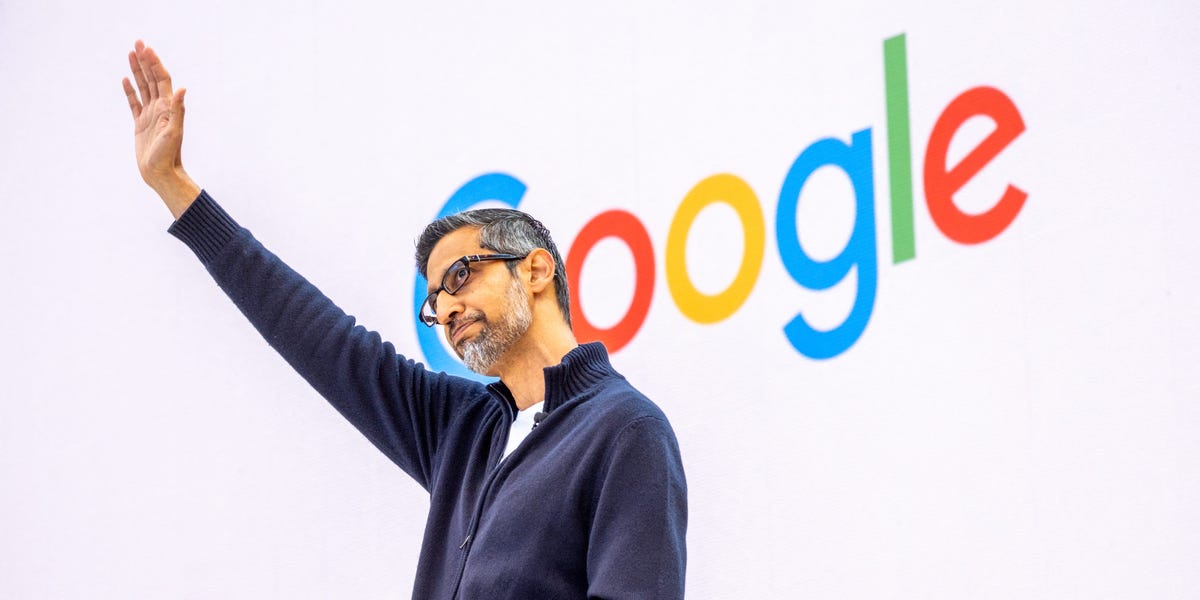
In November 2025, Google CEO Sundar Pichai told Business Insider that "vibe coding" makes software development "so much more enjoyable" and has made development "exciting again." Pichai described vibe coding as a development experience that combines AI assistance, visual editing and low‑code workflows, enabling team members to express product ideas more directly within a shared environment.
Pichai emphasized that the core of vibe coding is not to replace programmers but to let tools handle repetitive tasks and boilerplate so engineers are liberated from mechanical debugging and implementation details: "Tools will take care of tedious syntax and patterns, allowing engineers to focus on building experiences, solving more complex problems, and turning creative ideas into products."
He repeatedly highlighted vibe coding's appeal to non‑technical roles. With visual interfaces, real‑time AI suggestions and low‑barrier components, product managers, designers and even marketing staff can participate earlier in application building rather than relying solely on engineers to "translate" ideas into code. This shift is changing how teams collaborate: ideas can be prototyped faster and iterated more frequently.
Business Insider's report lists several scenarios: when AI generates UI components from natural‑language descriptions, when IDEs complete code in an "intent‑first" manner, or when business logic is composed by dragging and dropping in visual editors, vibe coding can significantly shorten the time from concept to runnable product. Pichai said the experience delivers not only efficiency gains but also a rekindled professional enjoyment.
On ecosystem impact, Pichai mentioned Google's continued investment in toolchains and models. He noted that building composable, auditable AI‑assisted features and ensuring the safety and maintainability of generated code will be priorities. For enterprise customers, vibe coding means faster experimentation and lower onboarding costs; for developers, it means handing repetitive tasks to systems and spending more time on architecture and innovation.
However, Pichai acknowledged challenges remain: teams must redefine role boundaries, establish new quality‑control processes, and preserve security and compliance oversight during code generation. He stressed that tool quality depends on constraints and transparency, and that Google will emphasize traceability and human review when promoting such experiences.
Business Insider pointed out that vibe coding is not unique to Google but part of the broader trend merging low‑code, visual programming and large models. Pichai said the key is to integrate these elements "for people"—boosting productivity while preserving developers' control and creative enjoyment.
For young developers and newcomers, Pichai's view is attractive: vibe coding lowers the entry barrier and lets more people see results quickly, thereby motivating learning and creativity. His November 2025 remarks signal Google's long‑term plan to popularize these tools and help evolve the industry ecosystem.