
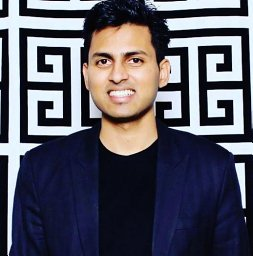
On November 6, 2025, Soumith Chintala, one of the co‑founders of the PyTorch project, formally announced his resignation from Meta (formerly Facebook), a development that reverberated across the global AI community. As the technical soul of PyTorch, Chintala led its evolution from a 2016 prototype to a leading deep learning framework. His departure not only signals a shift within Meta's AI organization, but also prompted widespread remembrance and tributes across much of the AI world. From OpenAI CEO Sam Altman to DeepMind head Demis Hassabis, hundreds of industry leaders posted messages of respect on X, and the #SoumithLegacy topic surged to around 5 million views. In a personal blog he wrote: 'PyTorch is a gift from the community; I will continue to advance open‑source AI in a new role.' This event may reshape the future of deep learning toolchains and highlights how talent mobility affects the ecosystem amid the generative AI boom.
Resignation background: from Meta FAIR to independent exploration
Soumith Chintala, an Indian‑American engineer, co‑launched PyTorch in 2016 with Adam Paszke and Sam Gross at Meta AI Research (FAIR). At a time when TensorFlow dominated the market, Chintala pushed back against the limits of static graphs and championed eager execution, helping PyTorch become researchers' preferred tool. Over a decade, PyTorch has amassed tens of millions of users and supported landmark models such as the GPT series and Stable Diffusion. According to the Stanford 2025 AI Index report, PyTorch holds about 65% of the open ML framework market, with its flexibility and Pythonic interface hailed as an engine for democratizing AI.
At the end of October 2025 Chintala submitted his resignation in an internal Meta meeting, and on November 6 he explained publicly: 'Meta's AI strategy is shifting toward productization; I am more drawn to fundamental research and the open‑source community.' A Meta spokesperson confirmed: 'Soumith's contributions are irreplaceable, and we wish him well.' Insiders say the move is related to Meta's Q3 results and its AI investments exceeding $20 billion — the company is prioritizing commercialization of the Llama family and trimming budgets for foundational tooling.
The resignation is not isolated. In 2025 the exodus of AI talent intensified: in recent months many researchers left OpenAI for xAI, Google Brain underwent restructuring leading to dozens of departures, and more than 20% of OpenAI staff have Meta backgrounds. A Reuters analysis suggests Chintala's choice reflects tensions between open and closed approaches: while PyTorch is open source, Meta's influence is perceived to be waning as competitors such as Hugging Face rise.
Tribute wave across the AI community: collective bows from Altman to Hassabis
Following the announcement, X erupted with tributes. OpenAI CEO Sam Altman posted: 'Soumith, you brought AI out of the lab and into the world. Without PyTorch, there would be no ChatGPT. A hero forever.' The post drew over 100,000 views, and Meta AI chief scientist Yann LeCun commented: 'From Torch7 to PyTorch, you changed the rules of the game. Looking forward to your next chapter.' DeepMind founder Demis Hassabis wrote at length: 'Soumith's inspiration for dynamic graphs laid a foundation for Gemini. Open AI owes you a bottle of champagne.'
Tributes came from beyond the executives. Hugging Face CEO Clément Delangue launched a 'PyTorch Gratitude Challenge' encouraging developers to share how PyTorch changed their lives; over 5,000 stories were collected within 24 hours. NVIDIA CEO Jensen Huang posted a video during the post‑GTC 2025 period: 'Soumith's code runs on every GPU. Resignation? No — an upgrade.' Jiang Jiang, director of Alibaba DAMO Academy, commented: 'The open‑source spirit endures. Your resignation is an AI graduation ceremony.'
On X under #SoumithLegacy startup developers shared personal notes: an Indian engineer wrote: 'As a fellow countryman of Soumith, PyTorch turned me from a coder into an AI lead. After you resign, teach us how to build the next one.' Another account, @AI_Ethics_Now, reflected: 'Soumith's resignation is a reminder that AI needs more guardians like him, not monopolists.' Fans also started a 'Chintala Open Source Fund' with a $1 million goal to support emerging ML frameworks.
PyTorch legacy: from dynamic graphs to an ecosystem empire
Looking back at Chintala's contributions, PyTorch is more than a tool — it established a paradigm. When first released in 2017 it comprised about 1,000 lines of code; today the ecosystem includes TorchServe for deployment, TorchVision for vision and TorchAudio for audio, with monthly downloads in the hundreds of millions. In 2025 PyTorch 2.5 added quantum computing support, aiding integrations with IBM Quantum and Google Cirq. A Forrester report shows 80% of enterprise AI projects rely on PyTorch; its run‑as‑you‑go philosophy lowered barriers to entry and helped move AI from elites to the mainstream.
How will the resignation affect Meta? FAIR will reorganize the PyTorch team with Edward Yang taking the lead, but the community worries about slowed innovation. Hugging Face has stated it will fork some modules to carry on Chintala's spirit. The Stanford AI Index 2025 dedicates a chapter to the resignation, calling it a milestone that marks open‑source AI's transition from a company project to a global public good.
From a global perspective, the event reflects fierce talent competition. Chinese AI firms such as ByteDance and Tencent are recruiting Meta talent with high salaries; the EU AI Act calls for transparency in open frameworks and PyTorch may become a benchmark. India, Chintala's homeland, announced a 'Soumith Scholarship' to fund 100 AI students to study in the United States.
Deeper reflection: ecosystem risks behind the resignation
Chintala's resignation is more than a personal choice — it is an industry alarm. In 2025 AI funding is expected to exceed $500 billion, yet talent shortages persist: a McKinsey report estimates a global shortfall of 1 million AI experts. Open‑source communities often rely on star contributors; while TensorFlow founder Jeff Dean remains at Google, few have made an exit as graceful as Chintala's. Ethically, X discussions raised concerns: 'If Meta loses Soumith, will it accelerate a shift to closed models? What becomes of AI fairness?'
Looking ahead, Chintala's next move will be closely watched. Rumors say his new startup will focus on federated learning and privacy‑preserving computation to address data siloing. Altman predicted on a podcast: 'Soumith will build another PyTorch — greener and more distributed.' Regardless, his resignation is a finale that ignites a relay of stewardship across the AI community.
In the era of generative AI, Chintala's story is a reminder that technological progress needs human stewards. The 2025 PyTorch conference (October, San Francisco) may already have served as his farewell; the tributes are turning into action — open source endures. AI practitioners should carry Soumith's light forward.