
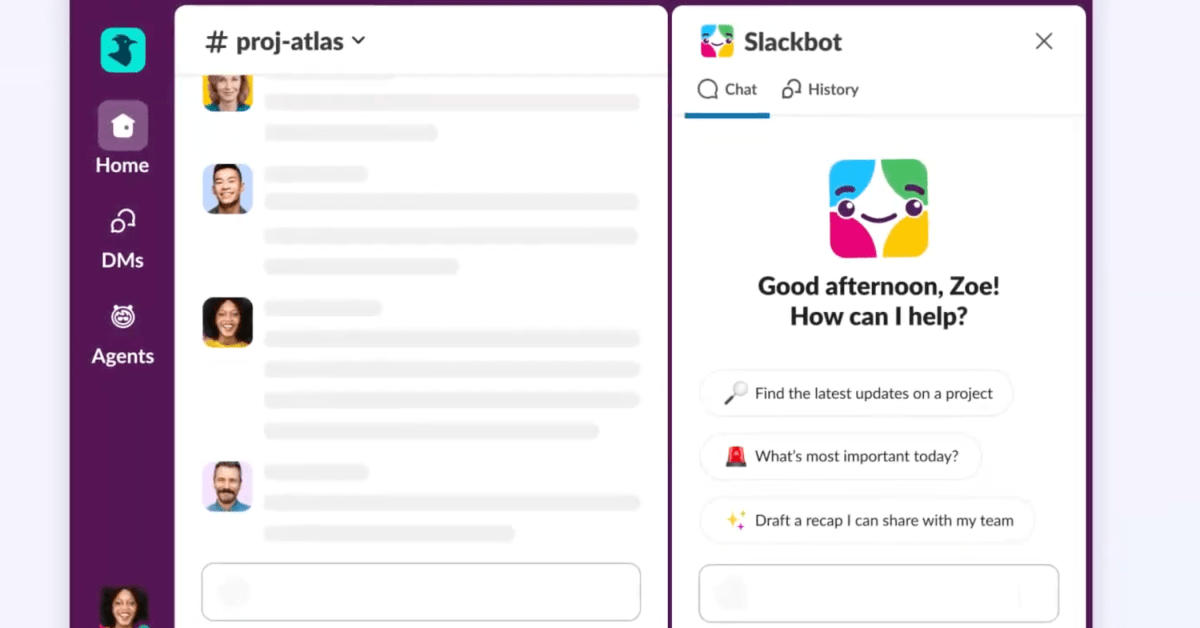
On Oct 14, 2025 The Verge disclosed that Slack is transforming the classic Slackbot into an "AI companion" and has begun piloting it with some customers. The new Slackbot will no longer be just an automatic reply or scheduled reminder tool; it will proactively extract information from your channel conversations, workspace settings and stored files to provide teams with context‑aware suggestions and actions.
In detail, Slack says the AI companion can perform a variety of tasks: generate concise summaries for busy channels, distill to‑dos from historical conversations and create follow‑up messages, draft or polish text to send to specific channels or individuals, and prioritize more targeted results in searches using context. Unlike traditional keyword search, the new Slackbot combines conversation history, file contents and workspace metadata to try to understand "who is doing what and how to move things forward." In the pilot phase, Slack limits the features to invited companies and teams, and administrators have more granular permission controls.
The report emphasizes that enterprise IT can decide which channels or files the AI may access, whether to enable capabilities for everyone, and retention policies for generated content. Slack also pledges to provide administrators with audit and compliance tools to see when the AI read specific data and what recommendations it produced. In terms of integration, Slack embeds the new Slackbot into existing workflows and shortcuts: you can click next to a message to invoke the AI to generate a reply draft, or use quick commands to request a summary of a channel. Slack is also exploring linking the AI with existing workspace automations (such as Workflow Builder) so that AI output can directly trigger the next steps instead of remaining only a suggestion. On privacy and data use, Slack frames the matter around enterprise control: the AI companion "extracts context from your conversations and files," but access permissions are set by workspace administrators.
The Verge's report did not disclose full underlying model details, nor did it make clear whether Slack will use usage data to train large‑scale models; such questions remain key concerns for enterprise customers evaluating the offering. The upgrade is interpreted as another move by Slack, after being acquired by Salesforce, to embed AI more deeply into its collaboration platform. Compared with office AI products driven by Microsoft, Google and others, Slack's advantage lies in its native ownership of conversational and team‑collaboration context, which can be closer to real‑time communication scenarios. However, actual effectiveness depends on two factors: the model's ability to extract valuable information from long, fragmented chat logs; and whether enterprise requirements for permissions and compliance will limit the AI's access to necessary context.
The Verge notes that Slack's current strategy is a phased rollout: first to teams and companies willing to try, to collect feedback and refine control mechanisms. For younger professionals, this change means chat tools may no longer just be message relays but become a "companion" that helps organize information, write templates and even remind you of missed tasks. But before broad deployment, issues around data transparency, usage boundaries and pricing still need further clarification between Slack and its customers.