
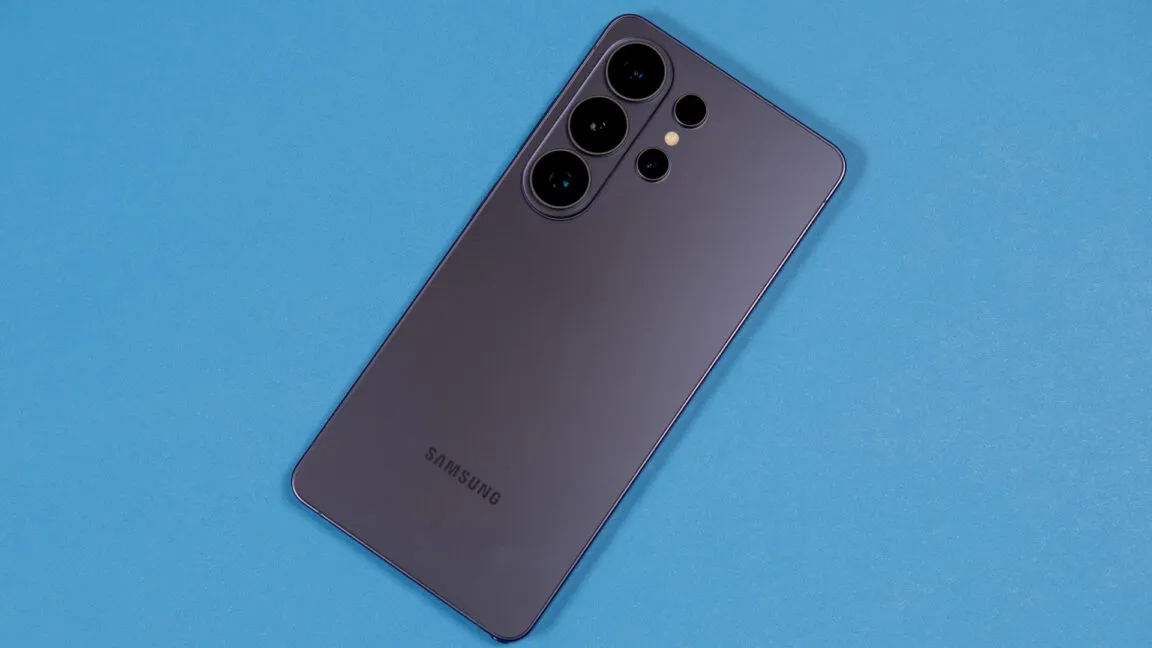
Late April 2026, Samsung Electronics faces a stark contrast between its business units: TM Roh (also transliterated Ro Tae‑moon), head of the Mobile eXperience (MX) division, warned company leadership that the smartphone business could record the division's first‑ever annual net loss, and even strong Galaxy S26‑series sales may not offset mounting cost pressure. At the same time, Samsung's Device Solutions (DS) semiconductor division has exploded under AI‑driven memory demand, with first‑quarter operating profit projected at KRW 57.2 trillion (about $38 billion), more than seven times year‑on‑year (some reports say eightfold), directly pushing Samsung Electronics' share price to repeated record highs.
The causal chain is clear and harsh: the AI boom has ignited global demand for DRAM and NAND flash, driving memory prices sharply higher and directly eroding smartphone manufacturing margins; the same memory business, however, has filled the semiconductor division's coffers, producing an internal "transfer" while external pressure mounts. Analysts such as Counterpoint Research note that by mid‑2026 RAM will account for over one‑third of bill‑of‑material costs in budget smartphones and exceed 20% even in high‑end models. The AI era has upended the traditional smartphone cost structure—where application processors and displays were once the biggest expenses, memory and storage costs have roughly doubled.
AI memory hunger: cost transmission from data centers to smartphones
The root cause is AI infrastructure's massive appetite for high‑bandwidth, low‑power memory—especially LPDDR5x. NVIDIA's next‑generation Vera AI CPU can be configured with up to 1.5TB of LPDDR5x memory per chip, and a rack‑scale AI platform equipped with 36 Vera CPUs and 72 Rubin GPUs would consume memory roughly equivalent to about 4,600 Galaxy S26 Ultra units (each standard with 12GB RAM). Nikkei Asia predicts that even with full capacity expansion, global DRAM supply could still be short by about 40% in 2027 unless AI demand slows significantly.
As the world's largest memory‑chip manufacturer, Samsung should in theory be a major beneficiary of this shortage, yet its smartphone business has become a direct casualty. The MX division must procure large volumes of LPDDR for the Galaxy lineup, and surging prices have compressed gross margins. Historically, Samsung's phone business remained profitable even through recessions and pandemic supply disruptions; this AI‑driven "memory crisis" may break that record.
To address cost pressure, Samsung has implemented price increases on several models: midrange Galaxy A37 and A57 up roughly $50; 512GB versions of the Z Flip 7 and Z Fold 7 up $80 each; Galaxy Tab S11 up $100. Competitors such as Motorola raised prices on budget Moto G series models by up to $50. However, it remains unclear whether these hikes can be fully passed on to consumers, particularly amid fierce competition in the premium foldable market and a saturated overall smartphone market.
Semiconductor division surge: Q1 profit hits record, memory contributes nearly 90%
In stark contrast to the smartphone outlook, Samsung's semiconductor business is benefiting from the AI tailwind. The company's Q1 operating profit guidance of KRW 57.2 trillion far exceeded analysts' earlier expectations of about KRW 40 trillion, representing a year‑on‑year increase of more than 755%. Memory generated the bulk of profits, with DRAM and NAND both posting record revenue. Analysts estimate that memory contributed roughly KRW 54 trillion to Q1 operating profit, accounting for the majority of the company's total profit (some estimates put it at 87%–90%), while the logic‑chip division registered a modest loss.
Samsung is accelerating capacity expansion—from LPDDR4 to LPDDR5 production—and, together with Micron and SK hynix, is stepping up investment in memory and storage lines. The company's 2026 semiconductor investment is at a record level, with some funds earmarked to meet AI customers' demand for high‑end products such as HBM (high‑bandwidth memory). Nonetheless, short‑term supply‑demand imbalances are likely to keep prices elevated.
This performance has directly benefited the stock. Samsung Electronics shares rose significantly after the Q1 guidance, contributing to substantial year‑to‑date gains and multiple record highs. Market optimism around an AI memory "supercycle" is pushing Samsung's valuation toward the trillion‑dollar mark. Investors appear to be prioritizing the semiconductor business's long‑term growth potential over short‑term pressure on the smartphone division.
Deep causal analysis: two sides of the same business
Samsung's dilemma is essentially the double‑edged sword of vertical integration. As a company with high self‑sufficiency in memory production, Samsung could in theory use internal transfer pricing to mitigate some pressure, but in practice it still faces market procurement costs, and the phone business must contend with intense price competition from Apple, Xiaomi, OPPO and others.
A deeper reason is the maturation of the smartphone market: shipment growth has slowed, product differentiation has weakened, and it is difficult to fully absorb raw‑material cost increases through scale. Although the Galaxy S26 series has been well received and delivered strong sales, premium foldables carry higher bill‑of‑material costs, amplifying the impact of memory price increases. By contrast, the semiconductor business is directly tied to AI data centers—a high‑margin demand side—and exhibits typical "price elasticity under a supply bottleneck": demand far exceeds supply, lifting profit margins substantially.
Industry observers note this divergence is not unique to Samsung. The entire smartphone supply chain is under memory‑shortage pressure, with budget models hit especially hard. If AI demand remains elevated, smartphone makers may need to optimize memory usage in design or shift further toward higher‑priced flagship strategies to preserve margins.
Potential impact and market outlook
For Samsung, a potential annual loss in the MX division will test the company's ability to reallocate internal resources. The company overall remains highly profitable, and semiconductor "transfers" may alleviate some pressure. But in the long term, sustained stress on the smartphone business could affect Samsung's ability to defend global market share, especially in emerging markets such as China where domestic brands are strong.
For investors, Samsung's strong share performance mainly stems from the semiconductor unit's clearer growth trajectory rather than the phone division. Multiple brokerages have raised target prices; optimists expect the company to reach record levels of operating profit for the year. The memory shortage is projected to last at least through 2027, implying Samsung's semiconductor "golden window" may continue while smartphone cost pressures remain difficult to resolve in the short term.
Broader industry lessons are clear: AI is reshaping cost and profit distribution across the electronics supply chain. Memory has become a strategic resource rather than a low‑profile component, and its price volatility transmits directly to consumer electronics. Consumers may face higher device prices, and manufacturers will need to balance innovation (such as AI‑enabled phone features) with cost control.
This episode highlights the complexity facing diversified tech giants—the same technology wave can create both crises and opportunities. The semiconductor business's success temporarily masks concerns in the phone division, but balancing coordinated development of these two core businesses will be a key challenge for Samsung's management. With the full Q1 report due at the end of April, the market will receive more detailed data to assess the depth of this "dual memory impact."
▶️ Enjoyed this article? Creating content is hard work!
Follow our YouTube channel:
AI Rosetta
Your likes, subscriptions and shares are our greatest support! 🙏
More AI news at: https://www.airosetta.com