
On 2026‑02‑25, according to reporting by The Information, Bloomberg and Reuters, Meta's core leader for AI infrastructure and base models, Ruoming Pang (庞若鸣), has officially left Meta to join OpenAI. The move comes just seven months after he left Apple to join Meta in July 2025. Reports say Ruoming Pang was granted a massive compensation package at Meta worth more than $200 million (including cash, equity and bonuses), but he ultimately chose to forgo that lucrative package to join OpenAI.
This high‑profile personnel change has reignited the powder keg of global AI talent competition and prompted renewed scrutiny of the mobility logic and pay ceilings for top AI talent.
Ruoming Pang's career path: from Apple to Meta, then to OpenAI
Ruoming Pang is a senior expert in AI infrastructure and base models, having worked at Google for many years and joining Apple in 2021 as head of its foundational models team, directly contributing to the core R&D of Apple Intelligence. He has also published more than 100 AI papers, with Google Scholar citations exceeding 54,000.
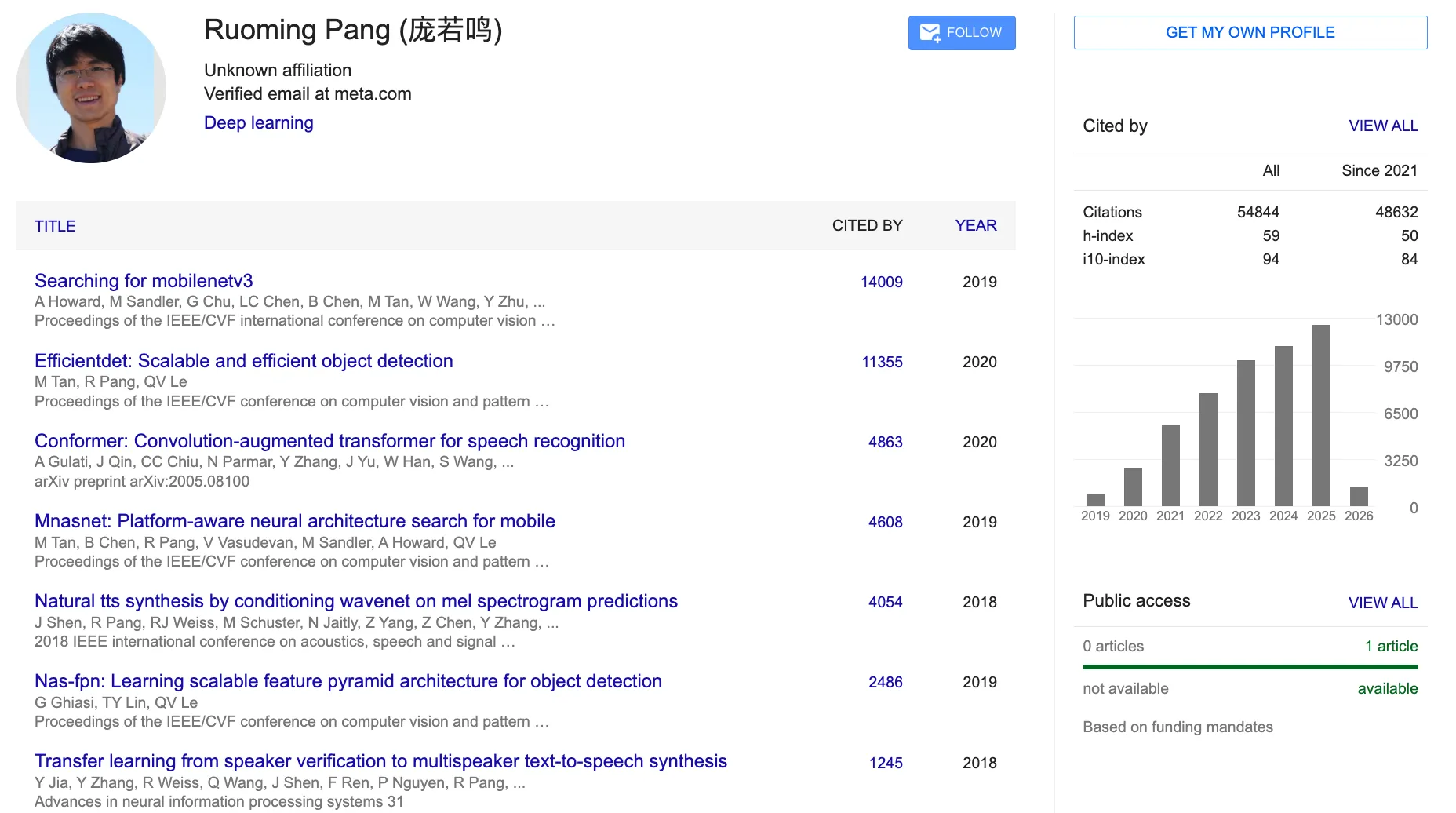
In July 2025, Meta lured him from Apple with a super‑sized compensation package worth over $200 million, appointing him to the newly formed "Superintelligence Labs" to lead AI infrastructure and base model development. At the time, the move was seen as a major win for Meta in its talent war with Apple.
However, only seven months later, Ruoming Pang made another surprising decision to join OpenAI. The Information, citing people familiar with the matter, reports that OpenAI offered highly competitive terms to attract him, including greater equity incentives and the opportunity to participate in core AGI projects. Meta attempted to retain him but ultimately failed.
Bloomberg reported that Ruoming Pang's departure is a significant blow to Meta, as he was regarded as one of the key figures in Meta's base model efforts and the construction of large‑scale training clusters.
Why give up $200 million? What attracts him to OpenAI?
A $200 million compensation package is astronomical in the tech industry, especially for an engineer or technical executive. But Ruoming Pang's decision appears driven by three main factors:
- OpenAI's AGI vision is more compelling OpenAI is pushing hard on the next generation of frontier models (GPT‑5.2 and beyond) with an explicit goal of AGI. As an infrastructure expert, Ruoming Pang values the historic opportunity to help "build general intelligence" over pure compensation figures.
- Differences in resources and platform OpenAI benefits from massive Azure compute support provided by Microsoft and Sam Altman's direct push for global data center expansion. While Meta is also heavily investing in AI, its focus is more weighted toward consumer applications and the metaverse, whereas OpenAI positions itself closer to "pure research and frontier breakthroughs."
- Industry trend of talent mobility In 2025–2026, top AI talent moved unusually frequently. Meta itself recruited many people from OpenAI, Anthropic and Google, and is now experiencing counter‑poaching, indicating the AI talent market has entered a zero‑sum, white‑hot phase. High pay is no longer the sole lever; platform vision, compute resources and research freedom have become increasingly critical.
Industry impact: the AI talent war enters a "big money + platform" dual‑drive era
Ruoming Pang's successive moves highlight the current frenzy in the AI talent market:
- Pay ceilings keep getting raised: Annual packages around $200 million far exceed traditional tech executive compensation and approach some public company CEO pay levels. Similar cases were frequent in 2025–2026, with Meta, OpenAI, Anthropic and xAI competing with multi‑billion‑dollar total packages to attract top talent.
- Platform and vision become core competitive advantages: High pay alone is insufficient to retain top talent. OpenAI, with a clear mission to "build AGI" and extensive compute resources, has become one of the most attractive platforms for leading talent.
- Direct impact on Meta: Over the past year Meta assembled a strong AI team through high pay, but repeated counter‑poaching by OpenAI of core personnel shows it still lags in attractiveness for frontier research. Mark Zuckerberg's push for the "Superintelligence Labs" now faces talent retention pressure.
The event also offers an important lesson for Chinese AI companies: in the global competition for top‑tier talent, high pay alone is insufficient; companies must build comprehensive competitiveness in mission, compute resources, research freedom and long‑term vision.
Conclusion: a "new normal" for AI talent mobility
From Apple to Meta to OpenAI, Ruoming Pang completed two remarkable moves in seven months, demonstrating that in the AI era of 2026, top talent mobility has entered a new stage driven by platform attractiveness and mission alignment.
A $200 million compensation package could not retain him; OpenAI countered with a more forward‑looking vision and resources. This is not only a personal career choice but also a microcosm of shifting industry talent competition.
Looking ahead, as the AGI race deepens, sky‑high poaching with "million‑dollar salaries + hundreds‑of‑millions equity" will likely become more frequent, and those able to retain top talent will be platforms with clear long‑term vision, abundant compute resources and open research environments.
▶️ Like this article? Creating content is hard work!
Follow our YouTube channel:
AI Rosetta
Your likes, subscriptions and shares are our greatest support! 🙏
For more AI news visit:
https://www.airosetta.com