
This week, the GitHub Trending list was dominated by an open‑source project called REA (Reverse Engineer Anything). The project, initiated by developer morluto, saw its stars surge from a few thousand to over 80,000 in a matter of days, with daily increases reaching more than 25,000 at peak, becoming one of the most watched developer tools in October 2026. REA's core positioning is: achieving full‑chain reverse engineering from application behavior to native binaries via AI Agents, enabling ordinary developers to dissect software implementations like experts using programming assistants such as Claude Code, Cursor, and Codex.
Details
REA, short for "Reverse Engineer Anything", is released under the MIT license, mainly written in TypeScript, and published as the npm package rea‑agents. It is not a traditional disassembler or decompiler, but a MCP (Model Context Protocol) server that wraps professional reverse‑engineering tools like Hopper, Ghidra, IDA, and Apktool into standardized interfaces for direct AI Agent calls.
How it works:
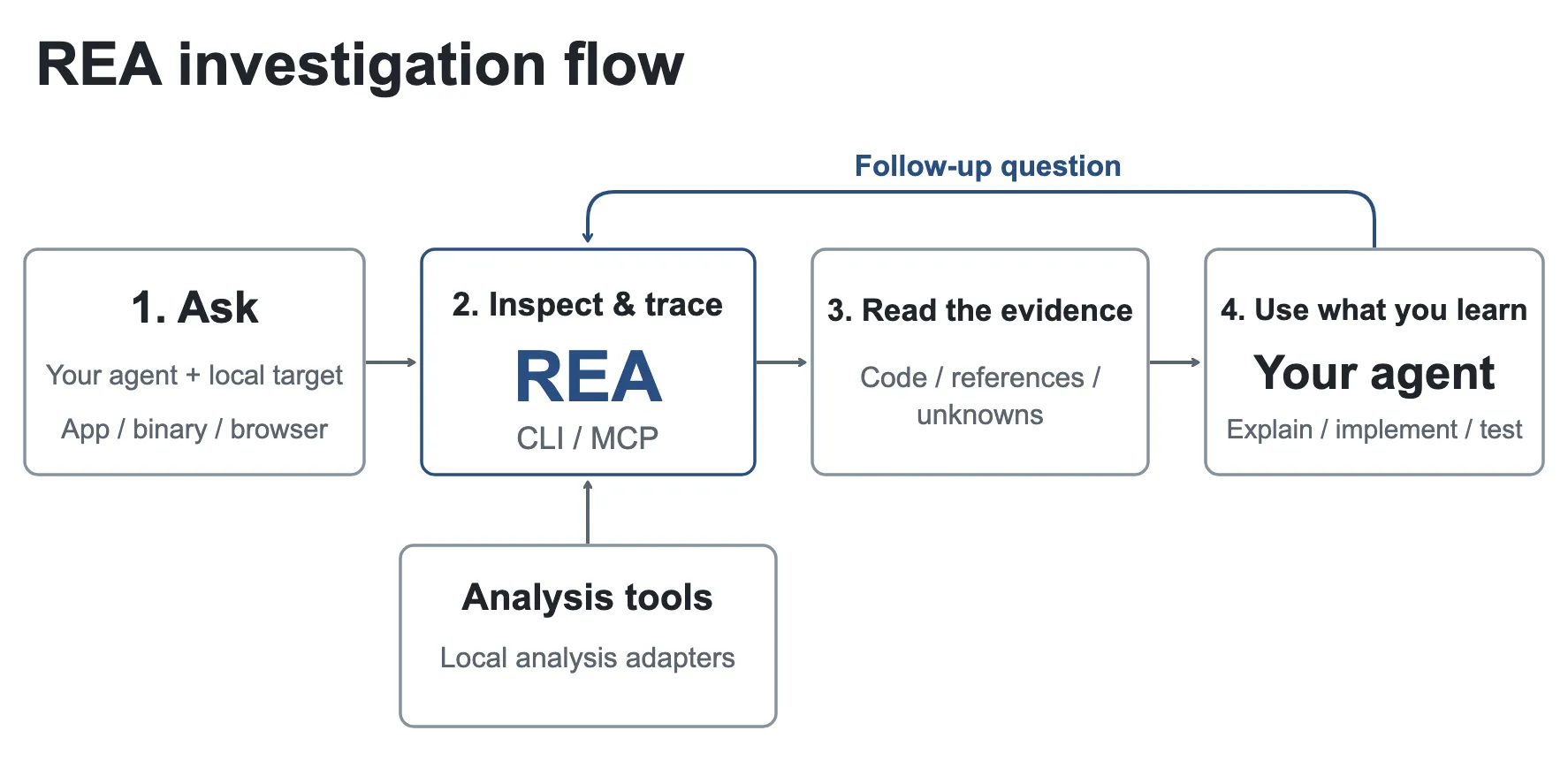
- A user issues a natural‑language instruction (for example, "Analyze how the login feature of this Electron app is implemented"), and an AI Agent can call any of the more than 40 tools provided by REA.
- REA runs analyses locally and returns evidence‑backed results (file offsets, confidence scores, clearly labeled "unknowns"), avoiding large‑model hallucinations.
- It supports conversational iteration: an Agent can first get an overview, then trace strings, cross‑references, and call graphs, and finally obtain pseudocode and assembly to reconstruct functionality in their own project.
Supported analysis targets include:
- Native binaries (ELF, PE, Mach‑O, etc.), using Hopper, Ghidra, or IDA to obtain pseudocode, assembly, symbols, and references.
- JavaScript/Electron apps (including ASAR unpacking and source recovery).
- .NET assemblies and Android APKs (including ADB device interaction and manifest parsing).
- Websites, firmware, EVM bytecode, and more.
Installation is extremely simple: run npx rea‑agents setup to automatically register with Agent environments such as Claude Code, Cursor, Codex, Gemini CLI, and GitHub Copilot CLI. Analyses run entirely locally and include evidence chains and limitations for human review.
The project is updated rapidly; as of October 11 it had released v6.4.0, adding Android device detection, JEB support, large‑scale analysis optimizations, and Ghidra Windows PE support. The official documentation is comprehensive and provides multilingual READMEs and showcase cases.
Three examples
Example 1: reverse‑engineering a mobile authenticator to recreate the OTP algorithm
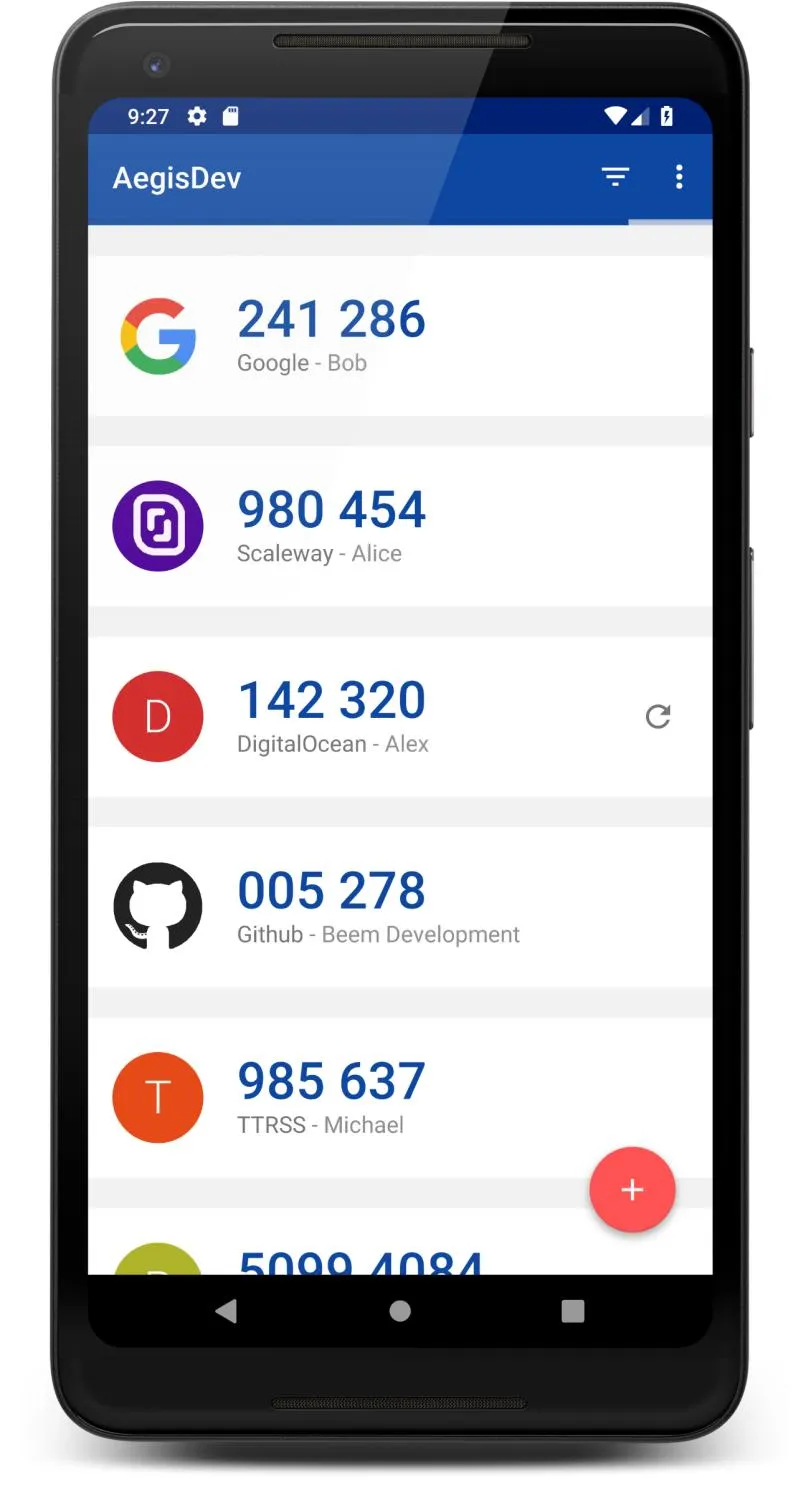
Scenario: investigating how an Android app generates one‑time passwords.
REA's public case analyzed the Aegis Authenticator APK. Facing an app containing about 3,077 classes, REA helped a programming Agent locate the OTP calculation method, trace call relations, and ultimately reconstruct a demonstration program that allows manual clock adjustment. The public case report says the reconstructed program passed 133 test cases and matched RFC 6238 reference tests.
REA: view the full case
This example illustrates that REA's value is not having AI guess how a program works but having it find evidence in actual code and call relations, then reimplement verifiable behavior.
Example 2: analyzing how the Notion desktop app copies rich text
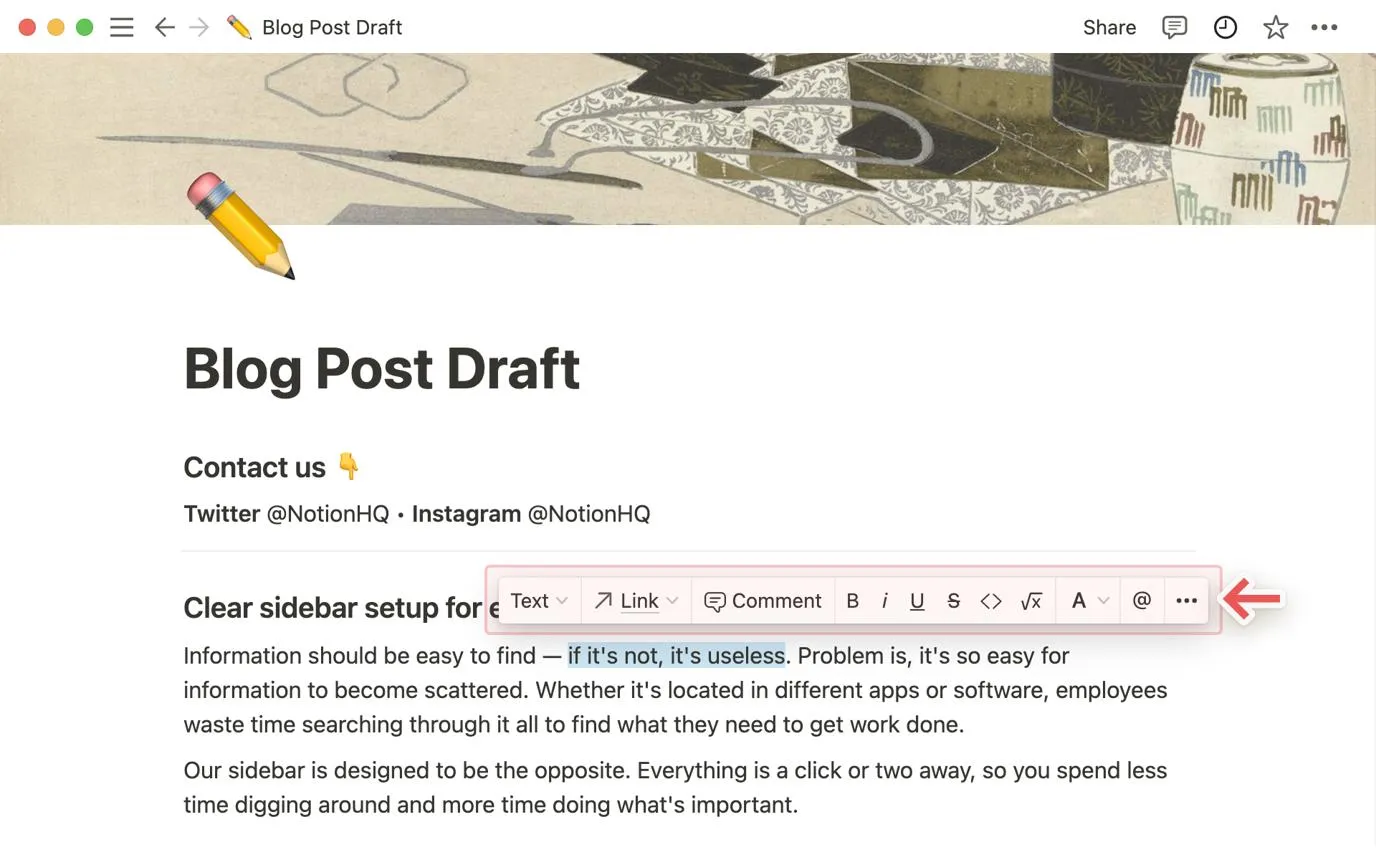
Scenario: implementing a similar copy feature in your own note‑taking app.
Reading the UI alone makes it hard to know which modules the copy operation goes through. REA's public case traced Notion's bundled JavaScript from page‑invoked APIs through Electron inter‑process communication (IPC) and the system clipboard, and analyzed an HTML markup used to preserve rich‑text block data associations.
In practice, you can have Codex or another supported programming Agent use this evidence to implement similar copy functionality in your React, Electron, or regular web app. The emphasis is understanding the original behavior and data flow, not copying the UI.
Example 3: recovering computation logic from an old game's binary
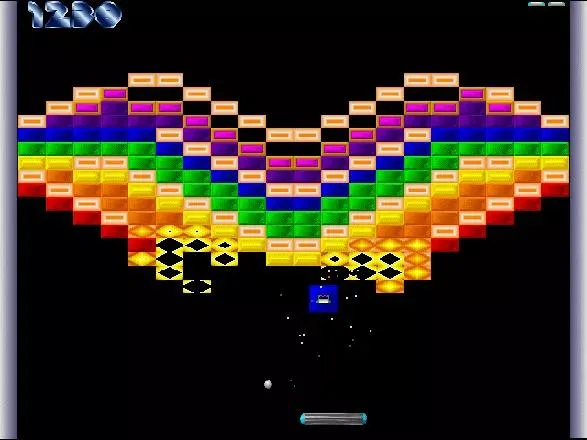
Scenario: only an executable is available and no source code—how to recover a game function?
Another public REA case analyzed the audio panning computation logic of the classic Windows game DX‑Ball. Using disassembly information, function call relationships, and numeric constants, it reconstructed a small C function and validated the rebuilt behavior against the original program. The case also reports verifying all 63 related compiled bytes.
This example shows REA can assist analysis of native binaries as well as JavaScript apps, though binary analysis usually requires additional configuration of tools like Ghidra, Hopper, or IDA.
Potential impact
1. Greatly lowers the barrier to reverse engineering
Traditional reverse engineering requires expert toolchains, assembly knowledge, and lengthy manual analysis. REA converts this process into "a natural‑language query + Agent execution", allowing front‑end, full‑stack, or product engineers to quickly understand competitors' implementations or legacy system logic, significantly improving developer efficiency.
2. Pushes AI Agents from "writing code" to "understanding code"
Most current programming Agents excel at generating and modifying code but have limited understanding of binaries and closed‑source implementations. REA injects real tool capabilities into Agents through MCP, giving AI the ability to "understand how software works" and potentially becoming a key infrastructure for the Agent ecosystem.
3. New challenges for commercial software and IP
The project's rapid popularity raises discussions: when AI can easily dissect application behavior and native implementations, closed‑source software's "black box protection" is significantly weakened. Companies may face risks of rapid feature replication, and the compliance boundaries for reverse research and security audits need redefinition.
4. Dual effects on open‑source and security communities
For security researchers and CTF players, REA provides a reproducible, collaborative analysis pipeline; for malware analysis and vulnerability hunting, the local+evidence‑chain design helps increase credibility. But it can also be misused, so the community and platforms should strengthen guidance on responsible use.
5. A benchmark MCP use case
REA is a successful example of Model Context Protocol in practice, proving the "tool wrapping + Agent invocation" pattern can quickly yield practical value. Similar vertical MCP servers (security, data analysis, design, etc.) may emerge in large numbers in the future.
Conclusion
REA's virality is not accidental. It precisely addresses a core pain point of developers in the AI Agent era—how to make AI truly understand and dissect existing software rather than remain at the text level of code generation. By connecting professional reverse tools through a local MCP server, REA transforms reverse engineering from an expert skill into a conversational, iterative everyday capability.
With star counts continuing to climb and rapid feature iteration, REA is poised to become one of the infrastructures for AI‑assisted software understanding. Its improvement to developer productivity is clear, and it also raises new questions about commercial software protection and security compliance. For those interested in AI Agents, reverse engineering, or developer tools, this is a project worth following.
Project: https://github.com/morluto/rea
▶️ Enjoy this article? Creating content is hard!
Follow our YouTube channel:
AI Rosetta
Your likes, subscriptions, and shares are our greatest support! 🙏
More AI news at: https://www.airosetta.com