
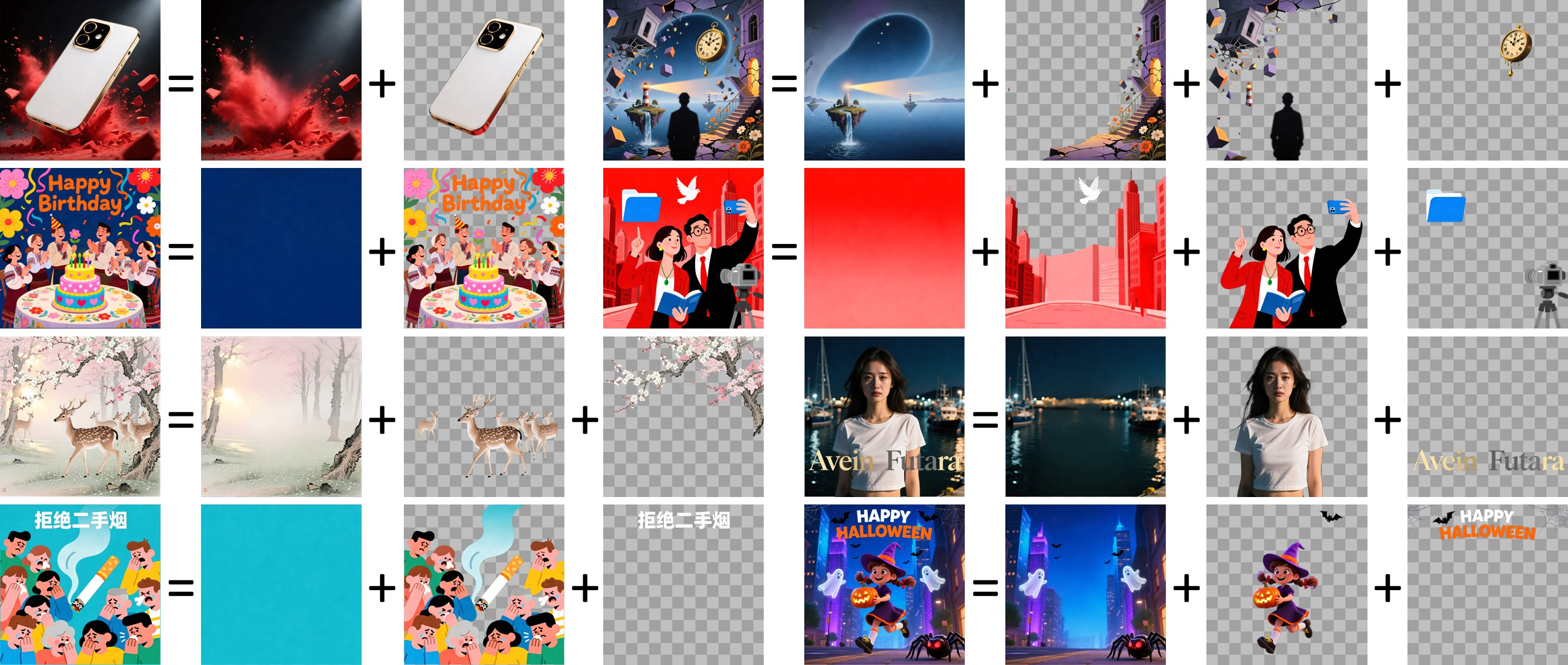
On December 19, 2025, Alibaba's Qwen AI team officially released its latest image‑processing model, Qwen‑Image‑Layered. Built around an end‑to‑end diffusion mechanism, the model can decompose a single RGB image into multiple semantically separated RGBA layers, enabling inherent editability. The open‑source version of Qwen‑Image‑Layered is now available on the Hugging Face platform for free download and testing. The release quickly sparked discussion in AI and image‑processing communities, with many experts saying it bridges the gap between traditional raster images and structured, editable representations, potentially reshaping content creation and digital design. The arXiv paper "Qwen‑Image‑Layered: Towards Inherent Editability via Layer Decomposition for Images" details the model's architecture and technical design, highlighting advances in editing efficiency and semantic accuracy.
Qwen AI Background and Model Evolution
Qwen AI is an open‑source large‑model series developed by Alibaba's DAMO Academy. Since 2023, the team has released multiple versions, including Qwen‑1.5, Qwen‑2 and Qwen‑3, covering text, code and multimodal tasks. As one of China's leading AI open‑source projects, the Qwen series has amassed hundreds of millions of downloads on Hugging Face and is widely used in chatbots, content generation and enterprise solutions. Qwen‑Image‑Layered is the latest result from the Qwen image‑processing branch, continuing the team's exploration of multimodal AI.
Previously, Qwen image models such as Qwen‑VL focused on visual‑language understanding, while Qwen‑Image‑Layered shifts attention to image decomposition and editing. In an official blog, the team said the model was inspired by user demand for image‑editing tools: traditional tools like Photoshop require manual layer separation, whereas AI should provide automation and intelligence. Reddit discussions in the StableDiffusion subreddit noted that this open‑source release marks Qwen's move from pure generation toward structured editing, filling a gap in AI image tooling.
Core Techniques and Feature Highlights
Qwen‑Image‑Layered is an end‑to‑end diffusion model that decomposes an input image into multiple high‑quality, semantically separated RGBA layers. Each layer contains an alpha channel allowing independent edits without affecting other layers. For example, a user can move or recolor a "person" layer while leaving the background layer unchanged. Unlike traditional segmentation tools that only identify objects, Qwen‑Image‑Layered produces complete editable layers that support transparency and semantic consistency.
The model was trained on large‑scale datasets and incorporates semantic disentanglement techniques to ensure independence between layers. Demonstration videos on YouTube show applications: given a complex scene as input, the model outputs multiple layered files that users can easily edit in tools such as GIMP. Reviews on the ComfyUI Wiki note that Qwen‑Image‑Layered decomposes scenes faster than comparable models, supports commercial licenses, and is suitable for professional design use.
When integrated with other Qwen models, it can work with Qwen‑2 to enable text‑guided decomposition, such as "decompose the image into person, background and object layers." Guides on DEV.to emphasize the model's revolutionary idea that "structure is the new pixel," turning flat images into composable hierarchies. Hacker News discussions noted that its handling of alpha channels outperforms tools like Flux or Krea.
Comparison with Competitors
The AI image‑editing market is highly competitive. Qwen‑Image‑Layered directly challenges Adobe Firefly, Stability AI's Stable Diffusion and Midjourney. Adobe Firefly focuses on generation, while Qwen emphasizes decomposition and editing; Stable Diffusion is open‑source but its layer separation is not as fine‑grained. Tests on Fal.ai indicate that Qwen‑Image‑Layered leads in semantic accuracy and supports end‑to‑end inference.
Compared with ChatGPT or DALL·E, Qwen's model concentrates on structured outputs rather than pure generation. The Qwen team says its open‑source approach fosters community innovation; Hugging Face downloads have already reached tens of thousands.
Use Cases and Potential Impact
Qwen‑Image‑Layered has broad applications. In digital design, it simplifies post‑processing by enabling quick element separation and improving efficiency. In game development, it can be used for asset editing; in e‑commerce, it supports product image customization. YouTube demonstrations highlight that independent layer editing avoids interference issues common with traditional tools.
The industry impact could be profound. TechCrunch notes the model advances AI toward editable content, lowering the professional threshold. However, challenges remain: the model requires more training data to optimize edge cases such as complex lighting, and there are ethical risks, including misuse for generating deceptive images.
Looking Ahead
The release of Qwen‑Image‑Layered strengthens Alibaba's leadership in AI open source. The team plans to extend the approach to video decomposition and may release a multimodal version in 2026. As AI image tools mature, this model could become a benchmark in the editing field and drive change across creative industries.
▶️ Enjoy this content? Creating takes real effort!
Follow our YouTube channel:
AI Rosetta
Your likes, subscriptions and shares are our greatest support! 🙏
More AI news at: https://www.airosetta.com