
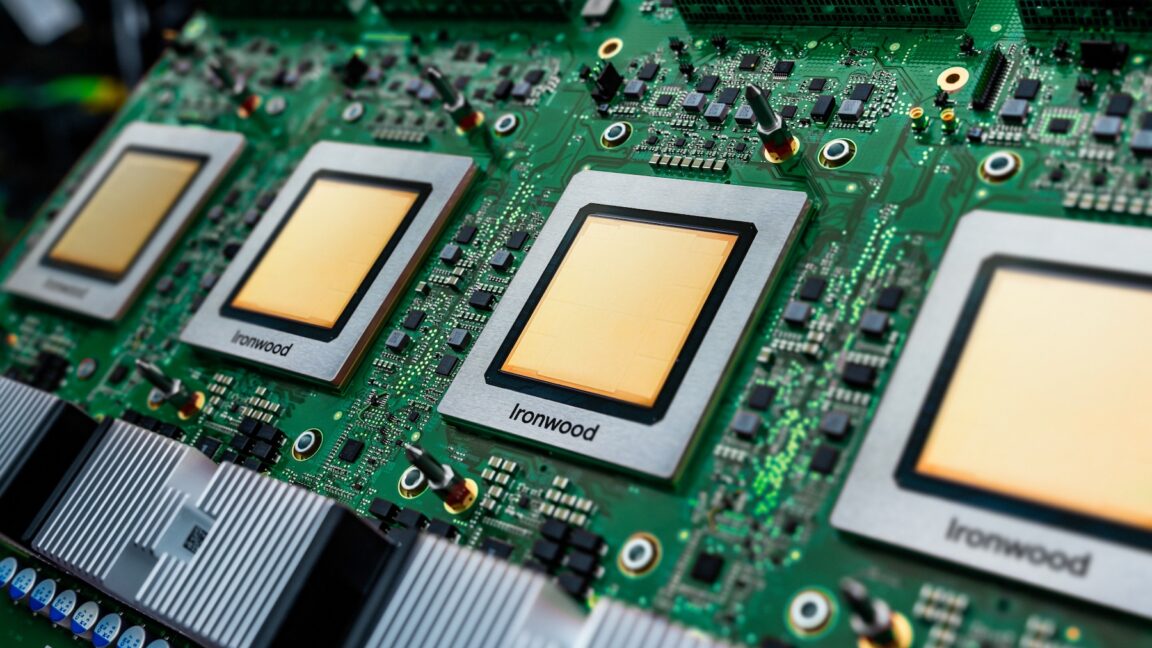
As AI compute demand exploded in November 2025, Google launched Project Suncatcher, formally ushering in an era of space‑based data centers. The ambitious plan aims to deploy AI accelerator chips on low Earth orbit satellites, using virtually unlimited solar energy and radiative cooling in space to address power and thermal limits faced by terrestrial data centers. Google CEO Sundar Pichai posted on X: "We have tested TPU radiation tolerance, but thermal management and orbital reliability remain challenges." The announcement immediately sparked global debate: Elon Musk quickly replied that SpaceX would pursue similar plans, while Chinese actors had already launched initial AI satellite constellations earlier in the year. With AI power consumption projected to reach the equivalent of 22% of U.S. household electricity by 2028, space data centers could reshape a trillion‑dollar computing ecosystem.
Project blueprint: how TPU satellites could 'feed' AI's power hunger
Google’s vision stems from AI’s growing "energy sink." According to MIT Technology Review, a single large‑scale AI training run such as GPT‑4 can consume electricity comparable to thousands of households for a year. Conventional data centers rely on fossil fuels and water cooling, driving emissions up and facing land scarcity. Project Suncatcher takes computation to orbit: deploying satellite swarms with each satellite carrying Google’s in‑house Tensor Processing Units (TPUs) optimized for training, content generation, speech synthesis, and predictive modeling.
The core architecture includes:
- Solar power: Satellites are placed in a polar orbit along the day–night terminator so solar panels are illuminated year‑round, delivering up to eight times the surface‑level output on Earth and reducing or eliminating battery storage needs.
- Space radiative cooling: TPU waste heat is directly radiated into the vacuum via radiators, avoiding water use for cooling.
- Laser interconnects: Free‑space optical links between satellites provide near‑light‑speed, low‑latency communications to form a distributed data center. Google simulations show 81 satellites (spanning a 2 km diameter formation) could aggregate terawatt‑level compute to support large‑scale AI workloads.
Project lead Travis Beals told Ars Technica: "Terrestrial data centers take in power and dump heat; satellites are the inverse—solar input, heat radiated to space." Google has ground‑tested TPUs against 67 MeV proton radiation (simulating five years of orbital dose), demonstrating chip resilience. In early 2027 two prototype satellites will launch in partnership with Planet, an Earth‑imaging company in which Alphabet holds equity, to validate laser links and AI workloads and accelerate prototype iteration.
The idea reads like science fiction but is grounded in engineering. Google’s research papers emphasize that SpaceX’s Starship could drive launch costs below $200/kg by 2035, enabling scale. Versus monolithic surface projects such as Starcloud and Nvidia’s large single sites (5 GW, 4 km solar arrays), Google prefers a "satellite swarm"—many small satellites that are easily scaled and highly redundant.
Musk enters: Starlink as an orbital AI 'factory'
Shortly after Google’s announcement, SpaceX founder Elon Musk responded on X that SpaceX would advance similar efforts. In October Musk publicly said the next‑generation V3 Starlink satellites could be expanded into orbital data centers by incorporating compute modules. With Starlink already exceeding 8,000 satellites and mature laser link capabilities, the network could be upgraded into distributed AI nodes. Musk frames this as a solution to AI’s terawatt‑scale power needs: orbit offers virtually unlimited solar energy and effortless cooling.
Analysts say Musk’s involvement raises industry attention. Yahoo Finance reported that SpaceX’s move could boost AI‑related ETFs by opening a new frontier in orbital computing. Unlike Google’s TPUs, SpaceX may integrate Nvidia GPUs to build a Starlink+AI closed loop. Musk told a YouTube interview: "AI needs terawatt‑scale power; space is the only way out." Google’s equity stake in SpaceX (reported at 7%) could make the companies collaborative launch partners.
China ahead: Adaspace constellation leads orbital AI experiments
In the space AI race, China has already made early moves. In May 2025 startup Adaspace launched an initial 12 AI cloud satellites and announced a plan for a 2,800‑satellite constellation. Those satellites carry domestic AI processors, laser communications, and distributed computing to support real‑time processing for applications such as Earth observation.
In June, China Aerospace Science and Technology Corporation followed with the first cluster of an AI supercomputing constellation. Live Science notes this effort was enabled by upgrades to relay systems: inter‑satellite laser links with bandwidths up to 100 Gbps, far exceeding terrestrial fiber in some scenarios. Pamir LLC’s blog argues China’s experiments place it among space computing leaders, with ambitions to meet Belt and Road data demands by 2030. Similar to Google’s swarm approach, China emphasizes modularity: each satellite handles small tasks while the cluster aggregates compute.
China’s advantage includes lower launch costs: a Long March 3B launch can be roughly half the cost of a SpaceX Falcon 9. However, radiation hardening and international spectrum coordination remain challenges. A Cutter Consortium report notes China holds a significant share of global space‑AI patents but still faces U.S. and European export control hurdles.
Global impact: opportunities and concerns intertwined
Orbiting data centers could unlock a trillion‑dollar market: Network World predicts orbital AI will enable real‑time satellite‑data analytics to aid climate monitoring and defense. Competition among Google, SpaceX, and Chinese actors may further reduce launch costs and drive iterations of Starship and Long March. Aviation Week dubbed this trend a "Silicon Valley lunar sprint"—where innovation and investment move in tandem.
Risks remain significant: orbital congestion (Starlink has already raised debris alerts), radiation effects on AI accuracy, and ground‑segment transmission bottlenecks. Forbes noted that although China has experimented with underwater data centers, the space variant carries greater strategic weight. Regulatory issues such as ITU spectrum allocation and provisions under the UN Outer Space Treaty will become focal points.
Conclusion: an era of AI's 'space leap'
Project Suncatcher, a potential Starlink upgrade and China’s Adaspace constellation together sketch a space‑based future for AI compute. Beals is optimistic: "Demand is limitless, and so is orbit." With AI investment topping $500 billion in 2025, space could become the ultimate solution. But as Asimov’s fiction warns, technology needs humane stewardship—sustainable and equitable approaches will be essential to light the way to the stars. The 2027 prototype launches will reveal who first "switches on" orbital AI at scale.