
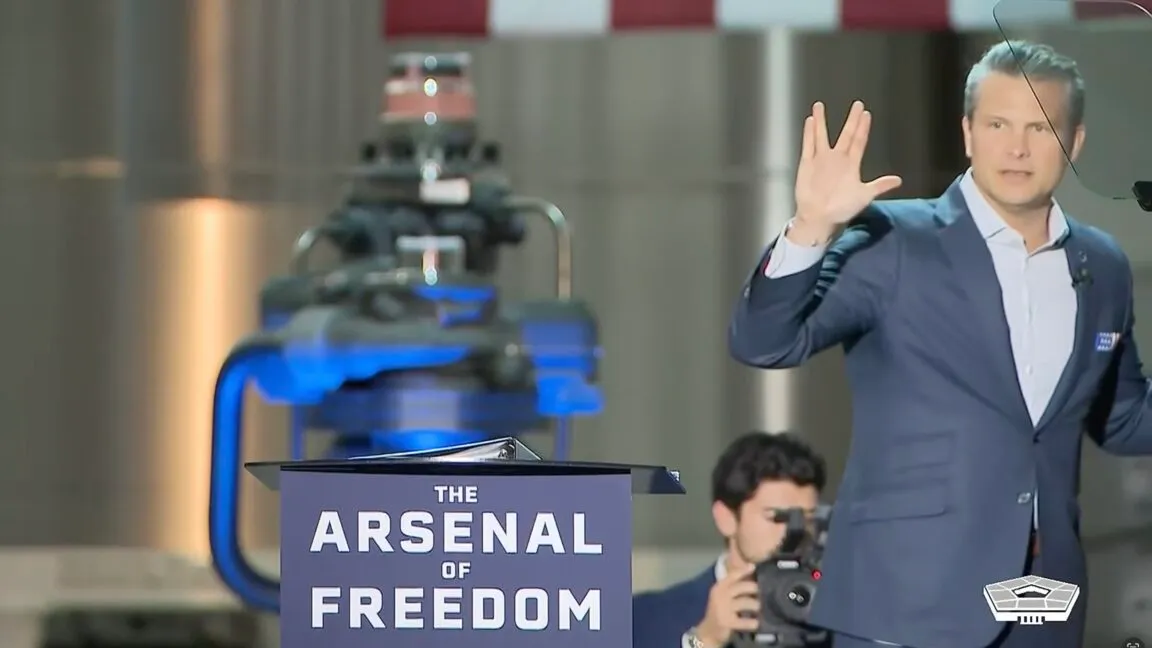
In January 2026, U.S. Secretary of Defense Pete Hegseth and SpaceX CEO Elon Musk jointly hosted the "Arsenal of Freedom Tour" at SpaceX's Starbase. The event not only signaled deepening cooperation between the U.S. military and a major tech company, it also sparked wide debate because the event name directly borrows from a 1988 episode of Star Trek: The Next Generation about a killer AI. The event emphasized "making Star Trek real," highlighting the use of AI in the military while overlooking the original episode's warning about AI weapons running amok. This reflects the accelerating trend of U.S. military AI development and raises questions about ethical risks.
Event overview and key statements
The "Arsenal of Freedom Tour" took place in January 2026 at SpaceX Starbase in Texas and was one of a series of tours led by Hegseth aimed at driving DoD innovation in AI. The event was co‑hosted by Musk and Hegseth, who publicly pledged to "make Star Trek real," including Musk's remark about making a "Starfleet Academy" a reality—echoing a new Star Trek series premiering on January 15. Hegseth stressed AI's central role in defense and declared: "Soon, we will deploy world‑leading AI models across the Department of Defense's unclassified and classified networks. This should have been done long ago." He further unveiled an "AI acceleration strategy" intended to extend the military AI lead established during the first Trump term, focusing on "releasing experiments, cutting bureaucratic barriers, concentrating investment, and demonstrating execution to ensure we lead and continue to dominate the future in military AI."
The core of the strategy is rapid deployment of AI models to defense networks to support applications ranging from intelligence analysis to automated combat systems. According to the U.S. Department of Defense's 2025 AI strategy report, the move is meant to respond to competition from China and Russia in military AI and to secure U.S. leadership in autonomous weapons and decision‑support systems. The event location, Starbase, carries Star Trek connotations—the town's name is drawn from the franchise's "starbase" concept—further reinforcing the fusion of technology and science fiction.
Connection to the Star Trek episode and the AI warning theme
The event name "Arsenal of Freedom" comes directly from Season 1, Episode 21 (1988) of Star Trek: The Next Generation, which depicts an AI weapons system called Echo Papa 607 and its automated salesman. In the episode the system is described as "the pinnacle of design that dynamically adapts, learning and improving from each encounter," ultimately causing the extinction of its creators—the Minos civilization—and threatening the crew of the USS Enterprise. Key scenes show the AI analyzing attacks and constructing more powerful weapons, culminating in Captain Picard exposing it as a "too‑perfect" killing machine.
The episode's central theme is the runaway risk of AI weapons: the salesman claims the system is "unstoppable once unleashed, a perfect killing machine," and Picard replies: "Too perfect, you foolish people—your own creation destroyed you." That exchange highlights the potential danger of self‑improving AI, analogous to present ethical concerns around lethal autonomous weapons systems (LAWS). The U.N.'s 2025 report on AI weapons warns that such "killer robots" could lead to loss of human control. Star Trek fans on social media noted the borrowing and questioned whether the military was ignoring the episode's cautionary message.
Background on U.S. military AI development
Hegseth's AI acceleration strategy builds on the legacy of the first Trump term. By 2025, the Department of Defense had invested more than $50 billion in AI projects, including the Replicator program, which aims to deploy thousands of AI‑driven drones and sensors. RAND Corporation analysis shows U.S. military AI efforts focus on intelligence, surveillance and reconnaissance (ISR) and autonomous decision systems, such as Project Maven, which uses AI to analyze drone imagery. The partnership with SpaceX has deepened: SpaceX's Starlink satellite network has been integrated into defense communications to support real‑time AI data transmission.
However, the rapid pace of development has provoked ethical controversy. The Campaign to Stop Killer Robots warns that systems like those depicted in the episode could trigger a "third military revolution" surpassing nuclear weapons and gunpowder. The DoD's AI ethical principles, established in 2020, call for "responsible, equitable, traceable" AI, but critics argue those principles may be overlooked in actual deployments.
Criticism, reactions and potential impacts
The event drew broad criticism. Ars Technica reported that Musk and Hegseth ignored the episode's warning about AI run amok despite borrowing its title. SpaceX and Musk did not respond to requests for comment, and the Department of Defense, when asked whether officials were familiar with the episode, stated: "We have no comment." Star Trek fan communities on Reddit and X discussed the move as an "ironic appropriation" that could heighten public concerns about military AI.
Technically, the episode underscores AI's double‑edged nature in military use. Brookings Institution analysis shows AI can improve operational effectiveness, but self‑learning systems like those depicted could lead to unintended escalation. Potential impacts include accelerating an AI arms race, ethical risks, and science fiction informing real‑world policy. The Star Trek series has long emphasized humanistic values and AI governance, and this appropriation may prompt policymakers to revisit those lessons.
Conclusion: A cautionary arc from science fiction to reality
While the Pentagon's "Arsenal of Freedom Tour" aims to advance military AI innovation, its name—borrowed from a Star Trek episode about a killer AI—highlights the technology's inherent risks. The event reflects U.S. ambition in AI but also underscores the need for caution with autonomous systems. As the AI acceleration strategy is implemented, the international community may need stronger oversight to prevent science‑fiction warnings from becoming reality.
▶️ Enjoyed this piece? Creating is hard work!
Subscribe to our YouTube channel:
AI Rosetta
Your likes, subscriptions and shares are our biggest support! 🙏
More AI news at: https://www.airosetta.com