
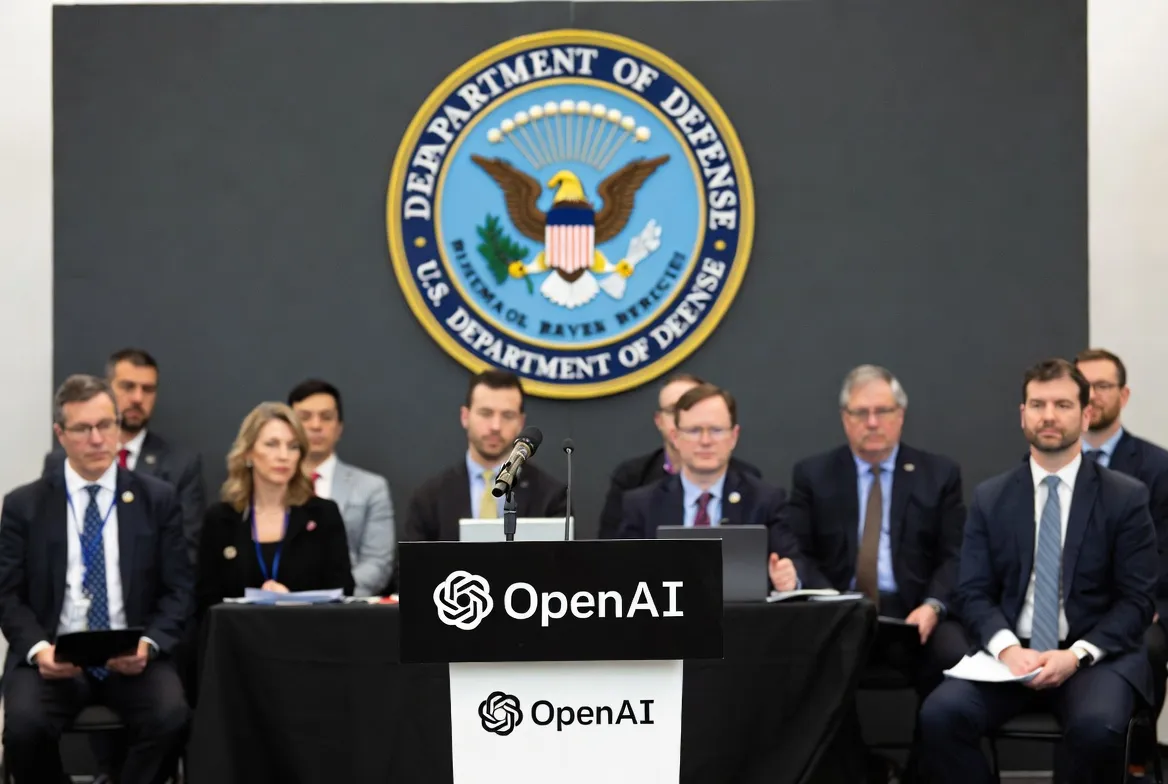
 In 2026, as artificial intelligence advanced rapidly, a controversy over military uses of AI swept the global tech community. On February 27, according to CNN Business, OpenAI formally reached a cooperation agreement with the U.S. Department of Defense (the Pentagon) allowing the Defense Department to use its AI tools to develop cybersecurity capabilities and support non‑lethal tasks. The agreement was announced just hours after competitor Anthropic explicitly declined a similar request, and it quickly drew strong criticism from AI ethicists, employee protesters and the public. An internal letter from OpenAI staff circulated on X, accusing the company of "abandoning its commitment to human welfare"; industry figures such as Elon Musk publicly mocked OpenAI for "opening the door to the military." The episode not only revealed divisions within AI companies but also highlighted the difficult tradeoffs tech giants face between national security and ethical boundaries. Based on reporting by CNN, The Information, Reuters and OpenAI's official statements, this article examines the background, details and implications of the agreement.
Anthropic's refusal: Upholding a "no military use" line
The episode traces back to earlier on February 27, when the U.S. Department of Defense, via its Defense Innovation Unit (DIU), invited multiple AI firms to collaborate on projects aimed at improving cyber defense and intelligence analysis. Anthropic, known for its safety‑focused approach, promptly declined. In an internal memo, CEO Dario Amodei reiterated that Anthropic's policy clearly prohibits any military or warfare‑related applications, even in non‑lethal areas. Anthropic’s "Constitutional AI" framework emphasizes that model behavior must align with human‑welfare principles, and the refusal was seen as a continuation of that responsible‑AI stance.
Reuters reported that Anthropic's decision stemmed from its founders' concerns about potential misuse of AI. As early as 2024 the company publicly pledged not to develop AI systems for the Department of Defense, and it had declined similar cooperation in 2025. That position won praise from some ethicists but pushed the Defense Department to seek other partners.
OpenAI's agreement: A policy shift from "ban" to "cautious cooperation"
In contrast to Anthropic's firm refusal, OpenAI announced on February 27 that it had reached an agreement with the Defense Department. According to OpenAI's official blog, the deal focuses on "cybersecurity tool development and open‑source software security improvements," stressing "non‑lethal, non‑intelligence‑collection uses." The agreement includes API access to the GPT model series for the Defense Department to use in cyber‑defense simulations and vulnerability detection, while explicitly excluding direct battlefield applications.
OpenAI said the collaboration follows a 2025 policy adjustment. The company had previously barred Defense Department use of its technology but revised its terms in mid‑2025 to permit "certain military applications" such as cybersecurity and humanitarian assistance. OpenAI Chief Policy Officer Anna Makanju stated: "We believe AI can enhance national security, but it must be done within a strict ethical framework." The agreement is reported to be worth hundreds of millions of dollars and involves technology transfer and joint research and development.
The Information reported exclusively that negotiations on the deal began in late 2025 and that the Defense Department committed to adhere to OpenAI's "responsible use guidelines." Nevertheless, the policy shift immediately provoked intense internal and external backlash.
Controversy storm: ethics, protests and industry rifts
After the agreement was announced, protests erupted within OpenAI. More than 500 employees signed a joint letter demanding the company "immediately end its cooperation with the Defense Department," saying the deal "betrays OpenAI's mission to benefit all of humanity." The letter argued that Defense Department use of AI could indirectly support military operations and thus violate earlier commitments. On X, the hashtag #OpenAIPentagonDeal quickly trended, attracting millions of shares.
Public criticism was equally strong. AI ethicist Timnit Gebru publicly condemned the move: "OpenAI has gone from ‘do no harm’ to ‘do harm for the military.’" Elon Musk mocked the company on X: "OpenAI is now 'Open War AI.'" Human rights group Amnesty International warned the collaboration could encourage misuse of AI in surveillance and conflict.
The episode also exposed industry divisions. Anthropic's refusal was lauded as a "moral benchmark," while OpenAI's "cautious cooperation" was seen as a pragmatic compromise. The BBC noted the incident illustrates the dual pressures AI companies face: on one hand, the U.S. government, through the Defense Innovation Unit, is actively encouraging AI adoption for defense; on the other, employees and the public are increasingly concerned about ethical limits.
Global impact: accelerating AI militarization and calls for regulation
The episode further accelerated the militarization of AI worldwide. The U.S. Department of Defense has partnered with several AI firms, such as Microsoft using Azure AI for intelligence analysis and renewed efforts around Google's Project Maven for drone imagery. OpenAI's participation helps the Defense Department expand its footprint in generative AI.
At the same time, the deal intensified broader ethical debates. The EU AI Act classifies "military AI" as high‑risk and requires rigorous audits. China's Interim Measures for the Management of Generative AI Services emphasize that AI applications must not endanger national security. A U.N. advisory group on AI has called for a global framework to limit AI use in lethal weapons.
For OpenAI, the agreement may yield financial and strategic benefits but carries significant risks: employee departures, public backlash and regulatory scrutiny could harm its long‑term reputation. Anthropic's refusal reinforces its "safety first" brand and may attract talent focused on ethics.
Conclusion: AI's double‑edged test
Anthropic's refusal and OpenAI's decision to sign a Defense Department agreement are more than commercial choices; they are a litmus test for the ethical boundaries of AI. The episode reminds tech companies worldwide that how they balance national security and human welfare will shape AI's future.
As AI militarization accelerates in 2026, this incident may be only an overture. The double‑edged nature of AI is testing the conscience and judgment of every company and practitioner in the field.
▶️ Enjoy this piece? Content creation is hard!
Follow our YouTube channel:
AI Rosetta
Your likes, subscriptions and shares are our greatest support! 🙏
More AI news at: https://www.airosetta.com