
On October 7, 2026, OpenAI announced the formal integration of its latest‑generation large model, GPT‑6, into ChatGPT and simultaneously launched a new "Intelligent UI." This update is not merely a cosmetic interface refresh but a fundamental breakthrough from the traditional text‑only generation model. It upgrades ChatGPT from an assistant that "only answers with text" to an intelligent interface system that can dynamically generate charts, buttons, forms and interactive tools according to context, marking a new stage of more efficient and intuitive human‑computer interaction.
Details
The core limitation of traditional large language models has been the monotony of output formats: nearly all responses are presented as text paragraphs. Users must read, comprehend and extract information themselves, then manually switch to other tools to complete follow‑up actions. Intelligent UI completely changes this paradigm. GPT‑6 is trained to judge when plain text suffices and when visual and interactive elements are needed, and it automatically selects the most appropriate presentation format.
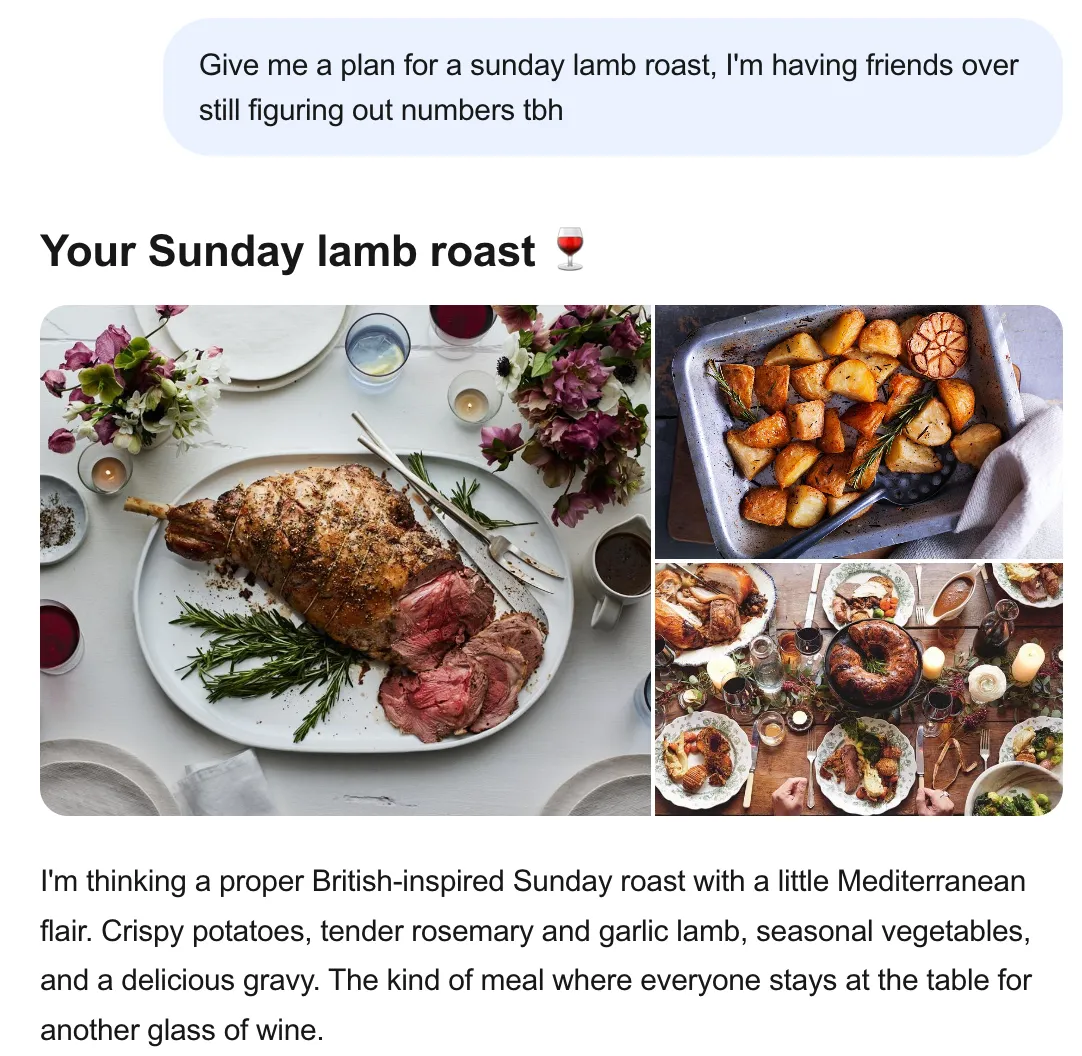
Specifically, the system can generate directly within the conversation:
- Clickable interactive diagrams (for example, a bicycle schematic where clicking a component highlights it and shows an explanation)
- Dynamic charts, side‑by‑side comparisons and maps
- Adjustable‑parameter forms and calculators
- Instant tools (bill splitters, savings calculators, mini‑games, checklists)
OpenAI achieves progressive interface rendering through a native streamable component library and a compiler: as the model generates content, the interface progressively displays it to maintain low latency. Official figures show that on queries requiring web search, GPT‑6 begins answering on average 44% faster than the previous generation. Paid users (Plus, Pro, Business, Enterprise) have access to GPT‑6 Sol starting October 7; free and Go users have access to GPT‑6 Luna starting October 8, covering more than 1.2 billion weekly active users worldwide.
Technically, Intelligent UI is not an after‑the‑fact "image plugin" but part of the model's native capabilities. It has learned to choose the best interface structure based on the question type while retaining the flexibility to output plain text directly in simple scenarios, avoiding excessive visualization that could hinder efficiency.
Significance as a breakthrough beyond text generation
Although text generation is powerful, it has inherent bottlenecks in information transmission efficiency. Complex concepts require lengthy textual descriptions, forcing users to reread repeatedly to form a mental model; when action is needed, they must leave the conversation window. Intelligent UI integrates "understanding—presentation—action" into the same conversational flow, significantly shortening the path from information acquisition to task completion.
The core of this breakthrough is that AI is no longer merely a "talking knowledge base" but becomes an "intelligent system that can design interfaces and support immediate interaction." It condenses functions that used to be scattered across multiple apps (charting tools, calculators, visual explanations) into the conversation itself, realizing a true "conversation‑as‑workbench."
Major implications for efficient human‑computer interaction
1. Reducing cognitive load and improving comprehension efficiency
Interactive diagrams and dynamic charts make abstract concepts tangible. Users can explore by clicking, scrolling and adjusting parameters directly instead of passively reading long text, which noticeably speeds up learning and decision‑making.
2. Shortening the gap between knowledge and action
Previously, users had to perform manual operations after receiving an answer; now they can complete calculations, comparisons, splits and planning directly in the conversation. Interaction paths are compressed, greatly increasing productivity in scenarios like financial planning, itinerary arrangement and teaching demonstrations.
3. Advancing the "conversation‑as‑software" paradigm
The ability to instantly generate small tools suggests that many lightweight applications may be replaced by conversational interfaces in the future. Users won’t need to install or switch software; they only need to describe requirements to receive a customized interactive interface, lowering the barrier to software use.
4. Accelerating AI adoption in real workflows
In enterprise and education settings, visual and actionable interfaces are more readily adopted than plain text. Decision support, training and customer service scenarios are likely to shift faster from "assisted reading" to "direct execution."
5. Setting a new competitive benchmark
Intelligent UI raises the experiential threshold for large‑model products. Vendors that remain limited to text or static multimodal outputs will trail significantly in interaction efficiency. This may accelerate the industry’s move toward "generative interfaces."
Of course, challenges remain: complex interfaces can increase rendering and computation costs; generated interactive elements must ensure accuracy and safety; and smooth performance across different devices will require ongoing optimization. But the direction is clear—human‑computer interaction is shifting from "reading answers" to "acting within answers."
Conclusion
The release of GPT‑6 and Intelligent UI represents a critical leap by OpenAI at the level of human‑computer interaction. It breaks the long‑standing reliance of large models on purely textual output by deeply embedding visuals and interactivity into conversations, making AI a truly efficient, intuitive and actionable intelligent partner. For users, this means lower comprehension costs and faster action cycles; for the industry, it marks an important transformation of AI products from "content generators" to "interface generators." As the features roll out to all users, the impact of this breakthrough will rapidly materialize and may redefine the basic form of future human‑AI collaboration.
▶️ Enjoyed this piece? Creating takes real effort!
Welcome to follow our YouTube channel:
AI Rosetta
Your likes, subscriptions and shares are our greatest support! 🙏
For more AI news visit: https://www.airosetta.com