
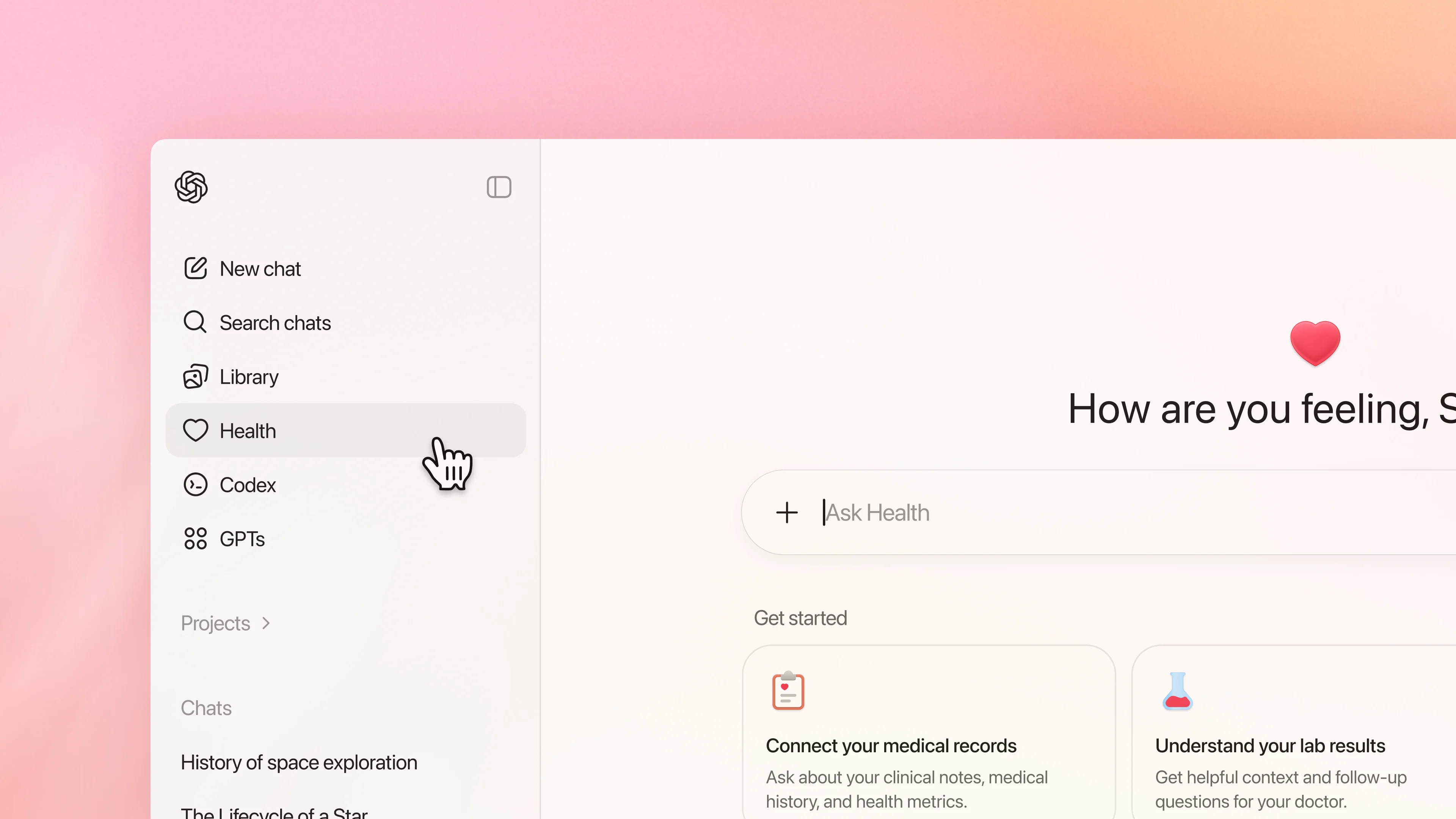
On January 7, 2026, OpenAI officially launched ChatGPT Health, a dedicated feature integrated into ChatGPT designed to help users securely connect and manage personal health information and to provide personalized insights using AI. According to OpenAI's official blog announcement, this service marks a major step in expanding the company's AI into healthcare in response to growing global demand for health‑related queries. Investing.com reported that the feature took months to develop and involved more than 260 physicians worldwide to ensure accuracy and professionalism. Media analysis from TechCrunch and Fortune suggests that ChatGPT Health not only improves user experience but also signals AI's potential in healthcare, while raising privacy and ethical discussions. At the same time, OpenAI recently released other specialized models, such as a model for the legal industry, further strengthening its presence in professional knowledge work. This article, based on OpenAI's official blog, Investing.com, TechCrunch, Fortune, Bloomberg and MacRumors, analyzes ChatGPT Health's features, development background and impact in detail, and briefly introduces OpenAI's other specialized models.
Feature details of ChatGPT Health: from data integration to personalized insights
The core of ChatGPT Health is securely combining users' health data with AI intelligence to provide tailored support. Users can connect medical records, fitness apps and wearable device data through this feature for seamless management. According to OpenAI's announcement and Fortune, it supports integration with apps like Apple Health, Function and MyFitnessPal, and can import steps, heart rate, sleep and nutrition data. For example, when a user uploads recent lab results, ChatGPT Health can help interpret the metrics, explain possible implications, and suggest how to discuss them with a doctor, while explicitly emphasizing that it is not for diagnosis or treatment.
Specific features include:
- Interpreting test results: AI analyzes blood tests or imaging reports and provides plain‑language explanations, such as "Your cholesterol level is high and you may need to adjust your diet."
- Appointment preparation: Generates question lists to help users communicate efficiently with clinicians.
- Diet and exercise recommendations: Recommends personalized plans based on data, e.g., "Based on your steps and calorie intake, we suggest adding two cardio sessions per week."
- Insurance and health pattern analysis: Interprets insurance options and identifies health patterns, such as risk from insufficient sleep.
- Data visualization: Generates charts to track trends, such as weight‑change curves.
OpenAI said the feature can respond to 230 million weekly health queries worldwide, covering diet, exercise and insurance. MacRumors highlighted Apple Health integration as a key point; users need iOS device connections. Some initial integrations (such as medical records) are limited to the U.S.; expansion to other regions is planned.
Development background and privacy safeguards: physician collaboration and encryption
ChatGPT Health's development originated from user demand: OpenAI data shows that 230 million people consult health topics weekly. To ensure accuracy, OpenAI worked with more than 260 physicians across 60 countries, providing over 600,000 pieces of feedback across 30 specialties. Bloomberg reported that this collaboration helps the AI avoid misinformation and ensures outputs support rather than replace medical care.
Privacy is a priority: OpenAI uses dedicated encryption and data isolation mechanisms and commits that health conversations will not be used to train models. User data is stored only in dedicated environments and meets HIPAA standards (U.S. health privacy law). Fortune noted this alleviates some concerns about data leaks, but user trust is required. OpenAI plans to release an AI healthcare policy blueprint in early 2026 to further regulate the space.
Availability and expansion plans: from limited testing to global rollout
ChatGPT Health is initially available in a limited scope: early access for small groups outside the European Economic Area, Switzerland and the UK via a waitlist, supporting ChatGPT Free, Go, Plus and Pro plans. It is planned to expand to all web and iOS users within weeks. Engadget reported this gradual rollout aims to ensure stability.
Impact and challenges: opportunities and risks for AI in healthcare
The launch of ChatGPT Health signals AI's potential in healthcare. Bloomberg analyzed that it could become a personal health hub, integrating data to provide preventive insights. Fortune noted it will challenge traditional apps and accelerate medical digitalization. However, risks remain: The Verge warned that AI interpretations can mislead and users should consult clinicians. EU regulations require transparency for AI healthcare tools, which OpenAI must follow.
Combined with other specialized models, the OpenAI ecosystem becomes more complete. The GPT‑5.2 series release improved code and knowledge‑processing capabilities, potentially empowering more complex analyses for Health. Overall, this innovation marks AI's leap from general‑purpose to vertical domains, promoting democratized health management while balancing privacy and accuracy.
▶️ Like this content? Creating it is really hard!
Welcome to follow our YouTube channel:
AI Rosetta
Your likes, subscriptions and shares are our greatest support! 🙏
More AI news at: https://www.airosetta.com