
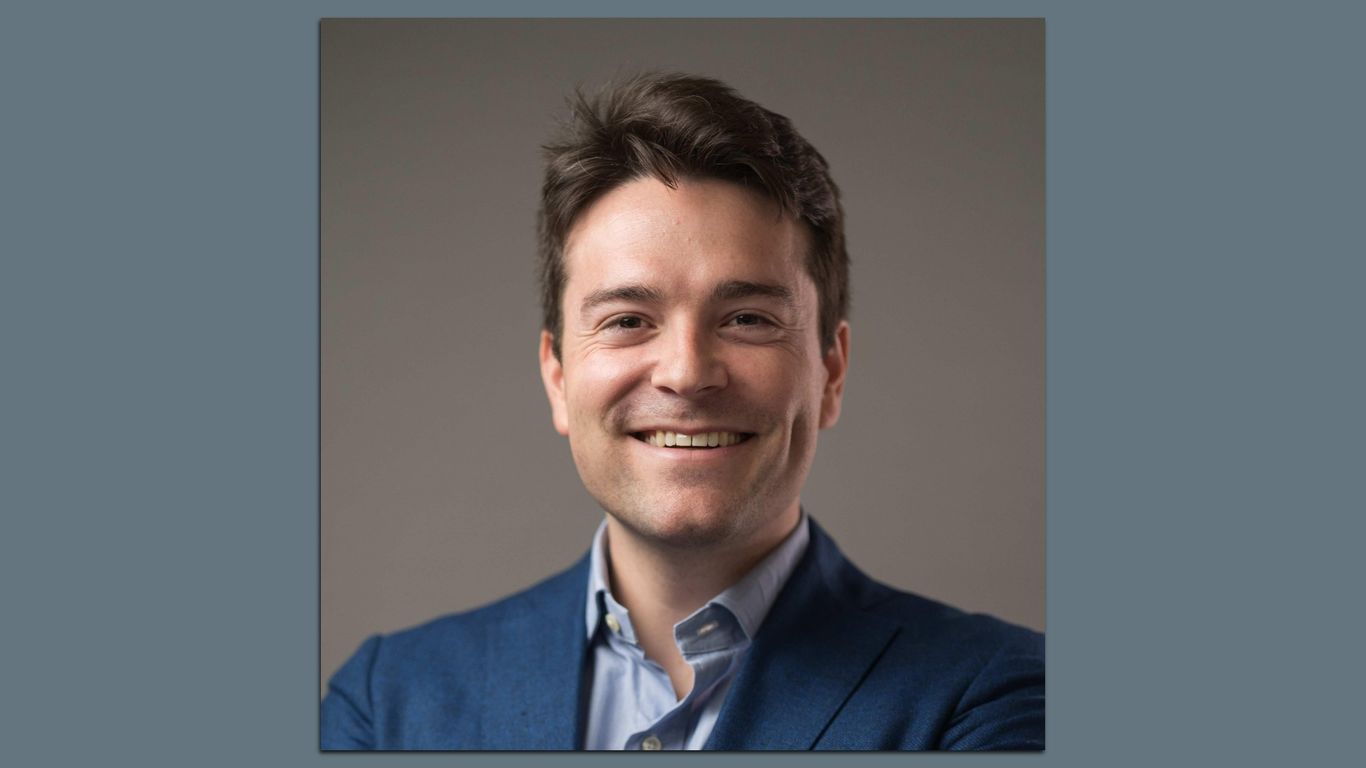
According to an Axios exclusive, OpenAI recently announced the hire of a well‑regarded scholar in black‑hole theoretical physics, marking a clearer intent to extend AI applications into cutting‑edge scientific research. The newly joined scientist is Alex Lupsasca, who currently remains a professor at Vanderbilt University but will join OpenAI's Science program to help drive the company's work in theoretical physics and complex scientific reasoning.
1. OpenAI's scientific ambitions
Prior to this hiring, OpenAI has already been applying its language models to scientific research areas, including mathematical modeling and physics problems. By using AI models for scientific questions, OpenAI aims to gain greater recognition within the research community rather than remaining primarily known for popular chatbots or consumer AI applications. Lupsasca's addition is viewed as a step toward becoming a research‑oriented AI lab. Within the new team, he will help shape research directions in theoretical physics and assist in guiding future models' performance on frontier, multi‑step scientific reasoning tasks. He will also work to strengthen collaborations with academia to foster linkages between OpenAI and external research institutions.
2. Why a black‑hole theorist?
Black‑hole theory is among the most abstract, mathematically demanding and challenging areas of modern physics. Scientists with deep expertise in this field typically possess strong mathematical intuition, theoretical modeling skills and logical deduction abilities.
Hiring such an expert carries multiple significances for OpenAI:
- Technical and reputational endorsement: It signals OpenAI's seriousness and commitment to the scientific community beyond a role as a commercial products or services vendor;
- Advancing AI methodologies for science: For complex scientific problems, AI needs not only prediction and generation but also 'thinking' capabilities and verifiable reasoning;
- A bridge for cross‑sector collaboration: As Lupsasca remains a university professor, his academic connections and credibility can help OpenAI build partnerships with universities and research institutes.
3. Current state and challenges of AI in scientific discovery
OpenAI's VP of Science, Kevin Weil, said in an interview that GPT‑5 can perform certain astrophysics calculations in days that might otherwise take graduate students substantial time to work through.
Weil also said GPT‑5 is already capable of limited novel scientific research.
Although his team acknowledges that today's models are far from final — he quipped that 'the AI you're using today is the worst AI model you'll ever use,' implying stronger versions will come — moving AI to the scientific frontier still faces several major challenges:
- Complexity: Scientific problems often require long chains of multi‑step reasoning, symbolic manipulation and rigorous mathematical proof, which are difficult for current language models;
- Reliability and verifiability: Scientific research does not tolerate guesswork; models must have self‑verification and error‑correction capabilities;
- Cross‑disciplinary knowledge integration: When astrophysics, biology, chemistry, materials science and other fields intersect, knowledge boundaries blur and models must adapt across domains;
- Trust from academia: Many researchers remain skeptical of AI's contributions and trust must be earned through real, reproducible results.
4. Competition and industry trends
OpenAI's move comes amid broader activity by AI labs entering scientific research. DeepMind achieved breakthroughs in protein structure prediction with AlphaFold and recently announced collaborations with research institutions to accelerate fusion science.
Anthropic has also announced a science initiative, providing API access to encourage research exploration.
Contributing to fundamental scientific research, rather than only building tools or applications, represents a new competitive dimension. OpenAI will need sustained investment across algorithms, model architectures, research partnerships and validation frameworks. Lupsasca's hire is a symbolic step in that direction.
5. Outlook and significance
The move underscores that AI‑era competition is shifting from what applications can be built to what science can be advanced. If AI can generate reliable, original scientific discoveries in physics, chemistry, biology or astronomy, it could become more than a tool — it could be a collaborator.
Model capability improvements, integration of scientific methods, academic recognition and robust validation mechanisms are all essential steps in that process. The collaboration between Lupsasca and OpenAI may be only a beginning — in the coming years, AI participation at the scientific frontier, and even challenges to human cognitive limits, may become commonplace.