
On April 27, 2026, well‑known supply‑chain analyst Ming‑Chi Kuo posted a new industry research report on social platform X, saying AI giant OpenAI plans to develop an AI‑native smartphone (AI Agent phone), and has partnered with Qualcomm and MediaTek to develop a dedicated mobile processor, while naming Luxshare Precision as the exclusive systems co‑design and device‑manufacturing partner. The project is expected to finalize product specs and its supplier list by the end of 2026 or Q1 2027, with mass production slated for 2028.
The news quickly drew market attention. Although OpenAI, Qualcomm, MediaTek and Luxshare Precision have not officially confirmed the report, Kuo—known for his long‑standing accurate predictions of Apple’s supply chain—was widely cited by mainstream media including Business Standard, India Today, 36Kr and Securities Times. After the announcement, Luxshare's A‑shares hit the daily trading limit intraday, reaching a record high with a market value surpassing CNY 520 billion; related mobile supply‑chain stocks such as Sunny Optical and Q Technology also rose significantly.
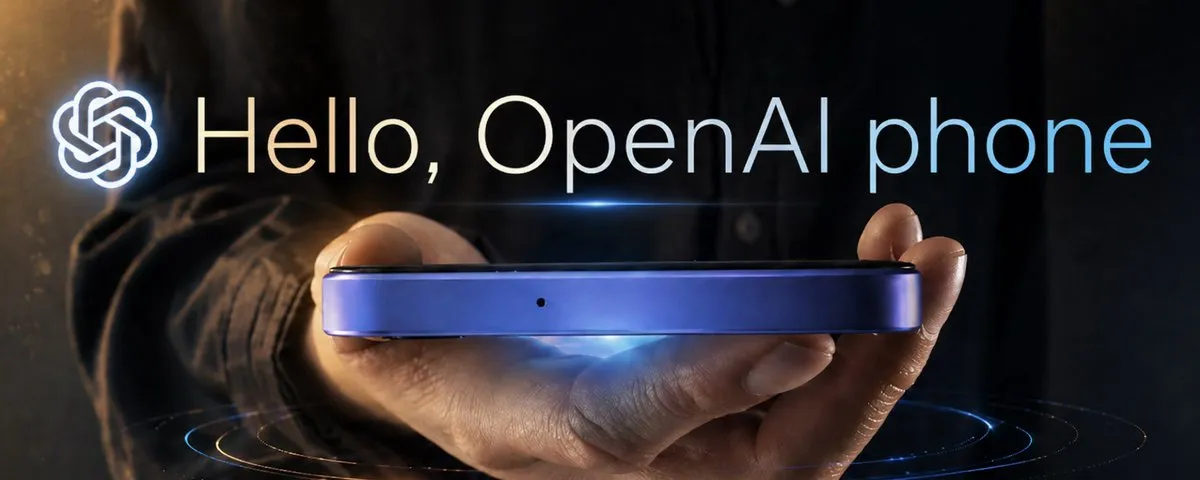
Project core positioning: Shift from App‑centered to Agent‑first
Unlike current smartphones designed around applications (apps), OpenAI's plan centers on building an Agent‑first interaction paradigm. Kuo noted that phones remain the world's largest class of endpoint devices and provide the most complete real‑time user context—critical input for AI Agent instant reasoning. OpenAI seeks to vertically integrate software and hardware to fundamentally change how people use phones: rather than relying on separate apps, AI agents would directly complete complex tasks such as booking tickets, scheduling, handling payments and retrieving information.
Complex tasks may still rely on cloud AI support, but the on‑device processor will be optimized for AI inference efficiency, contextual understanding, hierarchical memory management and low‑power performance. OpenAI has previously moved into AI hardware by acquiring Jony Ive–related startup io; this phone project is seen as an important step in expanding from a pure software company into a hardware ecosystem. Commercially, OpenAI may adopt a model of subscription services bundled with hardware and build a new AI Agent developer ecosystem.
Division of cooperation and supply‑chain impact
- Chip level: Qualcomm and MediaTek, leaders in mobile processors, will jointly take part in developing a dedicated AI processor. Qualcomm brings strengths in AI acceleration and connectivity on high‑end Snapdragon platforms, while MediaTek has strong cost‑performance and mid‑to‑high‑end market positioning. Their cooperation could accelerate on‑device AI capabilities and provide OpenAI with greater bargaining power and customization options.
- Manufacturing level: Luxshare Precision, an important contract manufacturer for Apple's iPhone and AirPods, will take on the role of exclusive systems co‑design and device manufacturing. Its experience in precision assembly, vertical integration and consumer‑electronics supply‑chain management is viewed as key to the project's success. Although Luxshare's position in Apple's supply chain may not fully eclipse Foxconn, securing a potentially high‑growth OpenAI project could significantly increase its leverage in the next‑generation AI hardware era.
Analysts estimate annual shipment targets could reach 300–400 million units, which, if achieved, would directly challenge the market dominance of Apple's iPhone and Samsung's Galaxy series.
Far‑reaching impacts on the industry chain and market
1. Impact on traditional smartphone giants
Markets interpret OpenAI's move as a direct challenge to Apple and Samsung. Apple is heavily advancing Apple Intelligence but still relies on external AI models (for example, cooperation with Google); Samsung has also invested heavily in Galaxy AI. If OpenAI successfully builds a truly agent‑driven device, existing vendors may be forced to accelerate the transition from a "hardware+app" model to a "hardware+agent ecosystem". In the short term this will intensify competition in the high‑end smartphone market; in the long term it could reshape operating‑system and user‑interface design paradigms.
2. Catalyst for the AI hardware ecosystem
Deployment of large AI models increasingly depends on endpoint hardware. Companies like Google and ByteDance have already pursued AI phones, and OpenAI's entry will further lower barriers to on‑device AI deployment, promoting large‑scale application of multimodal AI and real‑time contextual understanding. As the phone is the most intimate daily device, its AI capabilities would greatly enhance user experience and provide the hardware basis for AI Agents to evolve from "chat tools" into true personal digital assistants.
3. Supply‑chain and capital‑market benefits
- Luxshare Precision: As the exclusive manufacturing partner, it would directly benefit from new project orders and market expectations for its long‑term growth would rise significantly.
- Qualcomm and MediaTek: Beyond revenues from this collaboration, if OpenAI's phone achieves scale in future replacement cycles it would provide stable demand for AI chips.
- Broader supply chain: Camera modules, displays, batteries and precision components are all likely to benefit indirectly. After the news, multiple mobile supply‑chain stocks strengthened, reflecting market optimism about an AI hardware "super cycle".
4. Potential risks and challenges
Despite the promising outlook, OpenAI's hardware venture faces multiple challenges: complex smartphone supply chains, extensive after‑sales service systems and entrenched user habits that are hard to change quickly. Historically, AI hardware attempts such as Rabbit R1 and Humane AI Pin have not met expectations, highlighting the gap between "cool concepts" and "everyday usability." In addition, privacy protection, heat and power consumption, price positioning and building a developer ecosystem are problems OpenAI must solve. With the project planned to reach mass production in 2028, many variables remain and the final outcome is still uncertain.
Industry takeaway: Model companies' move into hardware becomes a new trend
OpenAI's phone plan signals that the AI industry is entering a "soft‑hardware integrated" phase. Previously, model companies mainly relied on cloud compute and third‑party hardware to deliver AI capabilities; now they increasingly realize that controlling endpoint hardware is necessary to achieve seamless, instant AI Agent experiences and to build closed‑loop business models.
This trend will also accelerate global investment in AI hardware. For Chinese supply‑chain companies, deep participation by firms like Luxshare could not only bring new growth in the AI era but also secure a stronger position in the global consumer‑electronics landscape.
Overall, although OpenAI's plan is still in early planning stages, it has already shaken the industry. It could spawn a new generation of AI‑native devices and help transition the mobile internet from the "App era" to the "Agent era." Finalizing product specifications in late 2026 to early 2027 will be a key window to monitor progress. Whether consumers will get a phone that truly changes everyday interaction remains to be seen.
▶️ Enjoy this article? Creating it takes a lot of work!
Subscribe to our YouTube channel:
AI Rosetta
Your likes, subscriptions and shares are our greatest support! 🙏
More AI news at: https://www.airosetta.com