
September 8, 2026, shortly after Anthropic announced a Lean formalization of Fermat’s Last Theorem using Fable 5.1, OpenAI officially announced that roughly 10,000 internal, advanced model‑driven AI agents completed a key breakthrough on one of the Millennium Prize problems in about 88 hours — the three‑dimensional Navier–Stokes existence and smoothness problem. The research shows that under a specific smooth external forcing, starting from rest with kinetic energy remaining finite, the velocity field can still develop a finite‑time singularity (blow‑up). OpenAI simultaneously published the manuscript and the Lean formal verification results, and stated it does not intend to claim the Clay Mathematics Institute’s $1,000,000 prize.
Details: large‑scale agent coordination and formal verification
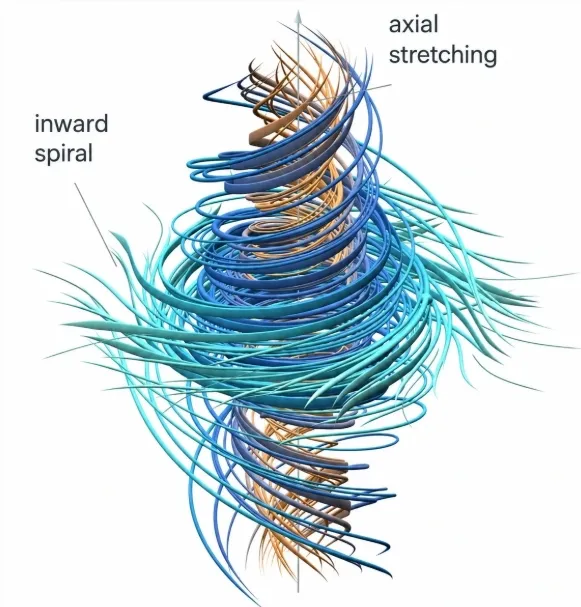
The Navier–Stokes equations describe the motion of incompressible fluids and are central to fluid mechanics. The Millennium Prize question asks whether solutions in three dimensions remain smooth (without singularities such as infinite velocity). OpenAI’s result demonstrates the existence of a flow that, from regular initial data and under a smooth, compactly supported external force, maintains finite kinetic energy yet develops unbounded velocity in finite time, addressing the relevant statements in the official formulation (primarily corresponding to statements “C” and “D”).
Technically, OpenAI used stronger internal models (reportedly significantly more capable than the public GPT‑6 Astra) to run a coordinated agent system. Agents had access to cached network materials, could run code, and collaborated in groups. The team first used about 1,000 agents to resolve a related Euler‑equation variant (the inviscid case) in roughly 50 hours, then scaled to about 10,000 agents to tackle the full Navier–Stokes problem. The agents produced the solution around September 5 after roughly 88 hours; GPT‑6 Astra then spent about 17 additional hours completing the Lean formalization and verification. Throughout the Navier–Stokes work, agents exchanged roughly 2.7 million messages and generated about 130 billion output tokens. At public pricing levels, the computational cost of a similar scale would be on the order of tens of millions of dollars.
OpenAI emphasized that the experiment was conducted under the same strict safety monitoring and isolation measures used for state‑of‑the‑art model evaluations. Presenting the result in machine‑checkable Lean form raises initial credibility, but independent mathematical review is still required.
Background and controversy
The Millennium Prize problems were posed by the Clay Mathematics Institute in 2000; there are seven problems, each carrying a $1 million prize. Until now only the Poincaré conjecture had been resolved. OpenAI said the action was partly inspired by rumors that two Millennium problems had already been solved. Almost concurrently, mathematician Tristan Buckmaster and others made significant progress on related Euler problems, prompting comparisons framed as a “Deep Blue–Kasparov moment”; discussions have touched on timelines and sources of inspiration, which OpenAI denies involved use of unpublished external materials.
Fields Medalist Terence Tao acknowledged the speed and scale of recent AI mathematical advances while expressing concern. He noted an “unprecedented gap between answers and understanding” this year — AI can rapidly produce new results, but humans may lack the time for the slow, deep discussion and digestion needed for genuine mathematical understanding and development.
Potential impact: research paradigms and AI capability limits
1. On mathematical research
If the result withstands rigorous review, it would mark the first substantive AI‑led resolution of a Millennium‑scale open problem, signaling a shift from “assistive verification/formalization” to “participation in core discovery.” The model of large‑scale agent collaboration plus formal verification could become a path to other major problems (rumors of progress related to the Riemann hypothesis have circulated). At the same time, it forces the mathematical community to reconsider how to balance fast AI output with human deep understanding.
2. On assessing AI capabilities
The deployment of tens of thousands of agents, hundreds of billions of tokens, and multi‑million‑dollar compute on a single scientific problem demonstrates current systems’ execution ability on complex, long‑horizon, high‑rigor tasks. Introducing Lean verification increases inspectability. This is both a capability milestone and a reminder of the very high cost and resource barriers.
3. On scientific discovery and priority
AI can exhaustively explore, trial, and collaborate in short order, altering the traditional rhythm of “human intuition plus long‑term cultivation.” The upside is accelerated breakthroughs; the risk is a flood of results the community cannot fully assimilate, producing knowledge accumulation that favors answers over understanding.
4. Ethics, priority and reward mechanisms
OpenAI declined to claim the prize, but issues of priority, attribution (human guidance versus agent autonomy), and how to evaluate “AI‑generated proofs” will remain contentious. Tao’s concerns point to deeper questions: when discovery outpaces human understanding, the scientific community’s trust and transmission mechanisms must adapt.
5. Potential risks and challenges
The result still needs independent reproduction and broader mathematical scrutiny. High‑cost approaches are hard to democratize; risks such as error propagation or goal divergence in agent collaborations require ongoing attention. Moreover, if AI quickly produces results across more foundational science problems, research resources could further concentrate in institutions with large compute budgets.
Conclusion
OpenAI’s claim that about 10,000 AI agents solved the key part of the Navier–Stokes Millennium problem in 88 hours and completed Lean verification is among the most notable events at the intersection of AI and mathematics in 2026. It demonstrates the potential of large‑scale agent systems on extremely complex problems and highlights the structural tension of “answers arriving faster than understanding.”
Terence Tao’s mixed reaction — praising the progress while warning about the understanding gap — reflects the mathematical community’s ambivalence: excitement about powerful tools, and caution about disruptive changes in knowledge production. Whatever the outcome of subsequent reviews, this event will profoundly shape perceptions of AI’s role in scientific discovery — from an assistive tool to a potential core participant that reshapes research pace and priorities.
Mathematics’ next steps may no longer be a solely human ascent, but rather how humans and fast‑running intelligent systems jointly define “understanding” and “progress.”
▶️ Enjoy this article? Content creation is hard!
Follow our YouTube channel:
AI Rosetta
Your likes, subscriptions, and shares are our greatest support! 🙏
More AI news at: https://www.airosetta.com