
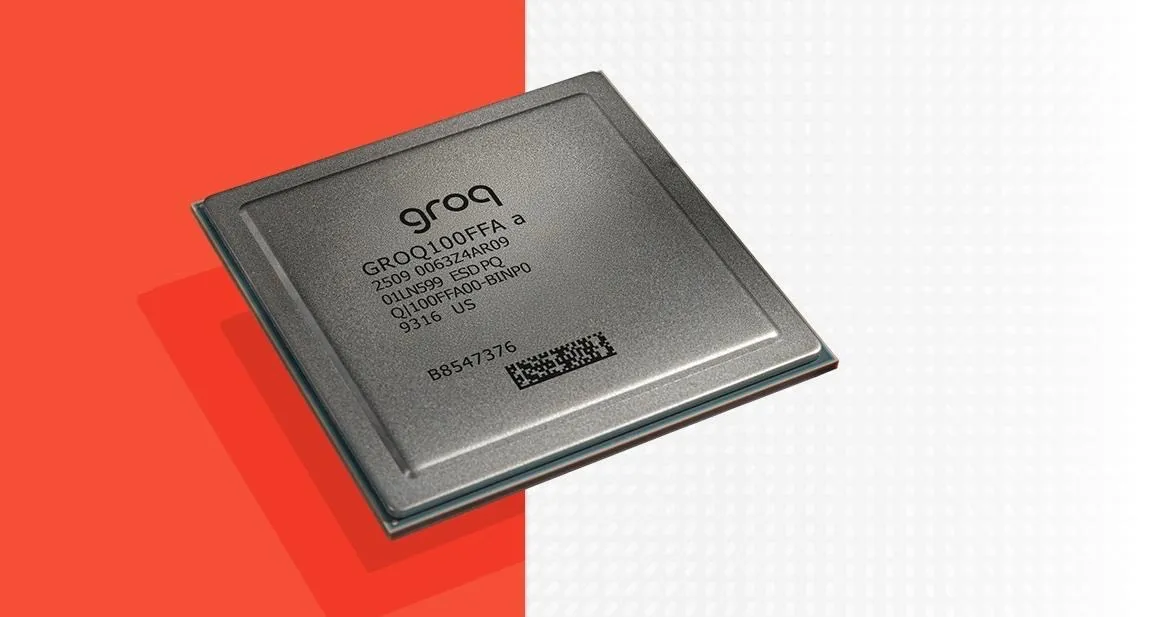
December 24, 2025 — Tech giant NVIDIA is the subject of a major report: according to CNBC, the company has preliminarily agreed to acquire AI chip startup Groq for $20 billion in cash. This would be the largest acquisition in NVIDIA's history, far exceeding the $7 billion Mellanox deal in 2019. Groq, a dark horse in the AI inference chip field, was valued at $6.9 billion after a funding round in September 2025; the acquisition premium is significant and highlights NVIDIA's expansion ambitions in AI hardware. Authoritative sources such as Marketscreener and TechCrunch note that if the transaction goes through, it would further consolidate NVIDIA's dominant position in the AI chip market and accelerate commercialization of AI inference technologies. This special report, based on CNBC, Marketscreener and real‑time discussion on X, analyzes the background, technical impact and industry outlook of this potential acquisition, ensuring the facts reflect the latest reporting.
Acquisition details: cash deal and strategic intent
According to CNBC citing Disruptive Capital CEO Alexander Davis, NVIDIA and Groq have reached a preliminary agreement for an all‑cash $20 billion transaction. However, Groq's cloud division would remain independent and outside the scope of the acquisition, a structure that may be intended to avoid antitrust scrutiny or preserve Groq's flexibility in cloud services. Groq was founded in 2016 by former Google TPU engineer Jonathan Ross and focuses on high‑performance AI accelerator chips (LPUs, Language Processing Units). Its technology is known for low power consumption and high throughput, specializing in the inference stage of AI workloads.
NVIDIA's motive is clear: amid explosive growth in AI compute demand, its GPU‑dominated training market remains strong, but competition in inference is intense. Groq's LPU is reportedly up to ten times faster than NVIDIA GPUs for some inference workloads, particularly in deploying large language models (LLMs). On X, users such as @Grit_Capital described the acquisition as NVIDIA's move to "control the entire AI lifecycle," from training to inference. NVIDIA could also absorb Groq's top talent, including elite Silicon Valley engineers, further strengthening its leadership in the AI hardware ecosystem.
Neither NVIDIA nor Groq responded to CNBC's request for comment, and transaction terms have not been formally announced. Still, real‑time discussion on X has stirred market interest, and NVIDIA shares rose modestly after the report, reflecting investor optimism about the deal.
Groq's technical highlights: an emerging challenger in AI inference
Based in Silicon Valley, Groq's core product is its proprietary LPU chip, designed specifically for the inference phase of AI models, enabling rapid response generation from trained models. Unlike NVIDIA's GPUs, Groq's chips use a deterministic architecture that avoids traditional GPU memory bottlenecks and randomness, delivering ultra‑low latency and high energy efficiency. TechCrunch reported that Groq completed a $750 million funding round in September 2025 with investors including BlackRock, Samsung and Cisco, lifting its valuation to $6.9 billion and reflecting market recognition of its technology.
Groq's advantages lie in its integrated hardware‑software stack: the chip supports massive parallelism and can process tens of trillions of operations per second (TOPS), making it well suited for real‑time inference of LLMs such as the GPT series. Compared with competitors like Cerebras and SambaNova, Groq emphasizes inference optimization over general‑purpose compute. Nasdaq analysis notes Groq's low‑power design could reduce energy consumption in AI data centers by more than 50%, a critical benefit amid energy constraints.
However, Groq faces challenges: its 2025 revenue forecast was revised down from an earlier $2 billion projection, indicating commercialization pressures. X user @gemini_edge highlighted that the acquisition would help Groq overcome production bottlenecks by leveraging NVIDIA's supply chain.
NVIDIA's strategy: from GPU leader to full‑stack AI empire
NVIDIA has dominated the AI hardware market since 2020; its data center revenue reached $46.7 billion in fiscal Q1 2025, up 56% year‑over‑year. Acquiring Groq would be the latest step to expand its inference business and address weaknesses of GPUs in high‑throughput inference. Fool.com observes that Groq's valuation underscores the heat in the AI chip market and that NVIDIA's move can preempt potential competitors.
The acquisition fits NVIDIA's M&A strategy—previous deals like Mellanox (and an attempted Arm acquisition) aimed to strengthen its ecosystem. On X, @Pirat_Nation called the move a "preemptive strike" against AMD and Intel. The deal could also accelerate NVIDIA's cloud service integration, even as Groq's cloud arm remains independent.
Industry impact: intensified AI chip competition and regulatory concerns
If completed, the transaction would further concentrate the AI chip market. NVIDIA already holds more than 80% market share in certain segments, and buying Groq could prompt antitrust review, particularly from the U.S. FTC and EU regulators. Analyses on Medium suggest the deal would deepen NVIDIA's advantage in inference but might also dampen independent innovation such as Groq's standalone development.
For the startup ecosystem, the acquisition highlights the capital intensity of AI hardware: Groq raised over $1 billion yet may be absorbed by a giant. X user @Tshepang_trill questioned, "Does this mean AI compute hegemony?" On the positive side, the move could lower AI inference costs and benefit downstream firms like OpenAI and Meta.
Challenges and outlook: technical integration and market uncertainty
Potential challenges include technical integration: Groq's LPU and NVIDIA's GPU architectures differ significantly, and integration will take time. Geopolitical risks, such as U.S.‑China trade tensions, could also affect supply chains.
Looking ahead, the acquisition could accelerate the shift from training to inference in AI, with the inference market projected to reach $40 billion by 2027. X user @Hawthorn_thinks called this a "new era for AI hardware."
▶️ Enjoyed this piece? Creating content takes real effort!
Follow our YouTube channel:
AI Rosetta
Your likes, subscriptions and shares are our greatest support! 🙏
For more AI news visit:
https://www.airosetta.com