
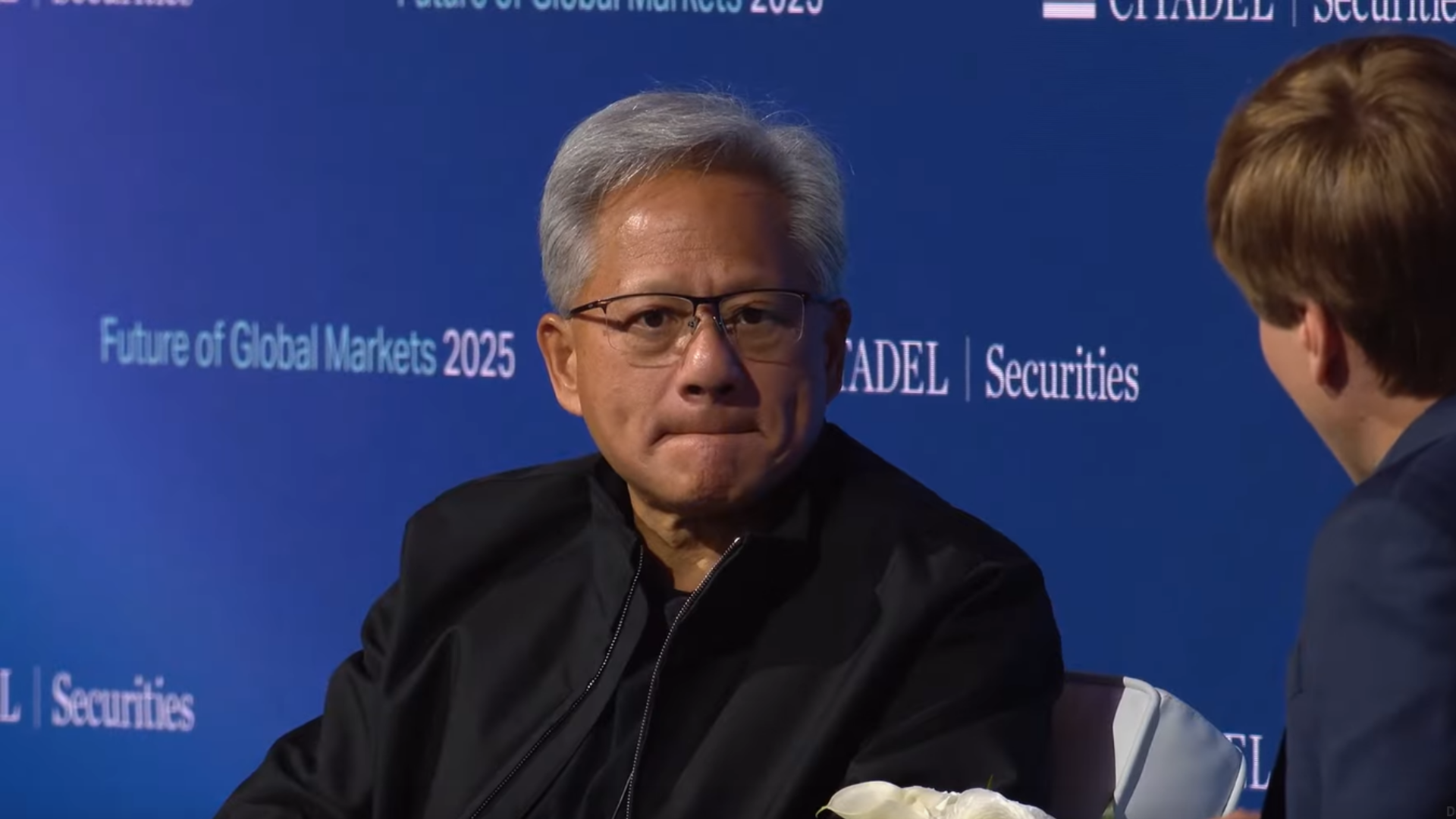
On October 19, 2025, Nvidia CEO Jensen Huang publicly stated at a Citadel Securities conference that the company’s share of the advanced AI chip market in China had plunged from 95% to 0%, a declaration that reverberated across the global tech sector. This decline stems directly from the continued tightening of U.S. export controls; China previously accounted for 20% of Nvidia’s revenue, and that critical battleground has effectively become a "no‑go" zone. At the same time, Huang was invited to attend the 2025 APEC CEO Summit and planned meetings with senior executives from Samsung Electronics and SK Hynix to further deepen AI cooperation. These developments underscore Nvidia’s strategic adjustment amid U.S.‑China tech tensions: shifting from reliance on the Chinese market toward strengthening supply‑chain cooperation with allies such as South Korea, aiming to sustain its leading position in AI chips.
Nvidia’s market share falling to "zero" was not an isolated incident. Since 2023 the U.S. Department of Commerce has progressively tightened export restrictions on AI chips to China, and in 2025 those measures were further escalated, prohibiting shipments of high‑end GPUs such as Nvidia’s H100 and A100 to China. Fortune has analyzed that the policy intends to curb China’s AI development but has also forced Nvidia to accelerate diversification. At the conference Huang lamented, "I cannot imagine any policymaker thinking this is a good idea." The remark quickly spread on X, where user @TechInsider commented, "Nvidia’s China dream is broken, but Korea cooperation could become a new pillar." The post drew hundreds of interactions. This shift not only affects Nvidia but is reshaping the global AI supply chain landscape.
China market share 'zero': regulatory shock and a wave of domestic substitution
Nvidia’s share of China’s AI accelerator market reportedly fell from 95% to 0%, a figure Huang confirmed and attributed to the cumulative effect of U.S. technology export bans to China. Wccftech reported that four years ago China was one of Nvidia’s largest markets, contributing 20% of revenue, but advanced AI chip sales have now effectively halted. The Times of India added that the decline began with the 2023 U.S. restrictions and expanded in 2025 to cover all high‑end GPUs, preventing Nvidia from exporting products such as the H800 to China. An Instagram post showed Huang saying at Computex 2025 that China’s share had declined from 95% to 50%, but the most recent data are harsher.
The driver behind this "zero" outcome is U.S. national security concern. Chosun reported the controls are intended to prevent AI technologies from being used for military purposes, but Huang warned they could hand the market to Chinese domestic firms such as Huawei and Cambricon. On Reddit’s r/China a user wrote, "Nvidia’s China AI GPU share has plummeted to zero; China once represented 20% of revenue," noting that China is accelerating domestic chip development, for example the Ascend series. A Facebook post emphasized that this shift has cost Nvidia tens of billions of dollars while also prompting a global supply‑chain reorganization.
China is also feeling profound effects. Analysis by Bo3.gg argues the U.S. ban has pushed Chinese companies toward domestic substitutes, and the Huawei Mate 60 series has been cited as evidence of China’s chip self‑sufficiency. AOL reported that Huang’s comments reflect the side effects of a trade conflict: although Nvidia dominates globally, the "no‑go" status of China is slowing its growth. The episode highlights the reality of U.S.‑China technological decoupling and the need for Nvidia to find new growth avenues.
Huang’s APEC visit: meetings in Korea and engagements with global leaders
Against the backdrop of a zeroed market share, Huang’s invitation to the 2025 APEC CEO Summit became symbolic of his company’s strategic pivot. Reuters reported that Huang would visit South Korea in late October — his first formal trip to Korea in 15 years — to attend the APEC CEO Summit and meet with global leaders and Korean executives. MK reported the summit brings together leaders from Nvidia, the OECD, Citi and others, and that Huang is expected to discuss AI innovation and economic cooperation. Chosun emphasized that Huang will meet with the CEOs of Samsung and SK Hynix, with a focus on supplying memory for AI data centers.
The APEC forum provides a platform for Nvidia. Korea JoongAng Daily wrote that Huang’s attendance underscores Korea’s role in the AI supply chain and that the summit will be a highlight for the "private‑sector economic forum." Mitrade noted the unprecedented scale of the summit, and that Huang’s participation highlights AI’s importance in the Asia‑Pacific economy. The APEC website lists Huang as a speaker alongside OECD Secretary‑General Mathias Cormann and Citi CEO Jane Fraser. AInvest reported Huang will spotlight Nvidia’s AI innovations, such as cooperation on HBM3E memory. A Facebook post said Huang plans to meet "global leaders and Korean executives," including Samsung and SK. YNA reported the visit aims to strengthen Nvidia’s alliance with Korean chip giants.
This invitation reflects Nvidia’s global strategy. Korea Times noted that while Nvidia relies on Korean memory suppliers, Huang’s Korea trip signals deeper AI cooperation.
Deepening cooperation with Samsung and SK Hynix: reorganizing the AI chip supply chain
Faced with the loss of the China market, Nvidia has intensified cooperation with Samsung and SK Hynix. TipRanks reported Huang will meet Samsung and SK executives in Korea to discuss AI chip production and supply. AInvest noted SK Hynix accounted for a portion of Nvidia’s Q1 2025 revenue, largely driven by HBM3E memory and next‑generation AI architectures. The OpenAI website shows Samsung and SK have joined OpenAI’s Stargate program to provide advanced memory chips that support AI infrastructure.
Details of the cooperation are emerging. Korea JoongAng Daily reported Samsung will become a foundry partner for Nvidia, seizing opportunities in AI chip manufacturing. AOL emphasized that Huang’s Korea visit focuses on memory for AI data centers. KED Global reported Samsung and SK stand to benefit from OpenAI‑AMD chip arrangements. TrendForce said Nvidia has added Samsung Foundry to the NVLink Fusion ecosystem for custom silicon production.
This deepening collaboration is Nvidia’s strategic response: with the China market at zero, Korea becomes a key partner as demand for HBM memory surges. Reuters analyzed that this will alleviate some supply‑chain pressure for Nvidia but also highlights geopolitical risks.
Impact analysis: Nvidia’s global reshaping and shifts in the AI ecosystem
The market‑share collapse has profound implications for Nvidia. Fortune reported the company must find replacement growth as the China loss may amount to tens of billions of dollars, though global AI demand remains strong. Huang’s APEC trip and partnerships with Korean firms mark a strategic turn from China dependence toward an Asia‑Pacific alliance. AInvest suggested this may sustain Nvidia’s leadership but noted the need to manage U.S.‑China tensions. For Korea, Samsung and SK are set to benefit from AI memory orders, and KED Global projects revenue growth. Globally, the rise of Chinese domestic chips could challenge Nvidia’s dominance.
Huang’s remarks have also prompted policy reflection. Chosun reported he warned that the controls "are not a good idea" and could cede markets to others. Discussions on X underline the episode as an example of the trade war’s double‑edged consequences.
Conclusion: Nvidia at a crossroads
Nvidia’s share of the China market falling to zero encapsulates the U.S.‑China technology conflict and places the company at a historic crossroads. While the loss in China presents a major challenge, Huang’s APEC visit and deeper ties with Korean firms open new paths for growth. This strategy alleviates near‑term pressure and helps lay a foundation for a healthier AI ecosystem. Going forward, Nvidia must continue to innovate, diversify geopolitical risk, and deepen collaboration with global partners to maintain AI leadership amid U.S.‑China competition and global uncertainty. At the same time, the company should embrace responsibilities to promote inclusive AI through open innovation and ethical governance, ensuring AI becomes a powerful tool for addressing global challenges such as climate change and public‑health crises. This crossroads is not only a turning point for Nvidia but also a key milestone in the maturation of the AI industry.