
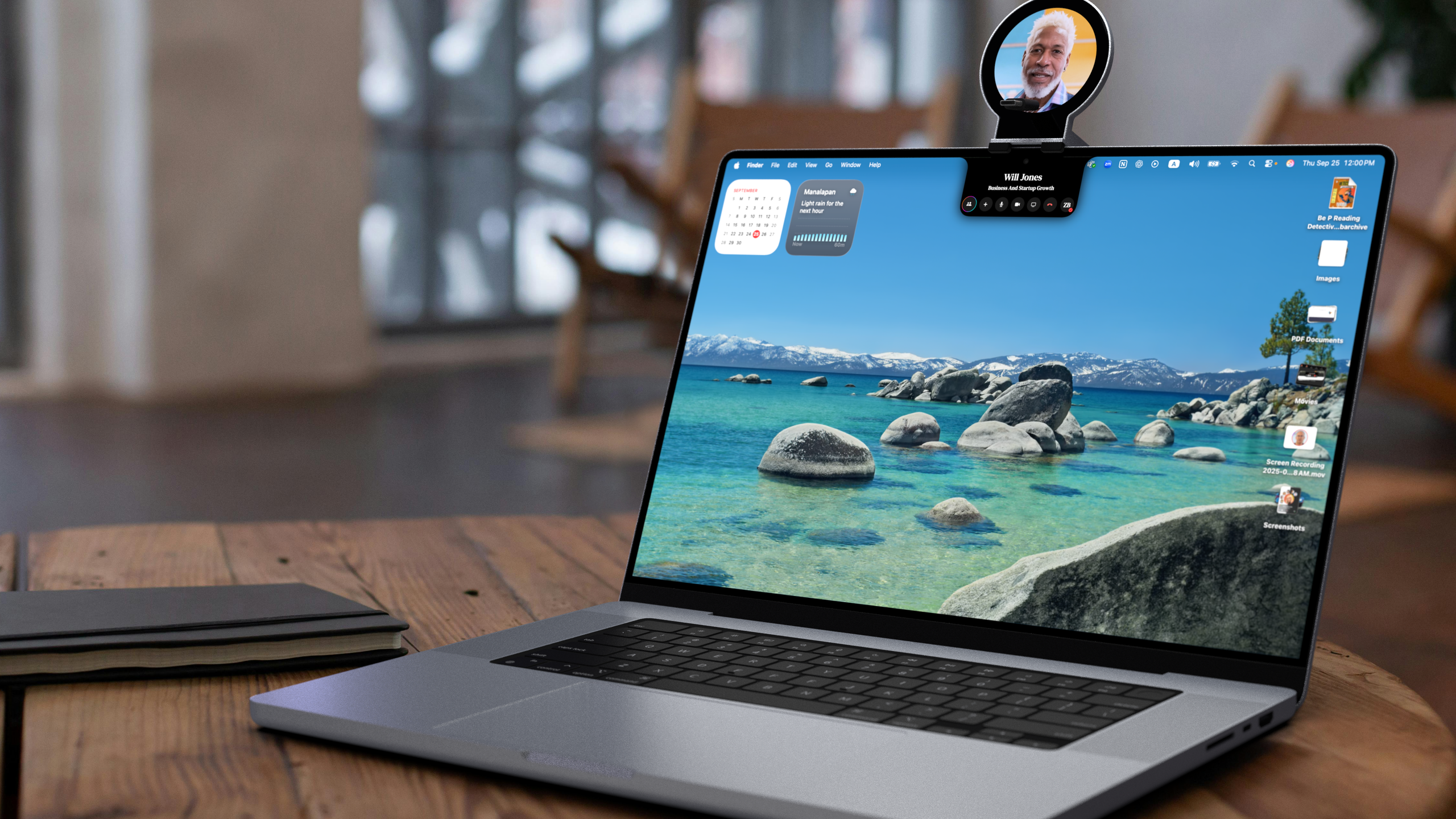
On October 21, 2025, Napster announced its return to the consumer hardware market, unveiling the Napster 26 holographic AI desktop display, priced at $99. Tom's Guide described the device as an attempt to "bring holographic imagery to the desktop and reinvent the AI assistant," aiming to move visual AI interaction from science fiction into living rooms and desks.
The Napster 26 is compact, designed more like a small stage placed at the center of a desk: a top panel facing the user projects "floating" images, while the body houses a microphone array and speakers for voice interaction and audio playback. Tom's Guide notes the product emphasizes intuitive three‑dimensional visual feedback—when you ask the device a question or request music, a brief holographic animation or a small personified avatar will "respond" in midair.
Functionally, the Napster 26 is not just a smart speaker with a screen. Napster describes it as a "tool to reconfigure workflows and creative processes," supporting quick calls to an AI assistant for answering questions, helping organize notes, drafting ideas, and synchronizing music playback. Given Napster's musical roots, the device emphasizes music control and visualized playback: during playback dynamic "floating" waveforms or short visualization elements appear, synchronized with the sound.
On pricing, the $99 entry price is the story's focus. Tom's Guide points out that this price clearly targets a broader consumer market, attempting to lower the barrier for more users to experience "holographic + AI." Napster also announced developer interfaces and third‑party integration plans, hinting at more applications and content partners joining the ecosystem in the future.
Regarding interaction, the report mentions support for natural language dialogue, simple gesture triggers (for example, tapping the chassis to wake it) and remote control via a mobile app. Privacy and data handling are also discussed: Napster says the device defaults to processing voice wake‑up and basic commands locally, while more complex tasks may be handled by cloud AI services, and users can view or delete interaction records in settings.
From a review perspective, Tom's Guide cautions readers on two points: first, the realism of the "holographic" experience varies—a $99 device cannot match high‑end motion‑tracking or holographic systems, but it can provide novel visual feedback in desktop scenarios; second, the depth of AI capabilities will depend on subsequent software updates and third‑party service integration, and Napster's long‑term appeal hinges on ecosystem development.
Napster's return is both a brand extension and a commercial strategy: using low‑cost hardware to enter daily scenarios, attract younger users to try new interaction methods, then retain them with content and services. Tom's Guide also notes Napster is opening platform interfaces to developers and content creators, encouraging the development of dedicated holographic experiences in music, education, gaming and other fields.
The release of the Napster 26 has rekindled interest in the tech community: it is not meant to directly challenge high‑end AR/VR hardware, but rather to make three‑dimensional visual interaction a consumer‑accessible experience through a combination of "low‑cost holography + AI assistant." For those seeking novel interaction forms and high‑quality music interaction, the $99 desktop‑focused device is worth watching.