
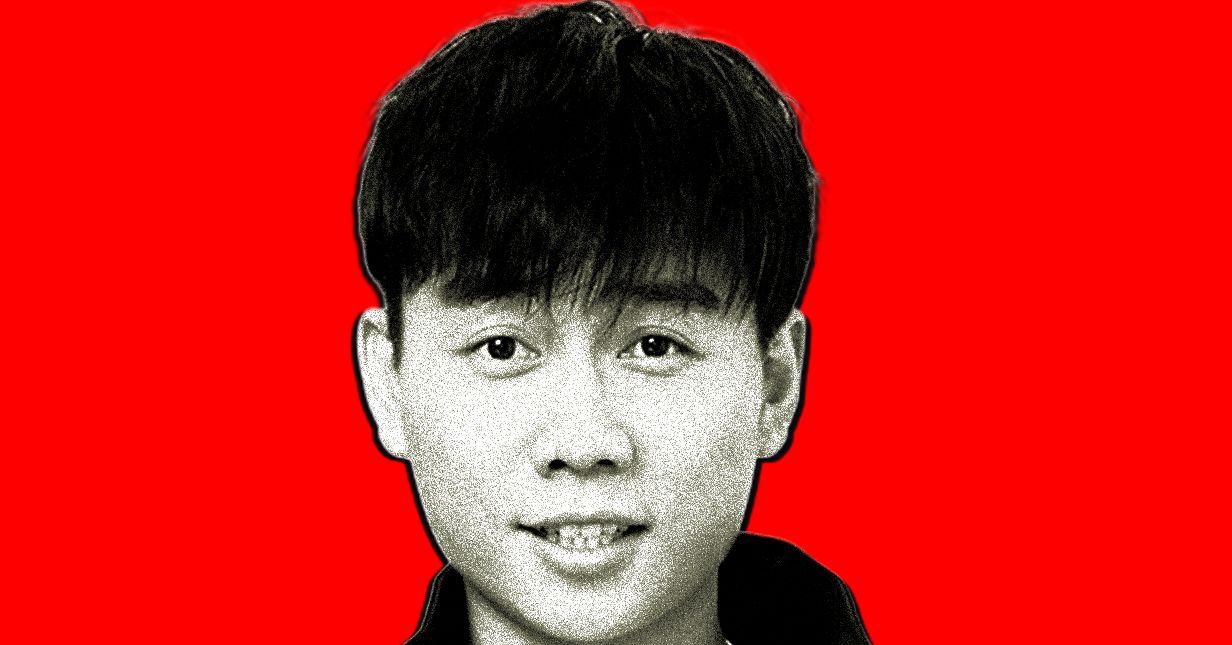
October 23, 2025 — WIRED reported on an apparently paradoxical but provocatively playful creative practice: Chinese video author Mu Tianran devotes himself to reproducing the "AI‑style" visual errors and dissonances familiar to viewers entirely by hand. Viewers’ first reaction is often "Was this made by AI?", but the answer is the opposite—every misalignment, every stutter, every facial distortion is the result of deliberate design and repeated adjustment.
The article details Mu Tianran’s working methods: he intentionally asks actors to make unnatural pauses and misaligned movements in front of the camera, adjusts lighting to produce mottled, uneven skin tones, and uses cheap props and hastily patched backgrounds to create a sense of poor compositing. In post‑production he does not seek smooth interpolation or seamless transitions; instead he amplifies mechanical traces through frame‑by‑frame editing, misaligned rotoscoping, and imprecise lip‑sync alignment.
WIRED quotes Mu Tianran as saying this "handcrafted AI‑ization" is both a lampoon of the current aesthetics of generative tools and a practical aesthetic experiment: by enlarging the common disguise errors and uncanny details of AI works, he prompts viewers—after the initial illusion—to rethink how we judge "real" versus "composite."
The report also records immediate audience reactions: some viewers are deeply attracted to Mu’s work, seeing the half‑clumsy, half‑deliberate style as a new form of visual humor; others on social platforms accuse him of exploiting "AI panic" for clicks. WIRED observes that the debate itself extends Mu’s project—when hand‑made flaws can trick public intuition about "machine‑made" artifacts, the boundaries between technology and art are forced to be redrawn.
Details in the report show Mu does not wholly dismiss the value of AI tools; in an interview he said he is interested in "the generation of aesthetic language" rather than a pure technical showdown. His creative process relies on traditional photography and editing techniques while strategically using audience expectations: by deliberately creating untimely cuts and discordant color schemes, he turns "algorithmic ugliness" from an accidental trait into a controllable visual device.
WIRED concludes by reflecting that this kind of human replication of algorithmic flaws exposes a paradox: when humans can precisely imitate a machine’s limitations, who can then claim that "machine‑made" is inherently distinctive? Mu Tianran’s works thus serve not just as short‑video spoofs but as a public test of aesthetics and recognition in the generative‑AI era.
After the report was published, Mu’s shorts prompted more creators to imitate and discuss them on domestic and international social platforms. WIRED documents these conversations: from production details to audience psychology, from technical ethics to aesthetic evolution, Mu uses a seemingly playful yet rigorously considered approach, treating "man‑made mechanicalness" as a creative language and advancing a cross‑cultural dialogue about the human versus the automatic, the real versus the disguised.