
 Introduction
At the start of 2026, the open‑source AI field saw a strong wave: MiroMind's MiroThinker 1.5 quickly went viral. With only a 30B‑parameter footprint, the model approaches or surpasses the performance of trillion‑parameter closed models on multiple benchmarks, overturning the conventional "bigger‑is‑better" assumption. According to VentureBeat, MiroThinker 1.5 achieves high performance at 1/20 the cost through an innovative "Interactive Scaling" mechanism, marking a shift from parameter races to intelligent density optimization. The Hugging Face repository shows the model was initially released in November 2025, and version 1.5 was optimized and launched in January 2026, earning thousands of stars and active community discussion. Medium analysis points out that the model's popularity stems from its efficient inference and open‑source nature, suitable for research, forecasting and agent tasks.
Model Overview
MiroThinker 1.5 is an open‑source search‑agent model developed by MiroMind, designed for complex research and forecasting tasks. The model family includes 30B and 235B‑parameter variants; the former is finetuned from Qwen3‑30B‑A3B‑Thinking‑2507 and supports a 256K context window and up to 400 tool calls. The GitHub repository indicates the model is fully open‑source, including weights, code and training logs, enabling community reproduction and extension. Compared with the v1.0 generation, v1.5 introduces "Temporal‑Sensitive Training," improving predictive ability for dynamic events such as Nasdaq index fluctuations or Oscar nomination analyses.
The MiroMind team is led by Chen Tianqiao (founder of Shanda Group) and Dai Jifeng (former chief scientist at Megvii), emphasizing "mirroring and connecting human intelligence with AI." Pandaily reported the model achieved a 60.2% average score on the GAIA benchmark, leading open‑source models. Shares on X show users have applied it to product strategy, public policy and execution decisions, highlighting its multimodal support and local deployment advantages. The model is provided on Hugging Face in a GGUF quantized format to facilitate deployment on consumer‑grade hardware.
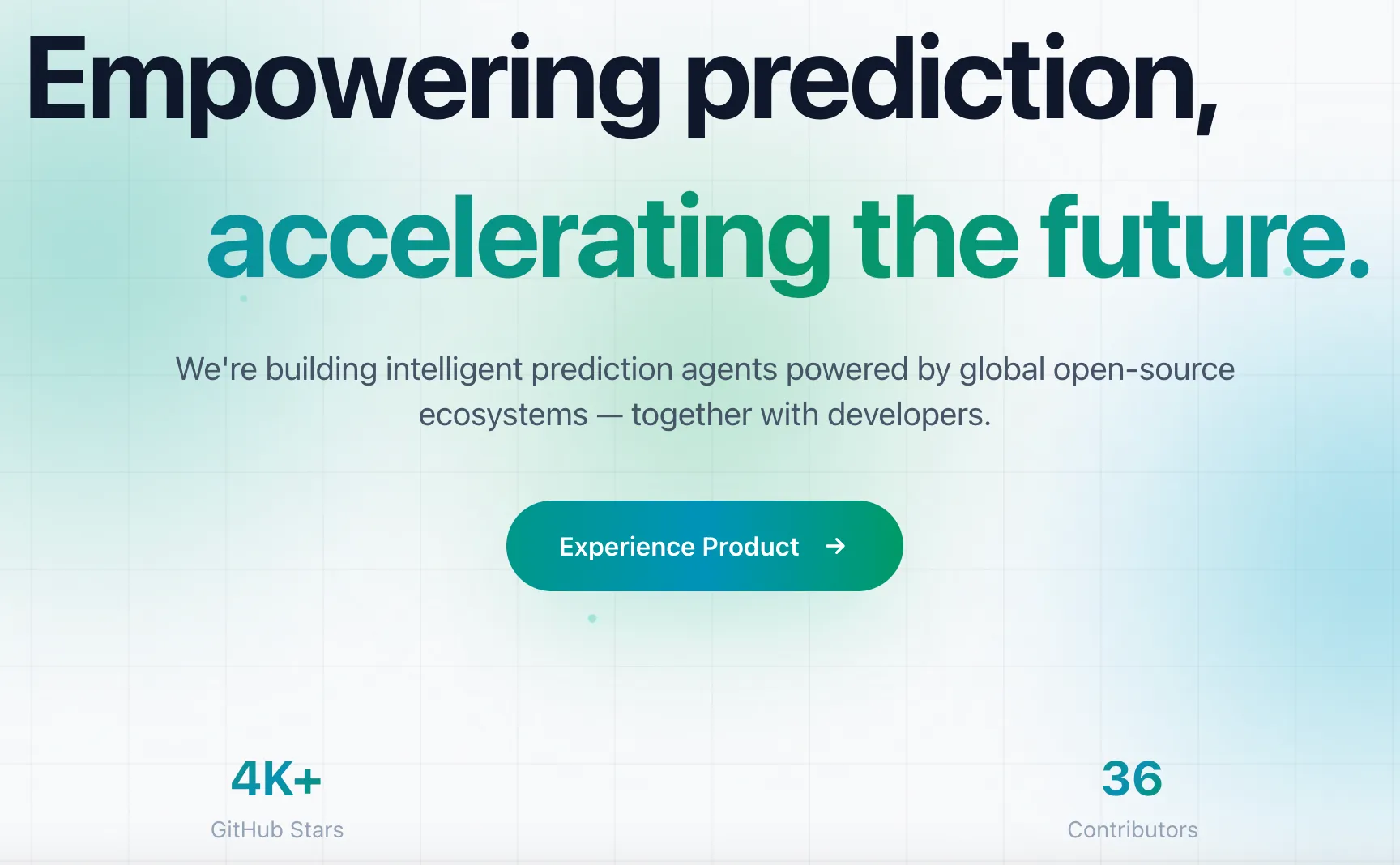
Currently the project can be experienced at https://dr.miromind.ai/ .
Technical Analysis
The core innovation of MiroThinker 1.5 is the "Interactive Scaling" framework, which introduces agentic density as a third dimension of performance improvement beyond traditional parameter and data scaling. TMTPost explains that this framework allows the model to perform deep interaction by generating hypotheses, performing real‑time evidence searches and iteratively revising, rather than relying on static reasoning. Specifically, the model implements a ReAct loop (Reason‑Act‑Observe‑Think) and supports 400+ tool calls, including web browsing, code execution and multi‑source verification.
Another key technique is "observation compression": to save tokens over long histories, early tool results are masked while keeping the most recent K rounds of raw observations and all thought processes (Thoughts). X user yan5xu analyzed that this counterintuitive design uses Thoughts as dynamic summaries: each Thought "digests" prior observations and forms a high‑fidelity compressed package without requiring an additional summarization agent. This enables a 256K context to contain hundreds of interaction rounds, suitable for deep research.
In addition, the model uses a "temporal‑sensitive sandbox" to avoid hindsight leakage and ensure fair predictions. A YouTube demo shows transparent reasoning chains: hypothesis generation, evidence verification and confidence quantification. LinkedIn posts note that this native agent capability is built into the model rather than provided by external scaffolding, improving efficiency. Compared with Kimi‑K2‑Thinking (1T parameters), MiroThinker 1.5 achieves a query inference cost of only $0.07/query and runs faster.
Performance Evaluation
MiroThinker 1.5 performs strongly across multiple benchmarks. Hugging Face data shows the 30B variant scored 39.2% on HLE‑Text, 69.8% on BrowseComp, 71.5% on BrowseComp‑ZH and 80.8% on GAIA‑Val‑165, leading open‑source agents and setting a new BrowseComp record. Compared with closed models, the 235B variant outperformed ChatGPT‑Agent (68.9% vs. 69.8% on BrowseComp), and the 30B variant surpassed Kimi‑K2‑Thinking on BrowseComp‑ZH (71.5% vs. 62.3%).
AIbase reported the model's strong performance on Chinese browsing tasks and highlighted its cost advantage. Substack analysis indicates Interactive Scaling yields predictable performance gains with deeper interaction, making it suitable for financial forecasting, Oscar nomination and Super Bowl analyses. X user tests confirm that for product strategy (such as SaaS investment decisions) and policy analysis, the model provides quantified uncertainty and hypothesis lists, outperforming traditional LLMs. The FriendliAI platform supports its quantized deployment, ensuring reliable inference.
Applications and Impact
MiroThinker 1.5 is suitable for deep research automation, such as event prediction and multi‑source analysis. X user KloudiHub noted it supports local deployment and can replace subscription services. LinkedIn posts emphasize that it reduces costs in enterprise scenarios and promotes AI democratization. Combined with tools like Kortix, it can be extended into productivity platforms.
In terms of impact, HM.AI reported the model rewrites the rules of AI efficiency, shifting from "brute‑force computation" to "intelligent density." Facebook posts say it challenges the 1T baseline and injects vitality into the open‑source ecosystem. X user JiantaoJ predicts this will continue the trajectory of agent scaling. In the future, it could expand into more domains such as healthcare and education.
Conclusion
The rapid rise of MiroThinker 1.5 demonstrates that smaller models, through intelligent optimization, can rival industry giants. Its Interactive Scaling and open‑source nature push AI toward greater efficiency and transparency. The model is factually reproducible and provides a replicable path for developers; with continued community contributions, it is likely to further reshape the AI ecosystem.
▶️ Enjoyed this piece? Creating content is hard work!
Follow our YouTube channel:
AI Rosetta
Your likes, subscriptions and shares are our greatest support! 🙏
For more AI news visit:
https://www.airosetta.com