
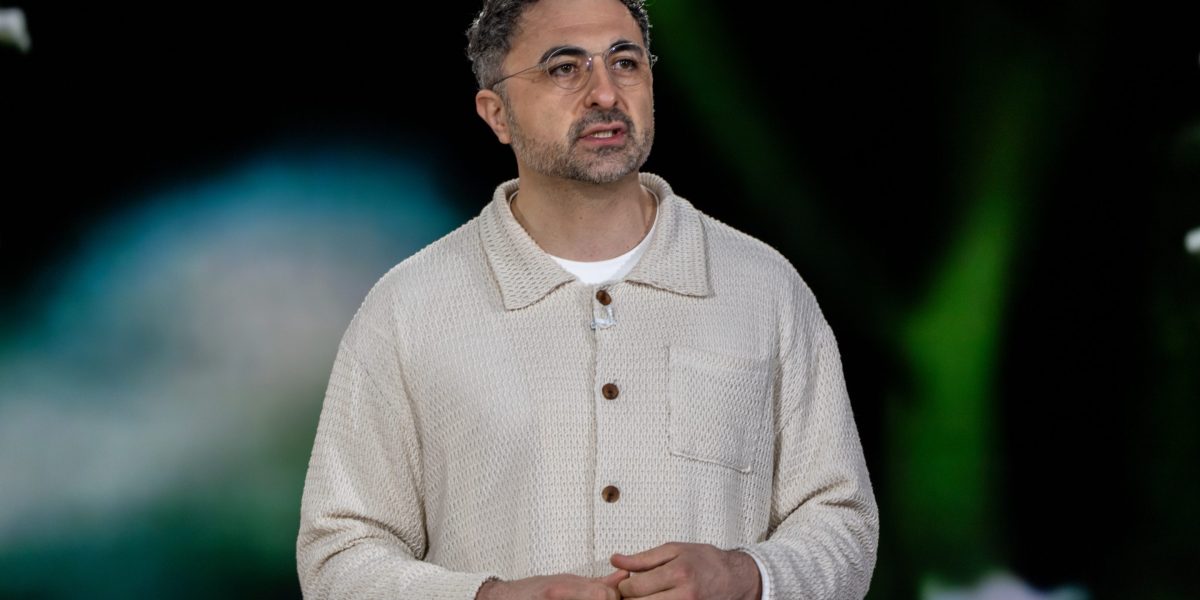
On October 24, 2025, Fortune reported that Microsoft AI CEO Mustafa Suleyman, speaking at the Paley International Council summit in Menlo Park, California, made a clear statement: Microsoft will not develop pornographic chatbot services. He said bluntly "this is very dangerous," stressing the potential risks of AI simulating human behavior. The remarks were aimed at partner OpenAI and rival xAI, both of which are actively embracing adult‑content generation, sparking intense debates over AI ethics and business models. Drawing on authoritative sources including CNBC, the BBC and posts on X, this article analyzes the split: can Microsoft's conservative strategy lead the industry? What impact will it have on OpenAI's ChatGPT and xAI's Grok? More importantly, how does this controversy reflect AI's shift from a tool to a "companion," and the resulting regulatory dilemmas.
Microsoft's position stems from a deep concern about the risks of AI "humanization." Suleyman warned that pornographic features could amplify AI's "mirror effect," making it harder for users to distinguish virtual from real and leading to emotional dependence or psychological harm. As OpenAI's largest investor (a total of $13 billion since 2019), Microsoft is accelerating development of an in‑house Copilot chatbot, due this fall, promising a "human‑centered" design that avoids any "simulated pornographic" elements. CNBC reported this decision marks a further rift with OpenAI: OpenAI recently signed a $300 billion computing deal with Microsoft's rival Oracle, while Microsoft is cementing B2B barriers through enterprise AI like Office integrations. Suleyman's remarks are not isolated, reflecting broader industry worries. Jessica Ji, a senior researcher at Georgetown's Center for Security and Emerging Technology, warned that pornographic AI could reinforce gender stereotypes and privacy breaches, especially where age verification is weak. Billionaire Mark Cuban wrote on X: "this will backfire. Parents will abandon ChatGPT." These voices show Microsoft's stance is both an ethical choice and a market positioning: targeting education, enterprise and family users while avoiding legal and reputational risks associated with adult content.
In stark contrast is OpenAI's "adult freedom" turn. On October 14, OpenAI CEO Sam Altman announced on X that ChatGPT will allow verified adult users to generate pornographic content starting in December, as part of a "treat adults like adults" principle. Altman defended the move: "AI is increasingly integrated into life; giving users freedom to use it is core to our mission." The BBC reported this policy grew out of user feedback—early strict limits (such as banning NSFW content) drove away some adult users. OpenAI says it will strengthen age gating and mental‑health screening, but X user @signulll quipped: "this is tantamount to giving language models unlimited access to humanity's edge systems—civilizational‑level decisions." Likewise, xAI's Grok introduced a "companion mode" earlier this year that lets subscribers interact with anime‑style virtual women, including flirtatious dialogue and wardrobe changes. xAI dismissed media criticism as "mainstream media lies," highlighting its anti‑establishment posture. TechBuzz analysts say this permissive strategy targets Gen Z entertainment demand and could boost ChatGPT monthly active users from 300 million to 400 million, but it also increases misuse risks such as deepfake pornography.
The deeper impact lies in reshaping the AI ecosystem. The New York Post noted Microsoft's "red line" may attract enterprise clients but sacrifice consumer growth: OpenAI and xAI's adult features could capture an OnlyFans‑style market, with the AI companion industry projected to reach $50 billion by 2027. Posts on X show public reaction is polarized: @contentnow warned "people will believe AI is conscious," calling for model‑welfare rights, while @avidseries criticized the approach as "exploiting America's appetite for porn." More broadly, OpenAI's own research indicates intimate AI can worsen loneliness and dependence, yet commercial incentives persist. Regulatory lag compounds the problem: California Governor Gavin Newsom vetoed a bill on October 14 to restrict children's access to AI companions, and one day later OpenAI loosened its rules. The EU AI Act requires audits for high‑risk content but enforcement remains weak; at the federal level, the Biden administration is preparing an "AI safety summit" that could mandate age‑verification standards.
This controversy highlights a crossroads in AI development: Microsoft's safety‑first approach versus OpenAI and xAI's pursuit of user freedom. The former seeks to guard against ethical risks; the latter may drive innovation but also sow seeds of psychological dependence and misuse. In the long term, the debate could prompt global regulatory standards—such as mandatory age verification and content audits—to balance technological potential with human welfare. If left unchecked, AI risks transforming from a reliable assistant into an emotional "lure," where social costs far outweigh commercial gains.
As a reader, which side do you choose?