
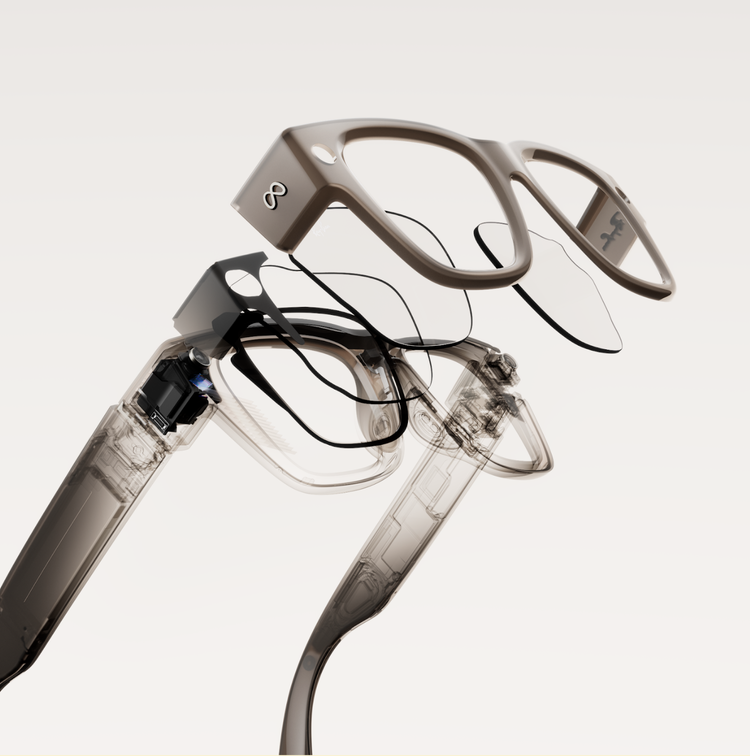
At the Meta Connect 2025 developer conference, Meta on September 17 officially unveiled two revolutionary AI smart glasses: the Meta Ray‑Ban Display and the Oakley Meta Vanguard. These glasses are the company’s first to integrate built‑in displays and support Meta AI Vision, an EMG (electromyography) wristband control, and real‑time AR interaction—marking a shift from traditional smart glasses toward a "full‑featured AR assistant." Meta CEO Mark Zuckerberg said in the opening keynote: "These glasses are not just accessories, they are your AI partner that can see the world and interact with it." According to TechCrunch, the Ray‑Ban Display is priced at $799 and will be sold in limited quantities in U.S. retail stores starting September 30; the Oakley Vanguard is priced at $499, with preorders open and general availability on October 21. This release continues Meta’s collaboration with EssilorLuxottica (Ray‑Ban’s parent company) but adds displays and AI enhancements that could challenge Apple Vision Pro and Snap Spectacles and help drive the AR glasses market toward a projected size exceeding $100 billion by 2030. In the AI hardware race, Meta’s glasses emphasize "lightweight + intelligence," which is expected to accelerate everyday AR applications.
The Ray‑Ban Display is an upgraded second‑generation Meta smart glass that retains the classic Ray‑Ban design while adding a miniature OLED display (1080p resolution, supporting a HUD interface). Core features include Meta AI Vision integration: the glasses’ cameras capture live imagery while AI analyzes the environment and provides contextual suggestions, such as "identifying a building ahead and offering historical information." In Zuckerberg’s demo, once the glasses are worn the AI automatically translates signs, recognizes dish nutrition or navigation routes, and projects results directly onto the lenses. Battery life reaches up to nine hours (in video recording mode); built‑in speakers are 20% louder, and the glasses support 3K video capture and spatial audio. Control is innovative: paired with an EMG wristband, users operate the device via gestures and muscle signals (for example, a fist squeeze to select or a rotation to scroll) without voice or touch. CNN reported that this addresses traditional smart‑glass interaction pain points, and early user feedback described the controls as "intuitive." Priced at $799 (available in black or sand), supplies are limited and the target consumers are fashion‑minded tech enthusiasts.
The Oakley Meta Vanguard is aimed at sports scenarios and priced at $499, with preorders already open. It uses Oakley’s signature frame and integrates the same AI features, but is optimized for water resistance and impact durability (IP68, military‑grade). In sport mode, the glasses can track heart rate and cadence and provide real‑time AI coaching—for example, "adjust your posture to avoid injury." Tom’s Guide live coverage noted that Zuckerberg demonstrated the glasses during a run, with the AI recognizing terrain and suggesting routes while HUD navigation was projected on the display. Battery life is eight hours; the Vanguard includes a built‑in microphone for hands‑free calls and is compatible with iOS and Android apps. Both models support local running of the Llama 3.1 model to preserve privacy (data is not uploaded to the cloud).

The launch reflects Meta’s "next‑generation computing" vision. Since the first‑generation Ray‑Ban Meta glasses (without a display) sold over one million units in 2023, Meta has invested more than $5 billion in AR hardware. In the Connect 2025 keynote Zuckerberg remarked: "From Oculus to Ray‑Ban, we built an AI glasses ecosystem; now with displays we make AR truly practical." The technical basis is Meta AI’s visual enhancement: the glasses’ cameras combined with Llama models enable object recognition, translation and creative generation (for example, "turn the coffee cup in front of you into a work of art"). Reuters reported that the EMG wristband captures muscle signals with latency under <50ms, outperforming touchscreens on devices like the Apple Watch. Safety features include a SynthID watermark to identify AI‑generated content, aligning with the EU AI Act.
The market impact is significant. The AR glasses market is projected to reach $50 billion by 2025, and Meta’s release could capture about 30% market share. It challenges the Apple Vision Pro (priced at $2,999 and considered bulky) and Snap Spectacles (priced at $380 without a display) by positioning itself as "fashionable + AI" for the mainstream. TechCrunch observed that the Ray‑Ban Display’s nine‑hour battery and 3K video capture fill a gap in the consumer AR space. Use cases are diverse: in daily life AI can identify dishes and provide nutrition advice; at work the glasses can support remote collaboration (for example, projecting a screen into the lenses); in sports the Oakley Vanguard can track performance and offer instant feedback. On X, the #MetaConnect2025 hashtag received 500,000 interactions with users sharing that "AR glasses are finally useful."
Challenges include privacy concerns: always‑on cameras could expose data, and Meta has pledged end‑to‑end encryption. Display brightness in strong sunlight still needs optimization, which Zuckerberg acknowledged by saying "outdoor testing is ongoing." Competition is intensifying: Google’s Project Astra was previewed on September 17 and integrates Gemini AI.
Looking ahead, Meta’s AI glasses could usher in an "everyday AR" era. Zuckerberg said: "In 2026 we will launch an even thinner version that supports holographic projection." The tech industry is witnessing glasses evolve from fashion items into AI hubs, and this release may accelerate AR adoption among the general public.
(Word count: 1018)
Sources:
- Meta Blog: "Introducing Meta Ray‑Ban Display: A Breakthrough Category of AI Glasses" (https://www.meta.com/blog/meta‑ray‑ban‑display‑ai‑glasses‑connect‑2025/, 2025‑09‑17).
- Meta: "Meta Ray‑Ban Display: AI Glasses With an EMG Wristband" (https://about.fb.com/news/2025/09/meta‑ray‑ban‑display‑ai‑glasses‑emg‑wristband/, 2025‑09‑17).
- CNN: "Mark Zuckerberg unveils Meta's newest AI‑powered smart glasses" (https://www.cnn.com/2025/09/17/tech/meta‑ai‑smart‑glasses‑connect, 2025‑09‑17).
- CNBC: "Mark Zuckerberg unveils $799 Meta Ray‑Ban Display glasses" (https://www.cnbc.com/2025/09/17/zuckerberg‑799‑meta‑ray‑ban‑display‑glasses.html, 2025‑09‑17).
- Reuters: "Meta's new $800 smart glasses with display likely to take center stage at Connect event" (https://www.reuters.com/business/media‑telecom/metas‑new‑800‑smart‑glasses‑with‑display‑likely‑take‑center‑stage‑connect‑event‑2025‑09‑17/, 2025‑09‑17).
- TechCrunch: "Meta unveils new smart glasses with a display and wristband controller" (https://techcrunch.com/2025/09/17/meta‑unveils‑new‑smart‑glasses‑with‑a‑display‑and‑wristband‑controller/, 2025‑09‑17).
- Tom's Guide: "Meta Connect 2025 LIVE — Meta Ray‑Ban Display" (https://www.tomsguide.com/news/live/meta‑connect‑2025‑live‑updates, 2025‑09‑17).
- Meta Blog: "Oakley Meta Vanguard: The Next Era for Performance AI Glasses" (https://www.meta.com/blog/oakley‑meta‑vanguard‑pre‑order‑performance‑ai‑glasses/, 2025‑09‑17).
- Reuters: "Meta launches smart glasses with built‑in display, reaching for superintelligence" (https://www.reuters.com/business/media‑telecom/meta‑launches‑smart‑glasses‑with‑built‑in‑display‑reaching‑superintelligence‑2025‑09‑18/, 2025‑09‑18).