
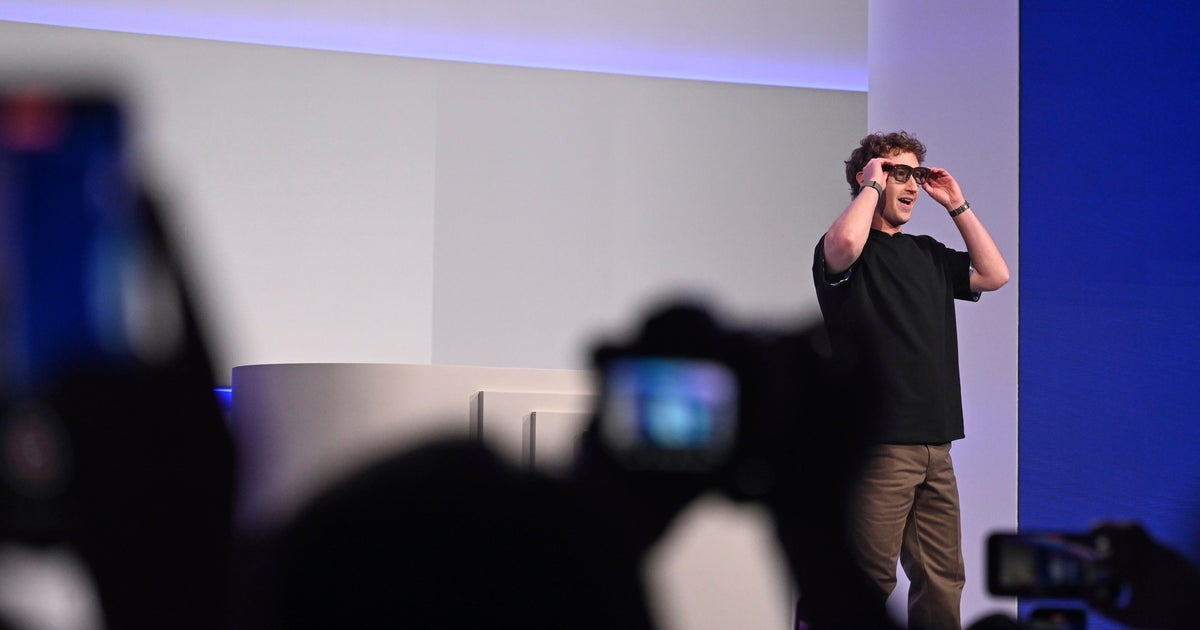
On September 22, 2025, CBS News reported new uses of Meta's AI glasses within the blind community. Equipped with a forward‑facing camera and voice feedback, the device is being used by some people with visual impairments to handle tasks that previously required assistance: opening and "listening to" mail, reading text on food packaging, and confirming prescription bottle labels.
The report describes concrete scenarios: users hold letters up to the glasses' camera, and the system converts and reads envelope and letter contents aloud in real time; in supermarkets, labels captured by the camera are quickly parsed by AI to indicate prices or ingredients, reducing friction when blind people shop. Unlike traditional canes or guide dogs, the device mainly provides immediate vision‑to‑voice conversion, filling gaps in text recognition and environmental description and making everyday tasks more direct.
At the same time, the report does not shy away from practical concerns: first, cost. The device price and replacement parts remain out of reach for many users. Second, accuracy and false positives — complex or blurred text and low‑light conditions can produce misleading results. There are also privacy worries: continuous camera capture in public spaces can involve other people's images and sensitive information, and the community is divided on how such devices should be used in public.
Notably, the blind community has not been a passive recipient; the report notes users are adapting how they use the glasses: some photograph routine bills in advance to build a personal archive the glasses can read; others share recognition tips in online groups, such as placing important mail against a specific background color or adding distinct shape markers at home to improve recognition rates.
Developers and accessibility organizations are also engaging: some suggest manufacturers improve low‑light recognition, add more granular permission controls, and introduce installment or subsidy programs to lower the barrier to access. The report emphasizes that these devices are not a full replacement for traditional aids but a complementary option that can offer new possibilities for blind users seeking greater independence.
Meta's AI glasses in 2025 demonstrate how technology can change everyday life at the margins: not a one‑off solution, but a gradual accumulation of small changes. For younger blind users, a device that feels "futuristic" is becoming a tangible source of independence through down‑to‑earth uses like mail reading and shopping assistance.