
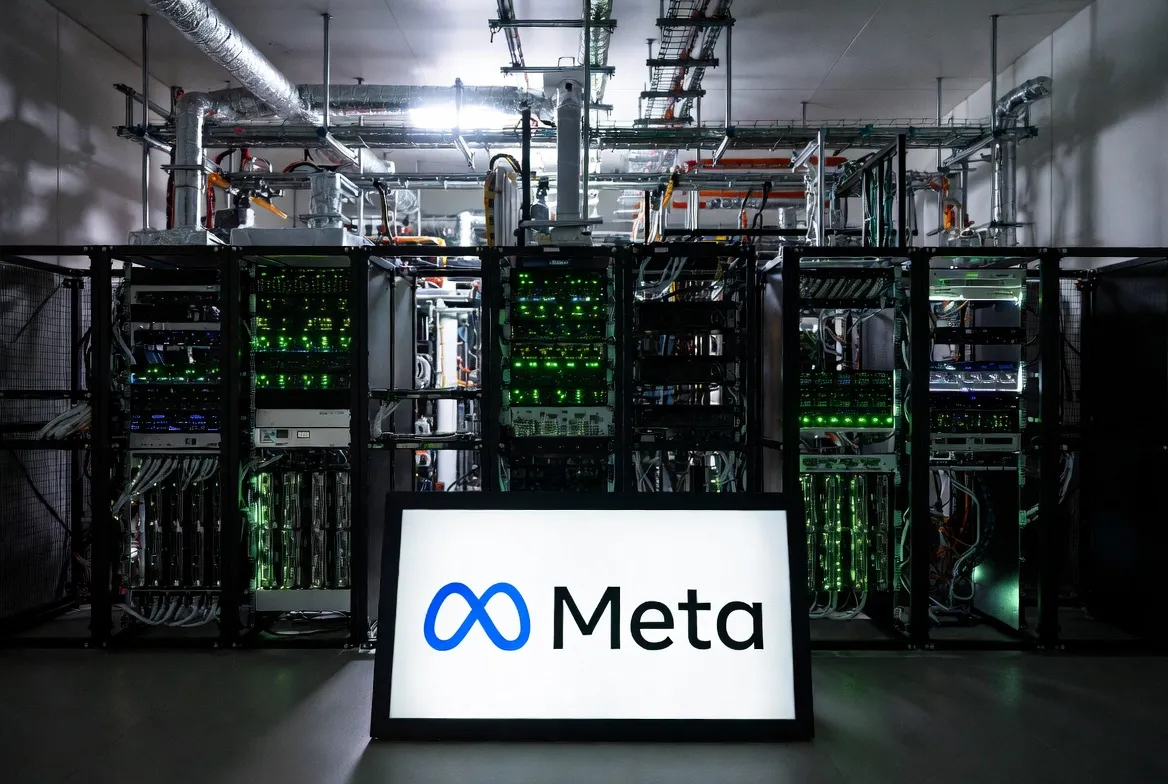
In 2026, as artificial intelligence advances rapidly, Meta Platforms (the parent company of Facebook) has once again become the center of attention in the global AI infrastructure arena. Following its 2025 effort to assemble a top AI team through high‑profile hires, the company launched a large‑scale spending campaign at the start of the year, signing consecutive massive chip purchase and rental agreements with NVIDIA, AMD and Google with a combined value estimated to exceed $150 billion. These moves mark Meta's shift from "talent competition" to "compute armament," intended to provide robust backing for its Llama family of large models and metaverse initiatives while further intensifying the infrastructure competition among global AI giants. According to Reuters, CNBC, Bloomberg and The Information, the deals are unprecedented in scale and include equity exchanges and deep technical cooperation, underscoring Meta's long‑term commitment to AI.
Multi‑generation GPU partnership with NVIDIA: millions of Blackwell and Rubin GPUs
On February 18, Meta and NVIDIA announced a multi‑generation, multi‑year strategic infrastructure partnership, a massive GPU procurement agreement. According to an NVIDIA press release, Meta will deploy at scale millions of NVIDIA GPUs based on the Blackwell architecture as well as the upcoming next‑generation Rubin GPUs. The agreement also includes integration of NVIDIA Grace CPUs and Spectrum‑X Ethernet networking solutions to optimize Meta’s AI training and inference clusters.
NVIDIA CEO Jensen Huang said the cooperation will "together define the standards for future hyperscale AI data centers." Meta CEO Mark Zuckerberg emphasized that the agreement will underpin the company’s tens of billions of dollars in AI capital expenditures in 2026, ensuring continued iteration of the Llama models and AI services for billions of users worldwide. While the total value of the deal was not disclosed, market estimates place the NVIDIA procurement at over $50 billion, making it one of Meta’s largest single‑chip investments in recent years.
The partnership is not sudden but rather a continuation of a long‑standing relationship between Meta and NVIDIA. Meta became one of NVIDIA’s largest customers as early as 2024, and this agreement further locks in multi‑generation product supply to mitigate supply‑chain disruption risks.
6GW agreement with AMD: an innovative chip‑for‑equity model
A week after the NVIDIA announcement, on February 24 Meta reached another massive agreement with AMD: Meta will deploy up to 6 gigawatts (6GW) of AMD Instinct GPUs across its global AI data centers over the next five years. The agreement’s total value could exceed $100 billion, representing the largest single order in AMD’s history.
The deal’s innovation lies in a chip‑for‑equity structure: AMD will issue to Meta 160 million ordinary share warrants that vest in stages. If AMD meets delivery milestones, Meta could ultimately hold roughly 10% of AMD’s shares. Similar to AMD’s prior collaboration with OpenAI, this reflects a new strategy by chip vendors to bind strategic customers through equity arrangements.
AMD CEO Lisa Su said the agreement places AMD at the core of Meta’s next‑generation AI infrastructure. Meta highlighted that the collaboration will provide more energy‑efficient, customized GPU solutions to complement its NVIDIA partnership and create a diversified supply chain. A 6GW scale corresponds to the peak power of hundreds of thousands of high‑end GPUs and will significantly boost Meta’s AI training capacity.
Multi‑billion‑dollar rental deal with Google: TPU cloud compute as a "third insurance"
On February 26, The Information reported exclusively that Meta reached a multi‑billion‑dollar AI chip rental agreement with Google to lease Google Cloud’s TPUs (Tensor Processing Units) for developing new AI models. Although smaller than the NVIDIA and AMD purchase agreements, this deal signals further diversification of Meta’s compute sources.
As a cloud services giant, Google’s TPUs offer distinct training efficiency advantages. The agreement includes Meta’s use of Google’s TPU v6 or newer for parallel training and inference optimization of Llama models. Both Google and Meta declined further comment, but informed sources said the cooperation aims to help Meta spread risk and avoid overreliance on a single chip supplier.
The deal also highlights Google Cloud’s competitiveness in the AI cloud compute market. Despite competition with Meta in social and metaverse areas, compute cooperation has become industry norm.
Meta’s strategic intent: a comprehensive upgrade from hiring talent to heavy spending
These agreements are not isolated actions but part of Meta’s systematic AI strategy for 2026. In 2025 Meta built a top AI team through high‑salary hires from OpenAI, Google and other leaders; in 2026 the company is shifting focus to infrastructure, planning as much as $135 billion in capital expenditures for the year to fund data centers, chip procurement and model training.
Through cooperation with NVIDIA, AMD and Google, Meta has created a three‑pronged compute supply chain:
- NVIDIA: top‑tier performance, suitable for intensive training;
- AMD: energy‑efficiency optimization, suitable for large‑scale deployment;
- Google: cloud TPUs, suitable for flexible rental and hybrid‑cloud models.
This strategy not only reduces supply‑chain risk but also helps ensure Meta’s lead in Llama model iterations and metaverse development. In an internal meeting, Zuckerberg said, "Compute is the oil of the AI era; we must lock in resources in advance."
Industry impact: AI infrastructure race heats up
Meta’s spending campaign further intensifies the global AI infrastructure race. Companies such as OpenAI, Anthropic and xAI are also expanding compute capacity on the order of tens to hundreds of billions of dollars, placing unprecedented demand pressure on the global semiconductor and energy markets. NVIDIA and AMD shares rose noticeably after the announcements, reflecting investor optimism about long‑term AI chip demand.
However, the race also raises concerns: will massive investments create a bubble? AMD and Meta’s chip‑for‑equity model is innovative but increases potential equity dilution risk for AMD. Meanwhile, global power and supply‑chain constraints could push up costs and affect smaller AI companies’ prospects.
For Chinese AI companies, the episode offers lessons. With domestic chips such as Ascend and Cambricon iterating rapidly, locking in compute resources through strategic partnerships will be a key challenge.
Conclusion: an upgraded compute "arms race" in the AI era
Meta’s hundred‑billion‑dollar‑level deals with NVIDIA, AMD and Google are more than commercial transactions; they signal a new phase in the AI infrastructure competition. Leading AI companies are preemptively securing core resources for years ahead in units of tens or hundreds of billions of dollars.
In 2026, amid rapid technological iteration, whoever controls sufficient compute will hold the key to the next generation of intelligence. Meta’s latest moves may be just the latest chapter in a much larger contest.
The AI compute arms race is escalating.
▶️ Enjoy this article? Creating it takes effort!
Follow our YouTube channel:
AI Rosetta
Your likes, subscriptions and shares are our greatest support! 🙏
More AI news at: https://www.airosetta.com