
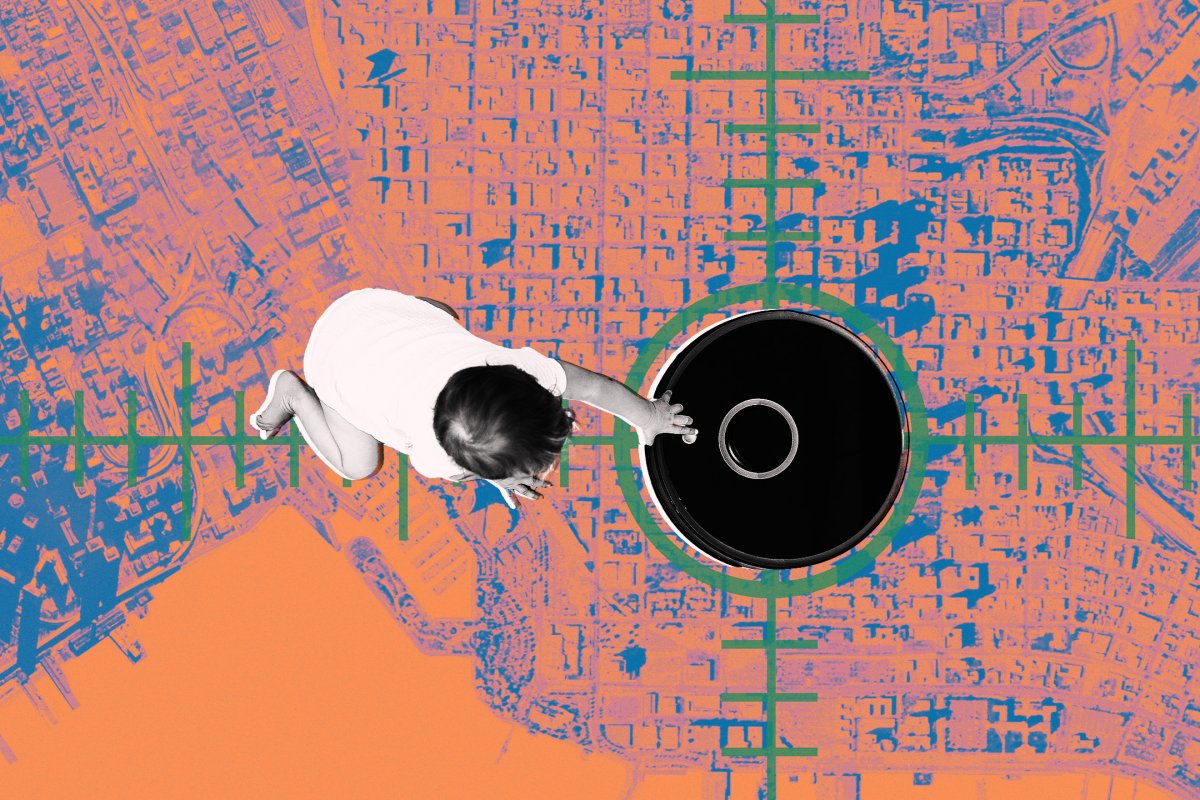
October 27, 2025, a regular household user discovered during a routine check of his home network that a robot vacuum was continuously sending large amounts of traffic in the background. By examining router logs and network captures, he found the device was not merely transmitting simple diagnostic information but batches of packets that could be used to reconstruct indoor structures.
These packets were not single status reports; they contained coordinates and depth information that could generate three‑dimensional point clouds or room topology—enough to map furniture positions, the orientation of doors and windows, and the location and width of stairs and passages. Logs also showed the uploads were sustained in minute‑by‑minute intervals rather than one‑off spikes, with destination servers located overseas and transmission paths spanning thousands of kilometers.
The user posted portions of the captured logs and traffic samples on social media. Screenshots showed multiple handshakes between the device and remote domains, repeated upload task IDs, and dense timestamped reporting. After the post, other users began inspecting their device logs and found similar behavior, prompting rapid discussion across the community.
Technicians explain that modern robot vacuums equipped with LiDAR or visual sensors do need to build indoor maps for navigation and path planning. Manufacturers commonly cache maps locally or upload anonymized maps to improve algorithms and perform cloud‑based SLAM (simultaneous localization and mapping). But when uploaded content can be directly used to reconstruct a home layout and be linked to account, IP or geolocation information, the privacy risk exceeds what is reasonable for algorithm optimization.
A security researcher interviewed for the story said the key issue is "identifiability and linkability"—even if map data does not include names or photos, if it can be combined with Wi‑Fi MAC addresses, account IDs or time‑series data it may reveal a home's exact location and interior layout. If such data are stored, shared or misused by third parties, it could enable tracking, targeted surveillance or even planning for unlawful entry.
For ordinary consumers, experts offered practical advice: enable device isolation and traffic monitoring on home routers, disable unnecessary cloud sync or upload options, place smart appliances on a separate virtual LAN (VLAN) or guest network; if the manufacturer offers local map storage or an offline mode, prioritize local processing.
At the time of reporting, the manufacturers involved had not issued a unified public statement. The community has called for greater transparency: manufacturers should clearly disclose map‑data collection frequency, the specific content collected, de‑identification measures and external storage locations, and provide more prominent privacy options in product settings. Regulators were urged to develop more detailed compliance and notification rules for this emerging category of household spatial data.
The incident has pushed the "invisible data flows" of smart home devices into public view: as AI and cloud services enhance device capabilities, users' control over—and right to know about—data describing their physical living spaces also requires protection by technology and policy.