
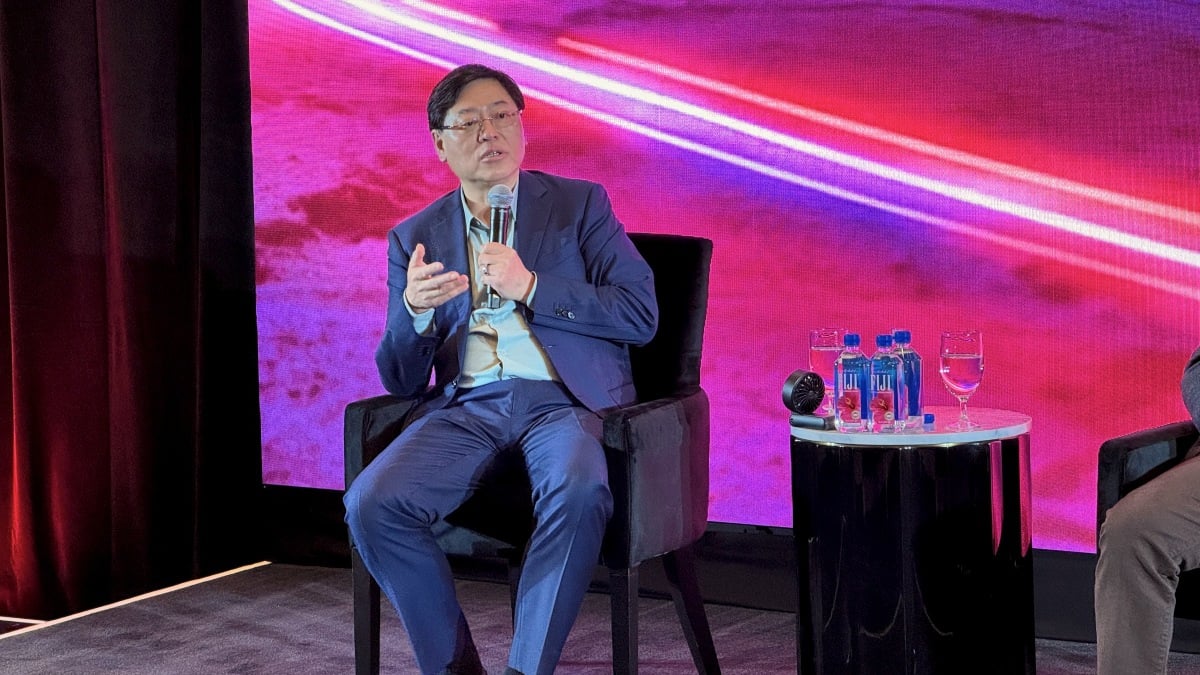
January 2026, at CES in Las Vegas where lights and holographic effects intertwined at The Sphere, Lenovo chairman and CEO Yang Yuanqing turned his focus to a topic that is no longer distant: artificial intelligence.
At the close of his keynote, Yang left a blunt message for the live and global audience: "Nobody can avoid it." He added that while some choose to wait or even deny AI, the technology is seeping from data centers into every endpoint and workflow. In a one‑on‑one interview with Mashable after the keynote, Yang distilled his argument into three areas: technological inevitability, controllability of use, and corporate responsibility.
Yang emphasized that Lenovo regards AI as a tool to boost productivity rather than a mere gimmick. To make that tool more usable and controllable, Lenovo has made clear design choices to embed AI capabilities into personal computers and enterprise solutions, allowing ordinary users to enjoy intelligent conveniences within familiar interfaces. In his onstage demonstrations and product explanations, he repeatedly returned to the question of "how to make users trust AI" — including privacy protection, localized processing, and explainability.
Addressing concerns that AI could cause large‑scale job losses, Yang did not shy away. He noted that historically each leap in productivity brings structural shifts in employment but also creates new jobs and business models. He focused on skills supply and education, arguing that companies and governments should take responsibility for training and transitions to help workers move into higher‑value roles rather than simply blaming the technology itself.
Onstage, Lenovo's set design and demos also conveyed a message: AI will not remain a conceptual demo. Yang showcased several scenarios where the company integrates AI into device experiences, from smarter meeting collaboration to creator‑focused content‑generation assistance, emphasizing "everyday usability" and "lowering the barrier to use." The recurring keywords were "controllable" and "responsible deployment."
When Mashable asked questions on site, Yang mentioned the importance of regulation and industry coordination. He believes corporate self‑discipline alone cannot fully address AI's complex risks; laws and standards need to be accelerated through public discussion to ensure technology development does not veer away from the public interest. At the same time, he warned against using "fear" to block reasonable applications of the technology — such blockades often hand opportunities to a few actors with greater resources.
The audience reaction was complex and immediate: some enterprise IT managers expressed agreement with Yang's emphasis on "localized processing" and "user privacy first," while developers were interested in how Lenovo will support more efficient AI model computation at the hardware level. In talks with the media, Yang said Lenovo will continue to promote hardware‑software integration, combining silicon, compute and system optimization to provide practical AI solutions for organizations and individual users of different scales.
Yang closed again with that English line: "Nobody can avoid it." In his view, the debate should not be about whether it can be avoided but about how to embrace and manage this technological shift in a transparent, responsible and human‑centered way. His call to younger users was clear: do not be fooled by hype or paralyzed by fear; actively master new tools and participate in setting the rules to secure real opportunities amid change.
▶️ Enjoy this article? Content creation is hard!
Subscribe to our YouTube channel:
AI Rosetta
Your likes, subscriptions and shares are our greatest support! 🙏
For more AI news, visit: https://www.airosetta.com