
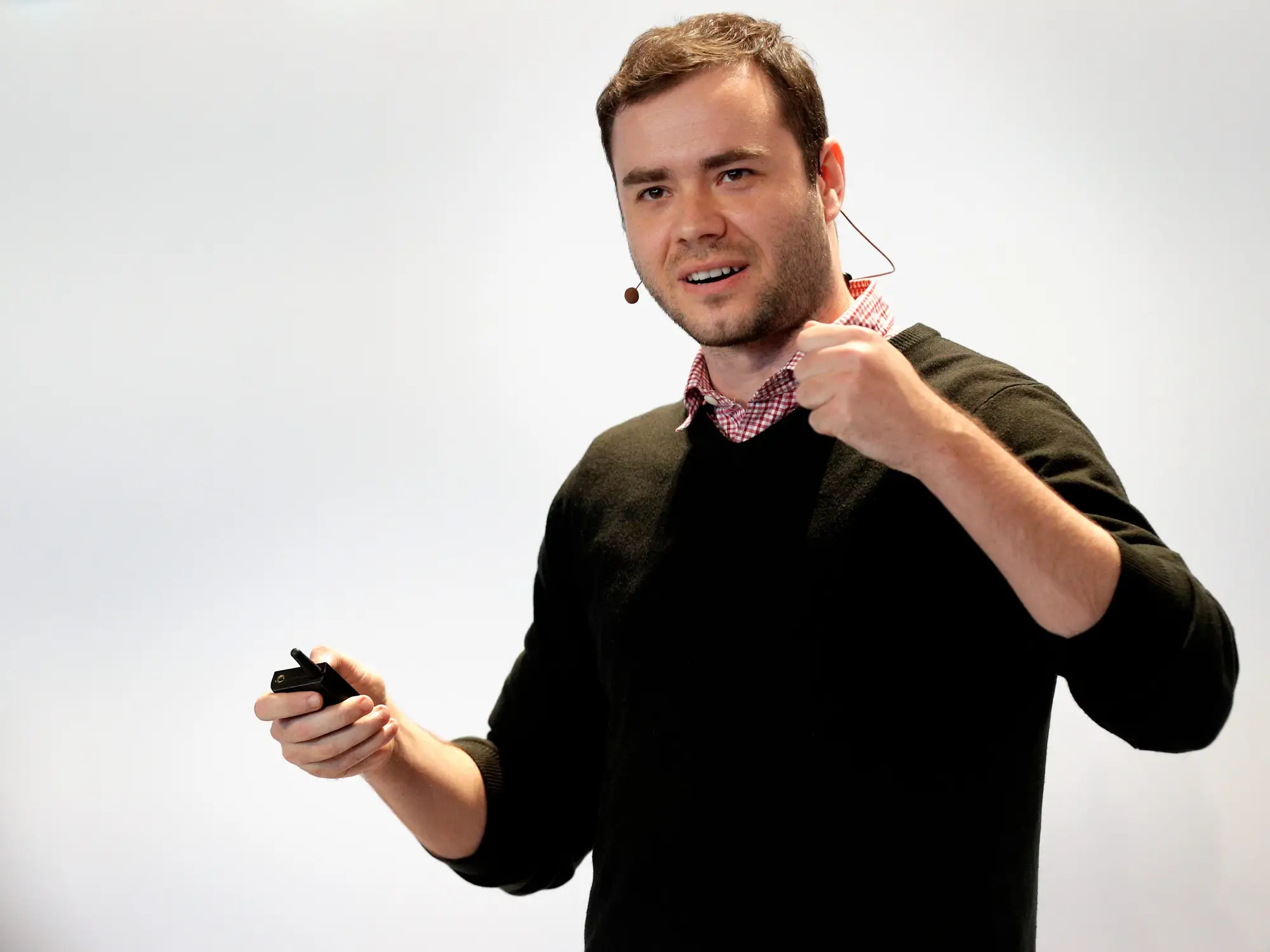
On October 16, 2025, former OpenAI cofounder and former Tesla AI director Andrej Karpathy spoke on the Dwarkesh Podcast about the timeline for AI agents, sparking wide discussion in the tech community. He bluntly said that fully functional AI agents "will take about ten years" to truly work, a view that sharply contrasts with the optimistic atmosphere in Silicon Valley. Business Insider reported that Karpathy’s forecast draws on his 15 years of AI experience and emphasizes that the engineering challenges for current AI agents are far greater than expected. On the X platform, Karpathy clarified in a post: "My AI timeline is 5–10 times more pessimistic than what you hear at an SF AI party or on Twitter, but I still think it's feasible within ten years." The remark quickly attracted thousands of interactions, and many developers agreed with his measured perspective.
Karpathy’s view is not without foundation. Many called 2025 the "year of agents," but he considers that label premature. A Dev.to analysis noted that Karpathy’s prediction stems from his deep understanding of reinforcement learning (RL) and model training, urging the industry to avoid excessive hype. As a mathematician and AI pioneer, his comments injected a dose of sobriety into a fast‑moving field and prompted a reassessment of AGI (artificial general intelligence) timelines.
Karpathy background: a bridge from academia to AI practice
Andrej Karpathy is a prominent figure in AI. After earning a PhD from Stanford, he joined OpenAI in 2015 as its first researcher and helped advance early GPT models. He later served as Tesla's director of AI, leading the Autopilot team and achieving vision‑based driving innovations. In 2024 he left OpenAI to found Eureka Labs, focusing on AI education tools. Karpathy is known for mathematical rigor; his blog posts and lectures (such as the LLM101n course) have influenced millions of developers.
On the podcast, Karpathy elaborated on the challenges for AI agents. He argued that agents are the "next frontier" for AI, but current systems like Auto‑GPT or BabyAGI are only prototypes and far from mature. He emphasized that agents must confront the "long‑tail problem": from perception to planning to execution, engineering challenges accumulate. By contrast, current LLMs (such as GPT‑5) excel at short‑horizon tasks, whereas agent‑level reliability will require a decade of iteration.
Prediction details: RL bottlenecks and model collapse
Karpathy’s core prediction is that it will take ten years for AI agents to move from concept to practical use. This timeline is based on his pessimistic assessment of RL. He called RL "bad" because it relies on sparse rewards and the exploration‑exploitation dilemma; other approaches (like supervised learning) are even worse. In the context of agents, RL is used to train decision‑making, but current algorithms are inefficient and cannot handle complex environments.
Another central issue is "model collapse": when LLMs train on synthetic data, performance degrades and they fail to capture long‑tail distributions. Karpathy pointed out this prevents agents from continuously improving from real‑world feedback. A LinkedIn piece titled "Andrej Karpathy: Agent Decade, RL, AGI" summarized that his ten‑year timeline comes from 15 years of experience: the problems are solvable, but will take time to accumulate solutions. He contrasted current AI—LLMs like the GPT series are strong at generation—with agents, which must integrate perception, memory, and action into a closed loop.
Karpathy also discussed AGI: he believes AGI will still take ten years, far longer than some Bay Area optimists (such as proponents of "AGI next year"). On the Reddit subreddit r/singularity, users quoted his clarification: "Ten years should be the optimistic timeline for AGI; it only sounds pessimistic compared to current hype." He stressed that the "ten‑year bet" for agents stems from engineering realities: from data collection to system integration, every step requires breakthroughs.
Industry impact: from hype to pragmatism
Karpathy’s remarks sparked debate. Business Insider said they serve as a reminder that "patience is a virtue," especially amid the AI agent frenzy. Blogger Simon Willison analyzed that although 2025 is an agent year, Karpathy’s ten‑year prediction is more realistic and echoes the slow progress of RL since AlphaGo. The X post by @karpathy received tens of thousands of views, and many developers responded: "Thanks for the cold shower — it prevents blind optimism."
The view may influence investment and research. An AOL article noted Karpathy’s pessimistic timeline could cool investments in AI agents while pushing toward more pragmatic approaches. Community reactions were divided: optimists called him conservative, pessimists praised his rigor. A Dev.to piece said this sparked renewed thinking about agent engineering, such as improving RL algorithms.
Compared with current AI development, Karpathy’s prediction is reasonable. Although OpenAI’s o1 model represents mathematical advances, agents like Auto‑GPT still struggle with reliability. He argued that agents must solve "multi‑agent collaboration" and "long‑term planning," which will require a decade of accumulation.
Conclusion: reason guiding AI's future
Karpathy’s ten‑year prediction may seem pessimistic, but it injects rationality into the development of AI agents. For many technology practitioners, it can also be welcome news. It reminds the industry that AI is not magic but engineering iteration. In the future, with improvements in RL and data, agents may arrive faster. But as Karpathy said, amid Silicon Valley party optimism, staying grounded in reality is key. His view not only scrutinizes timelines but helps reshape the AI narrative, encouraging a shift from hype to pragmatism.