
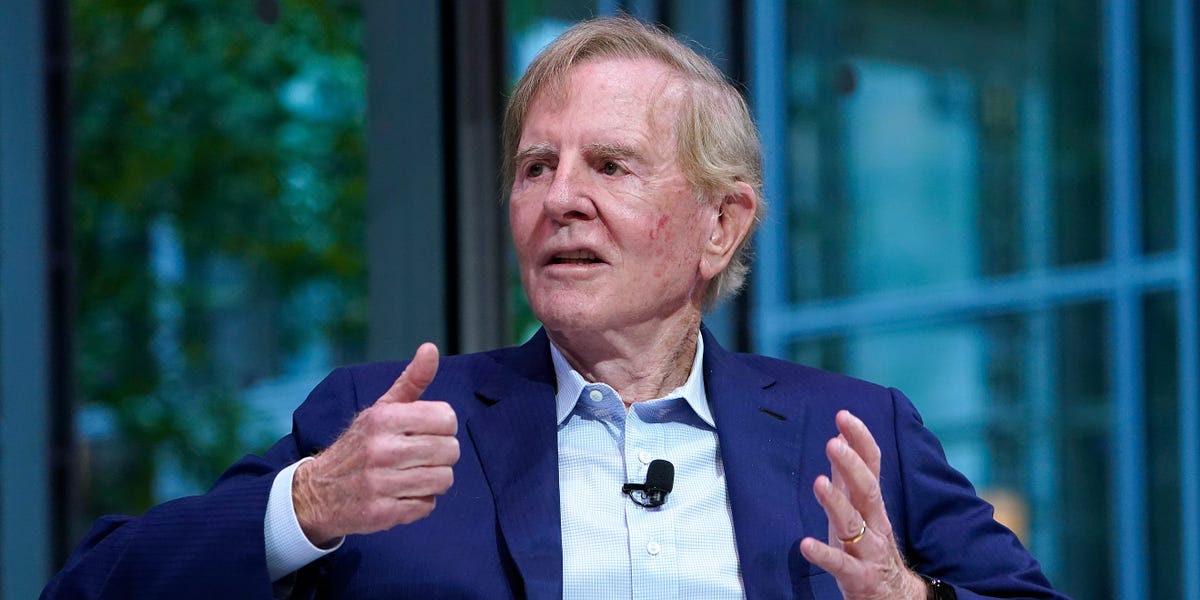
On October 13, 2025, former Apple CEO John Sculley, in an interview with Business Insider, spoke in an almost cautionary tone about generative AI reshaping the tech industry: he said he believes OpenAI may be Apple's "first real competitor in decades".
Sculley recalled Apple's long‑standing strategy of locking in users through hardware, operating systems and its ecosystem, but bluntly said "AI has not been a particular strength for the business", a line he repeated during the interview. For him, the issue is not the survival of Apple's technology but the company's insufficient moves to build large‑scale models, cloud training capabilities and model‑driven service layers.
He noted that in recent years OpenAI has converted AI capabilities into services that directly reach users by rapidly iterating models, opening APIs and pursuing developer‑ and enterprise‑focused product strategies. By contrast, Apple excels at differentiating through hardware and privacy, but has been more cautious about embedding generative AI into everyday user experiences and building a platform centered on large models.
In the interview, Sculley did not lay out a detailed acquisition or technical roadmap, but repeatedly emphasized two points: first, AI capabilities will be decisive in future endpoint competition; second, if Apple remains conservative in AI, it risks losing leadership at the service level. He views OpenAI's rapid commercialization and ecosystem expansion as a direct challenge to Apple's existing business model.
Industry observers say Sculley's comments are not groundless. Over the past two years, OpenAI has quickly gained traction in user interfaces and developer ecosystems through large models, embedded assistants and enterprise‑tailored services; close cooperation with major cloud providers has also given it advantages in training and deployment scale. These are precisely the core concerns Sculley highlighted.
For younger users, the contest centers on changes in experience: whether it means more powerful assistants, more personalized content generation, or new interaction modes integrated into phones and wearables. Sculley's remarks serve as a reminder that if Apple wants to capture the next wave of user habits and platform dividends, it must make more substantive deployments in AI model capabilities and openness strategies.
At the end of the interview, Sculley emphasized the dual significance of competition: on one hand, it may spur Apple to accelerate change; on the other, if Apple moves slowly, competitors that gain the lead in user habits and developer ecosystems could leave Apple facing long‑term structural challenges.