
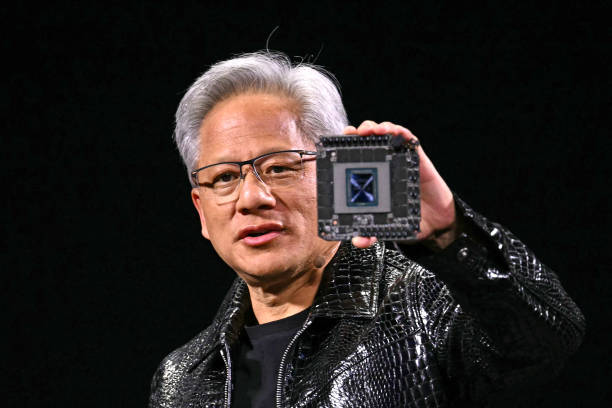
On January 7, 2026 (January 6, 2025, U.S. Eastern Time), the Institute of Electrical and Electronics Engineers (IEEE) officially announced it had awarded NVIDIA founder and CEO Jensen Huang a special commendation—the IEEE Robert N. Noyce Medal special recognition, and a $2 million cash award. The award recognizes his pioneering contributions in the field of graphics processors (GPUs) and his role in advancing the artificial intelligence (AI) revolution. This medal is one of IEEE's highest honors and is typically presented to individuals with outstanding achievements in integrated circuits and computing innovation. According to the announcement on IEEE's official website, this special commendation reflects Huang's long‑term impact leading NVIDIA's transformation from graphics processing to general‑purpose computing, particularly breakthroughs in AI infrastructure. In an interview after his CES 2026 keynote, Huang said the honor belongs to the entire NVIDIA team and emphasized that the future of AI computing will reshape global industry. The recognition not only affirms Huang's personal achievements but also underscores the central role of GPU technology in the AI era.
Jensen Huang's Career: A Pioneer from Game Graphics to AI Computing
Jensen Huang was born in Taipei, Taiwan in 1963 and, after emigrating to the United States, earned a master's degree in electrical engineering from Stanford University. In 1993 he co‑founded NVIDIA with Chris Malachowsky and Curtis Priem, initially focusing on 3D graphics chips. Early NVIDIA products, notably the GeForce series of GPUs, helped drive the PC gaming revolution. Huang's foresight, however, was to extend GPUs from graphics‑specific tasks to general‑purpose computing (GPGPU). In 2006 he introduced CUDA (Compute Unified Device Architecture), a parallel computing platform that allowed developers to harness GPUs for non‑graphics workloads such as scientific simulation and machine learning. This innovation laid the foundation for AI computing: GPUs' parallel architectures greatly outperform CPUs on matrix operations, accelerating deep learning model training.
Under Huang's leadership NVIDIA grew from a company with a market value in the billions to a multi‑trillion‑dollar giant. Forbes reported NVIDIA's market value passed she trillion dollars in 2025, driven largely by explosive demand for AI chips. His strategy included launching the Blackwell and Rubin platforms, architectures that reduced AI inference costs by a factor of ten and advanced applications in agent AIs and physical AI. Huang's personal style—often wearing a leather jacket and giving humorous presentations—has also made him a tech icon.
Details of the IEEE Special Commendation: Honoring the GPU Computing Revolution
The IEEE Robert N. Noyce Medal is one of IEEE's top awards, established in 2000 and named for Intel co‑founder Robert N. Noyce, to honor outstanding contributions in the field of integrated circuits. The 2026 special commendation recognizes Huang's innovations in GPU architecture and CUDA, technologies that "reshaped the computing paradigm and ushered in the AI era." IEEE President Tom Coughlin said in the award statement that Huang's contributions transformed GPUs from gaming tools into general‑purpose computing engines, accelerating the deep learning revolution. The award customarily includes a $100,000 cash prize and a medal, and the presentation ceremony will take place at an IEEE international conference in 2026.
Huang has previously received multiple honors, including the 2024 IEEE Founders Medal, but this special commendation emphasizes his impact on AI computing. Reuters reported that the award coincided with CES 2026, where NVIDIA unveiled the Rubin platform, further reinforcing its leadership in AI.
Huang's Technical Contributions: The Transformative Impact of GPUs and CUDA
Huang's core contribution was turning GPUs from graphics‑dedicated processors into general‑purpose computing devices. Traditional CPUs are serial processors, while GPUs are designed for parallelism and can handle thousands of threads simultaneously. CUDA was the key: as a software platform it enabled developers to write GPU programs in C/C++, simplifying parallel computing. Conceptually, CUDA decomposes tasks into grids and blocks, with each thread executing a kernel function—for example, each element's computation in a matrix multiplication.
This innovation directly propelled AI development: deep learning relies on matrix operations, and GPUs can accelerate training by orders of magnitude. The use of NVIDIA GPUs in AlexNet (the 2012 ImageNet champion) marked a turning point. TechCrunch analysis notes Huang's foresight transformed NVIDIA from a gaming company into an AI giant, with a market value exceeding 5 trillion dollars in 2025. At CES 2026, NVIDIA's Rubin platform was announced to cut AI costs by tenfold, continuing this trajectory.
Industry Impact: Democratization of AI Computing and Challenges
Huang's award reflects the GPU's influence on AI: NVIDIA chips account for roughly 90% of the AI market and have enabled models such as ChatGPT. But the dominance has also raised monopoly concerns: Anthropic has turned to Google's TPUs, and xAI raised $20 billion to build its own stack. Environmental impacts are also prominent: AI training consumes vast amounts of electricity, and NVIDIA has committed to sustainable computing initiatives.
Huang's leadership style—making bold predictions about AI's future—has also influenced the industry. At CES 2026 he forecast that agent AIs would become dominant and called for ethical development.
Conclusion: Huang's Legacy and the Future of AI
Jensen Huang's IEEE special commendation not only recognizes his innovations but also signals a golden era for AI computing. His GPU revolution has reshaped the world, driving transformations from gaming to healthcare. Looking ahead, the honor should inspire further innovation while balancing technological progress with responsibility. Huang's vision—to "accelerate computing to change the world"—is steadily being realized.
▶️ Enjoy this article? Creating it took real effort!
Follow our YouTube channel:
AI Rosetta
Your likes, subscriptions, and shares are our greatest support! 🙏
More AI news at: https://www.airosetta.com