
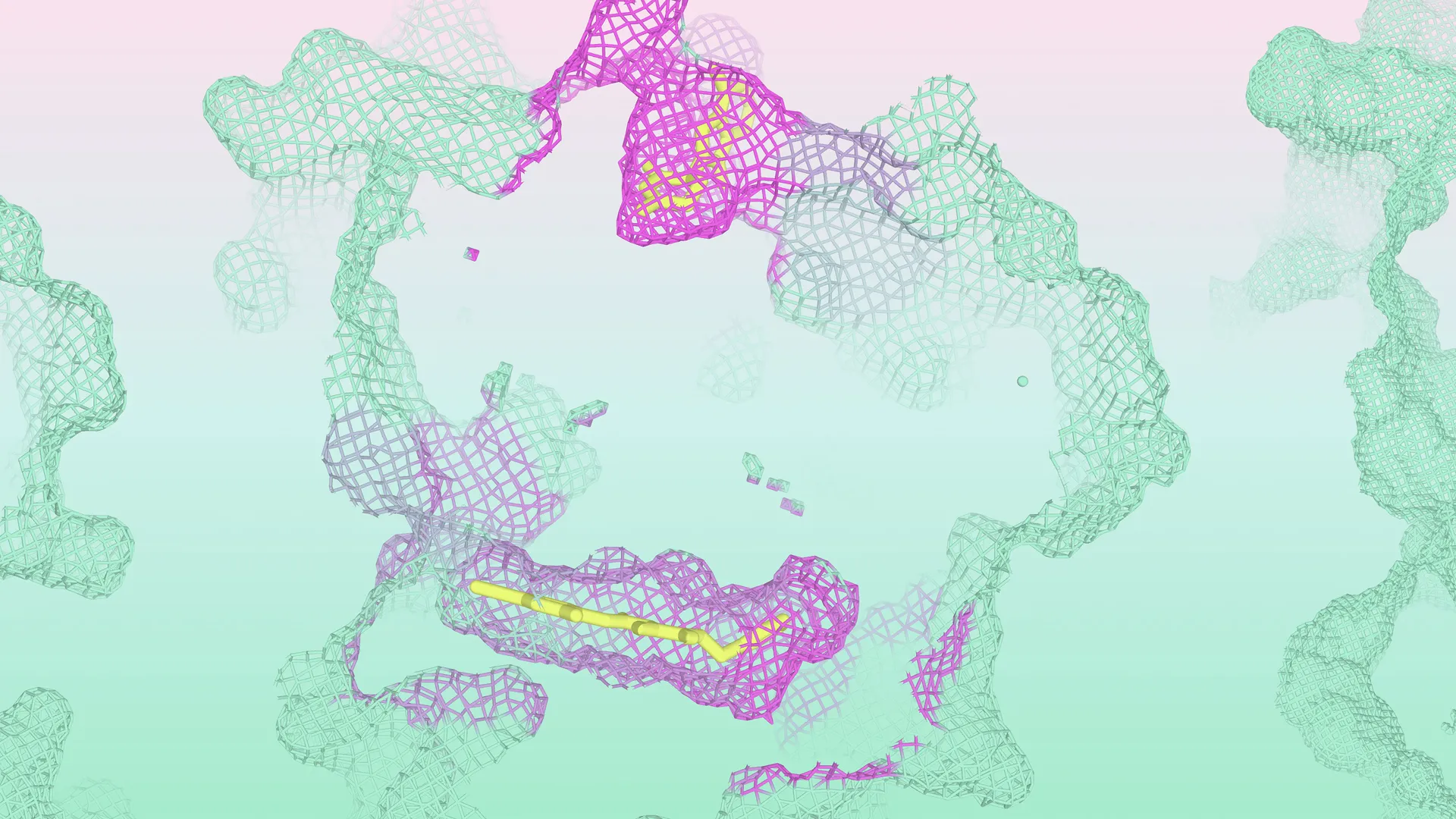
 On February 10, 2026, Isomorphic Labs, a subsidiary of Google DeepMind, officially released the Isomorphic Labs Drug Design Engine (IsoDDE). Arriving nearly two years after AlphaFold 3, this marks another major advance by DeepMind in molecular structure prediction. IsoDDE moves beyond static structure prediction and extends AlphaFold 3’s core capabilities across the full drug discovery workflow, including dynamic conformation simulation, ligand optimization, binding affinity prediction and multi‑molecule complex design, and is regarded by the industry as a practical "upgrade" of AlphaFold 3. However, in stark contrast to AlphaFold 2’s full open‑source release, Isomorphic Labs has made clear that IsoDDE’s code and model weights will not be open‑sourced, and the platform will be offered to partners only through a controlled commercial service. This decision has reignited intense debate in the scientific community over the openness of AI tools versus commercial protection.
In an official blog post Isomorphic Labs said: "AlphaFold 3 let us see the static structures of biomolecules; IsoDDE enables us to truly 'design' molecules, turning AI from an 'observer' into a 'creator'." The tool has demonstrated significant advantages in internal tests at several major pharmaceutical companies, with some early partners reporting reductions in drug discovery timelines of more than 30%.
From AlphaFold 3 to IsoDDE: continuity and technical breakthroughs
AlphaFold 3 was jointly released by Google DeepMind and Isomorphic Labs on May 8, 2024, achieving atomic‑level prediction for almost all biomolecules and their interactions—proteins, DNA, RNA, ligands and small ionic molecules—for the first time, improving accuracy by at least 50% over previous methods and even doubling it in some key interaction categories.
IsoDDE builds systematically on AlphaFold 3’s diffusion‑model foundation. Major breakthroughs include:
- Dynamic conformations and binding dynamics simulation: instead of predicting only static structures, IsoDDE simulates molecules' dynamic behavior in physiological environments, including flexible loop motions, ligand binding/unbinding processes, and generation of conformation ensembles. As shown in Figure 2 of the paper, IsoDDE can produce multi‑conformer ensembles that accurately capture transient states difficult to observe experimentally.
- End‑to‑end drug design pipeline: it integrates molecular generation, docking optimization, ADMET (absorption, distribution, metabolism, excretion, toxicity) prediction and synthetic feasibility assessment into a closed‑loop design process. Figure 4 illustrates IsoDDE’s optimization on a real drug target: for one kinase target, the system generated 12 high‑affinity candidate molecules within 48 hours, three of which were validated with nanomolar activity in subsequent wet‑lab experiments.
- Multi‑scale modeling capability: spanning atomic to complex to cellular environment scales for cross‑scale prediction. Figure 5 compares results showing IsoDDE achieves a Pearson correlation of 0.89 for protein–ligand binding free energy prediction, markedly better than AlphaFold 3’s 0.72 and traditional docking software’s 0.55.
These capabilities elevate IsoDDE from a "structure prediction tool" to a "drug design engine," directly supporting Isomorphic Labs’ commercial drug discovery operations. The tool has already reached partnership agreements with several global pharmaceutical companies, and some projects have entered preclinical stages.
Not open‑sourcing: commercial strategy and debate in the scientific community
In contrast to AlphaFold 2’s complete open‑source release in 2021, Isomorphic Labs has stated that the code, weights and training details for IsoDDE will not be open‑sourced. The company explained that AlphaFold 3’s code was partially opened in November 2024 for academic research, but IsoDDE, as a commercial product, will make its core IP available to pharmaceutical partners under licensing agreements.
The decision has drawn controversy. Some researchers argue that limiting open access will slow basic scientific progress, especially in drug discovery, which heavily relies on openly shared data. A Nature commentary in February 2026 noted: "As AlphaFold 3 transitions from an academic tool to a commercial engine, the spirit of open science is being tested." Supporters counter that Isomorphic Labs, as an independent commercial entity, has the right to protect intellectual property it has developed at great expense, while the academic community can continue foundational research via the AlphaFold Server and the limited open‑source releases.
Google DeepMind reiterated that it will continue to maintain academic open channels for AlphaFold 3 and plans to further expand the AlphaFold Database’s community dataset features within 2026 (multiple large community datasets were added in February 2026).
Far‑reaching impact on drug discovery and the biopharmaceutical industry
IsoDDE’s release is seen as a milestone in AI‑driven drug discovery moving from "predictive assistance" to "end‑to‑end design." Traditional drug discovery can take 10–15 years, cost over $1 billion, and suffer failure rates as high as 90%. IsoDDE aims to accelerate early screening and optimization, potentially shortening timelines to 3–5 years and substantially reducing costs.
Early collaboration cases show:
- For oncology targets, IsoDDE designed multiple highly selective inhibitor candidates in weeks, some of which have shown strong efficacy in animal models.
- In antibiotic resistance research, the system rapidly generated candidate molecules targeting novel resistant bacteria, accelerating early‑stage development.
For the biopharmaceutical industry, this signals a shift from trial‑and‑error to design‑driven discovery. Large pharmaceutical companies can allocate more resources to later‑stage clinical trials while early discovery becomes far more efficient. At the same time, IsoDDE provides powerful tools to small and mid‑sized biotech firms, potentially lowering barriers to innovation.
Conclusion: an AI‑driven new era in biology
Although Isomorphic Labs did not continue open‑sourcing IsoDDE, the platform pragmatically advances AlphaFold 3’s technologies into practical drug discovery. It moves AI from "predicting structures" to "designing molecules," from "understanding life" to "reshaping life," marking a new epoch in computational biology.
In an era of rapid AI advancement in 2026, this release underscores that openness and commercialization are not necessarily opposites but can be complementary forces that drive scientific progress. As more tools of this kind emerge, humanity’s understanding of and ability to modify life are likely to accelerate at an unprecedented pace.
▶️ Enjoy this article? Creating it is hard work!
Subscribe to our YouTube channel:
AI Rosetta
Your likes, subscriptions and shares are our greatest support! 🙏
For more AI news visit: https://www.airosetta.com