
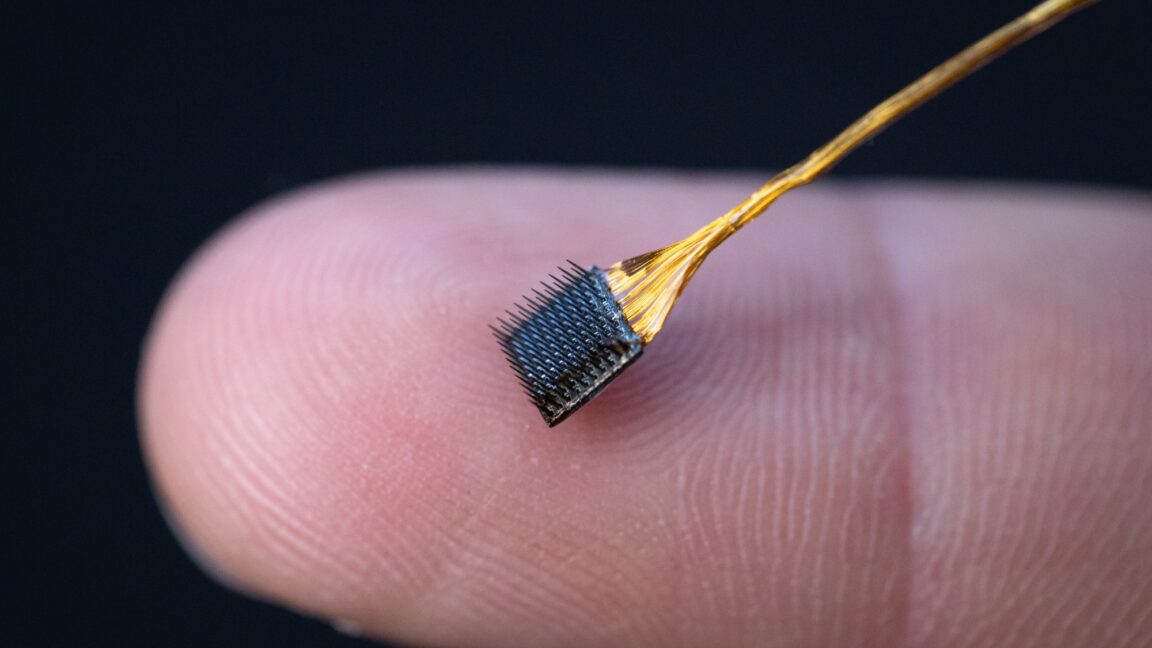
In the emerging interdisciplinary frontier of artificial intelligence and neuroscience, a recent study developed a neural AI decoder capable of decoding "inner speech." This technology can read words that people silently "murmur" in their minds but have never actually spoken, opening a new window into understanding human thought. The decoder's research findings were published in August 2025 in Ars Technica, in an article titled "An inner‑speech decoder reveals some mental privacy issues," which highlights the significant mental privacy concerns raised by the technology.
Unlike traditional speech‑recognition systems, this inner‑speech decoding system targets the language centers in the cerebral cortex directly. The research team used high‑resolution electroencephalography (EEG) and functional magnetic resonance imaging (fMRI) to capture and record participants' internal speech activity. When participants silently rehearsed particular words in their minds, the system detected specific neural activity patterns in speech‑related brain regions.
To the researchers' surprise, even "secret" words that participants had never spoken aloud or consciously thought in the real world produced unique activation signals in the brain's speech centers. This suggests that the neural mechanisms involved in processing inner speech are highly complex and can even reveal subconscious thoughts.
The system's core algorithm is based on deep neural networks trained on large volumes of neural signal data, enabling it to extract neural patterns corresponding to specific inner‑speech words from noisy EEG signals. The researchers also described a multimodal input design that incorporates faint electrical signals from micro‑movements of speech‑related muscles, substantially reducing decoding error rates.
However, the breakthrough has provoked strong concerns about mental privacy. The researchers warned that if such brain‑language decoding technologies are abused, they could bypass traditional channels of verbal communication and directly reveal a person's most private thoughts without their conscious expression. Imagine employers, governments or commercial entities remotely reading employees' or consumers' inner thoughts—such capabilities would pose grave threats to personal freedom and privacy rights.
Accordingly, the scientific and ethics communities are calling for strict norms and legal protections governing the application of this technology. The research team is actively working with ethics committees to explore how to ensure legitimate uses and prevent potential psychological surveillance and privacy infringements.
Beyond privacy concerns, the study also demonstrated broad application prospects for inner‑speech decoding technology. For example, people with severe aphasia could achieve silent verbal communication through brain‑language signals; advanced human–machine interfaces might enable more natural control by reading users' inner language thoughts. Future intelligent brain interfaces may no longer rely on physical input devices but instead operate digital environments directly through inner‑speech signals.
Dr. Jane Liu, one of the project leads, said, "Our research is only the tip of the iceberg in terms of the brain's language‑processing mechanisms. This approach will help us better understand the nature of language, thought and consciousness. At the same time, we must take the technology's ethical risks very seriously to ensure that human privacy and freedoms are not eroded."
Overall, the inner‑speech decoder demonstrates the enormous potential and startling challenges of combining AI with brain science. Facing this gateway into the world of thought, society must find a new balance between technological innovation and ethical constraints, a balance that will profoundly shape future human–machine interactions.