
In early October 2026, independent researcher Prinz published a new result in historical cryptanalysis: using OpenAI's flagship model GPT‑6 Astra, he successfully decoded two cipher letters of the Catholic League dated July 22, 1593. These two letters were sent from Paris by Thibault Desportes, secretary to the Duke of Mayenne, addressed respectively to Pietro Aldobrandini (Pope Clement VIII's nephew, responsible for French affairs) and to Mayenne's agent in Rome, Girolamo Frachetta. According to Prinz, the letters had never before been fully deciphered; they are preserved in the archives of the Bibliothèque nationale de France and were logged as "undeciphered" when intercepted by the royal court.
Details
Historical background
France in 1593 was at the end of the Wars of Religion. Henry IV (formerly Henry of Navarre), a Protestant who succeeded to the throne in 1589, had long fought the Catholic League. The League, made up of Catholic nobles, princes and cities, refused to recognize a Protestant as the legitimate king. In May of that year, Henry IV announced his intention to convert to Catholicism, opening a path to reconciliation with the Vatican and the French nobility. For the Duke of Mayenne, this move directly threatened the League's religious legitimacy and his own power. The cipher letters Desportes sent on July 22, three days before the conversion, were internal communications written at this critical moment.
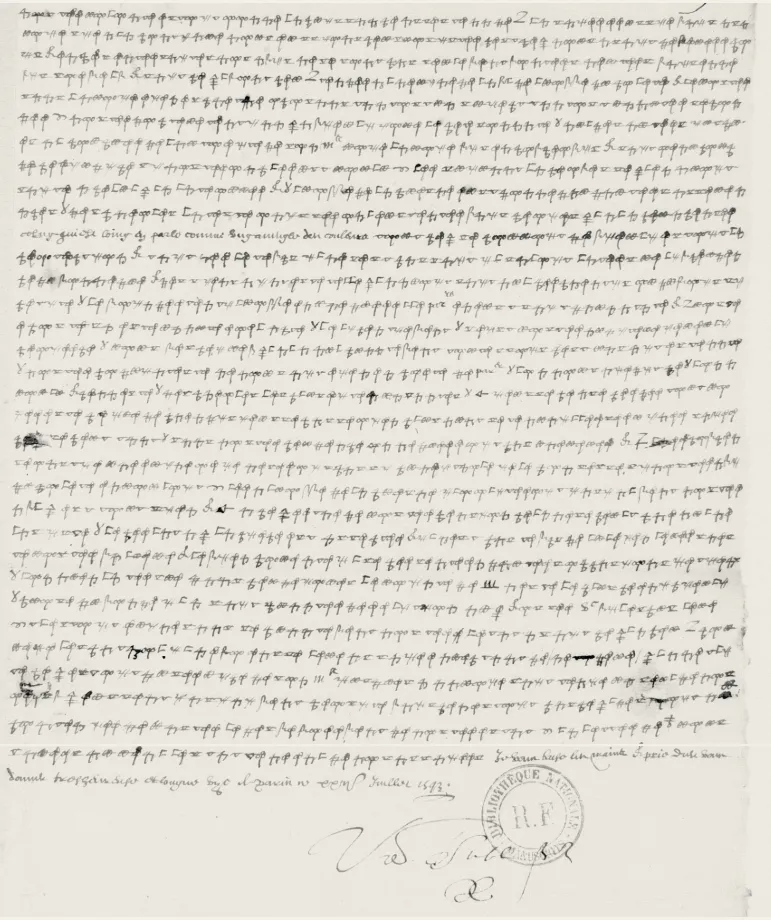
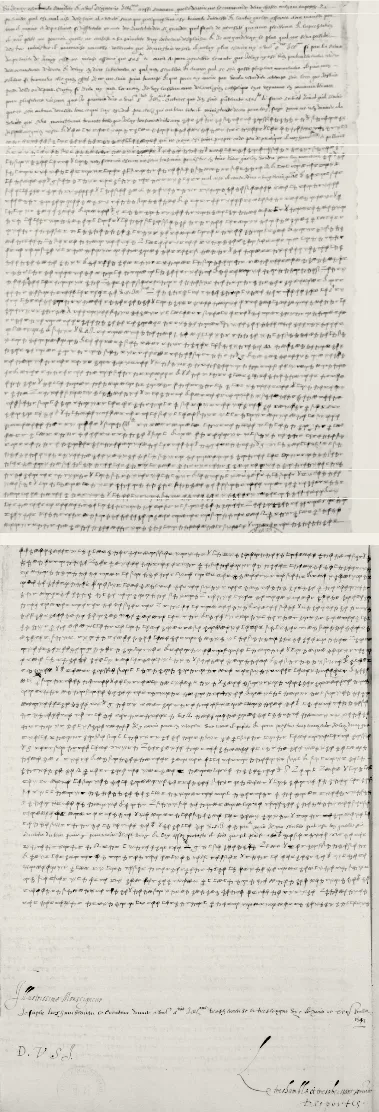
Deciphering process and methods
Prinz used GPT‑6 Astra to process these two cipher letters. Parts were initially attempted with GPT‑6.1 Sol, and after reaching a bottleneck he switched to Astra to complete the work. For hard‑to‑decipher symbols he had the model assist in producing dedicated tools. After decoding, Prinz manually checked the entire letter to Frachetta symbol by symbol, confirming a 100% accuracy rate, and published the cipher table, the French transcription and an English translation with historical annotations.
Key findings
The most striking content of the letters is that Desportes explicitly recorded the precise sum Henry IV accepted to convert to Catholicism—500,000 écus. This provides concrete financial detail to the famous anecdote that "Paris was worth a Mass." The letters also reveal fractures within the League: Desportes defends Mayenne, accuses allies of betrayal, and explains why a ceasefire with Henry IV had become unavoidable. The letter to Frachetta uses many code phrases (such as "friends in the academy," "people of La Chesnaye," "our uncle") and describes anti‑Spanish plots from the Roman side, reading like a detective novel. The letters may also explain why, two months later, Frachetta handed over Desportes' correspondence to the Spanish ambassador—Mayenne claimed he was unable to pay for services because funds had to come from a third party (a high‑ranking cleric) and "it was not appropriate to use those funds at this time."
These details align closely with known history: Henry IV did formally convert on July 25, 1593, and ultimately gained broad recognition that ended years of civil war. The cipher letters provide a rare first‑hand, internal perspective on this turning point.
Potential impact
1. New material for historical research
The specific figure of 500,000 écus and the League's immediate reactions and financial entanglements will help reconstruct the negotiations and motives behind Henry IV's conversion in greater detail. This offers directly citable new evidence for research on the French Wars of Religion, diplomatic history and the Vatican's policy toward France.
2. Continued advances in AI‑assisted historical cryptanalysis
Following breakthroughs such as Napoleonic 1809 military intelligence, World War I wireless intercepts and some Enigma messages, Astra has again succeeded with late‑16th‑century diplomatic ciphers. This further demonstrates the practical capabilities of state‑of‑the‑art models in handling homophonic ciphers, historical‑context reasoning, symbol recognition and cross‑verification. Publishing reproducible materials (cipher tables, transcriptions, translations) helps the scholarly community verify and build on the work.
3. Implications for archives and undeciphered documents
Many early modern diplomatic and political communications remain in cipher in archives. AI lowers the initial threshold for decryption and may accelerate the "unsealing" of such documents, though final historical interpretation and contextual judgment still require expert historians.
4. Trust and methodological norms
Prinz emphasized manual symbol‑by‑symbol verification and the publication of materials, aligning with best practices for AI‑assisted humanities research. As similar cases multiply, establishing unified verification standards, contribution annotations and data openness norms will become increasingly important.
5. Public awareness and interdisciplinary interest
Mammalian narratives such as "AI cracked 400‑year‑old cipher and revealed the price of a king's conversion" help raise public interest in the intersection of historical archives and artificial intelligence, and may attract more computational humanities and cryptographic history researchers.
Conclusion
GPT‑6 Astra's assistance in deciphering the Catholic League cipher letters of 1593 again demonstrates the potential of large models to resolve historical puzzles. The work not only reconstructs the tensions and calculations within the League on the eve of Henry IV's conversion, but—by specifying the sum of 500,000 écus—adds a concrete monetary dimension to this pivotal moment in French history. For historians, it is a valuable new primary source; for the AI field, it is another verifiable interdisciplinary success. As more undeciphered documents are systematically re‑examined, artificial intelligence is increasingly becoming a powerful tool for opening sealed archives, though its true value depends on how cautiously and transparently human researchers use it.
▶️ Like this content? Creating it takes real effort!
Welcome to follow our YouTube channel:
AI Rosetta
Your likes, subscriptions and shares are our greatest support! 🙏
For more AI news please visit: https://www.airosetta.com