
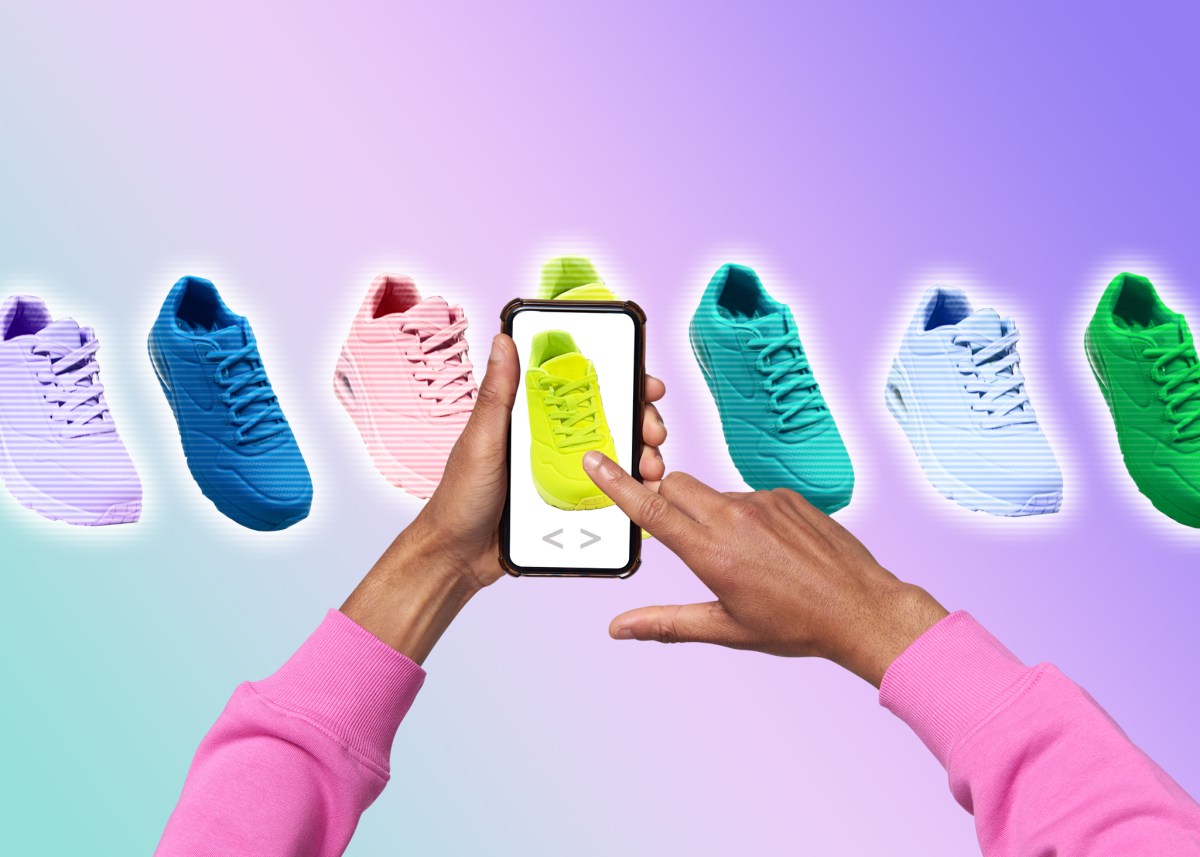
On October 8, 2025, Google announced it is expanding its virtual try‑on shopping tool to more countries and adding shoes to the list of try‑onable product categories. Google said that when users see a shoe that supports try‑on in Search or Shopping results, they only need to tap the "try it on" button on the product page and follow the prompts to upload a full‑body photo; the system will then overlay the selected shoe onto the user’s foot area on the phone screen in augmented reality to simulate the wearing effect.
Google has retained the workflow used for apparel try‑on but made adjustments for footwear: the algorithm analyzes the uploaded full‑body photo to locate the ankles and posture, and attempts to match perspective and lighting so that the shoe's upper angle, heel height and viewpoint align as closely as possible. TechCrunch emphasized that the flow relies on users actively uploading a "full‑body photo"—a required step to complete the try‑on—rather than performing only a live camera overlay, which means most experiences are based on static‑photo visual composition.
This expansion is not limited to a single market. Google said it has rolled the tool out to more countries with the aim of giving cross‑border shoppers a more intuitive way to judge size and style before purchase.
TechCrunch noted that the feature still depends on retailer integration: not all products will show a "try it on" button—only brands and merchants participating in the program and supplying visual assets will appear at the try‑on entry point. Technically, Google's virtual try‑on combines computer vision and machine learning models to accomplish key tasks: human pose estimation, foot localization, shoe geometry and texture mapping, and lighting adjustment. The article states that while synthesis results have improved significantly in most examples, try‑on can still show deviations in complex poses, nonstandard lighting, or when users wear thick socks—making the experience dependent on photo quality and adherence to posture guidelines.
Privacy and data handling are repeatedly mentioned in the coverage. TechCrunch pointed out that requiring a full‑body photo involves trade‑offs between adoption and perceived privacy; Google provides information on photo use and retention periods, but details such as storage strategy, whether images are used for model training, and how de‑identification is performed remain focal concerns for users and regulators. Commercially, Google positions virtual try‑on as one tool to boost shopping conversion rates.
For e‑commerce, offering a visual try‑on experience can help reduce returns and increase purchase confidence; for brands, it brings online browsing closer to the in‑store fitting experience. TechCrunch quoted observers who said shoe try‑on demands higher detail than apparel—shoe size, foot shape differences and physical feel remain difficult to fully replace with a single photo.
The October 8, 2025 update represents another step in Google's application of AI to shopping: extending from apparel to footwear and testing user adoption and technical robustness across broader markets. For younger consumers, the "see it on" mobile experience lowers uncertainty in online purchases but also raises new expectations for visual accuracy and personal privacy protection. TechCrunch's coverage recommends that users read image upload and data‑use terms carefully and try multiple photos in varied lighting and standing poses to obtain more reliable try‑on results.