
1. Vids rollout and core features
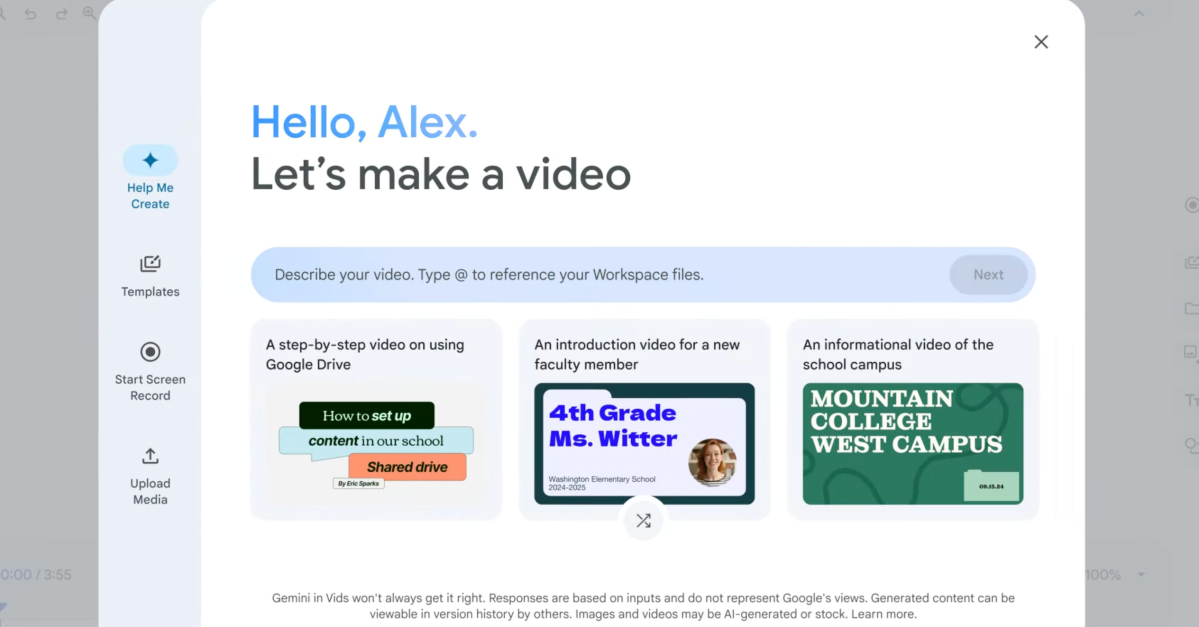
On August 28, 2025, Google announced via The Verge that its AI‑powered video editing tool Vids is now available free to all users. Previously limited to Google Workspace or AI plan subscribers, ordinary users can now access the basic version with a Google account to use templates, stock media and some AI features. Google product director Vishnu Sivaji said the free tier includes "nearly all the amazing features," aiming to let more users experience AI‑driven video production.
Vids, launched in 2024, is part of the Google Workspace suite and designed for quick video presentations. It offers several AI conveniences, including:
- Automatic storyboard generation: AI suggests scenes, stock images and background music based on user needs to simplify the creation process.
- Templates and stock media: A rich set of templates and royalty‑free assets for rapid production of professional‑looking videos.
- Basic AI editing: Such as automatic trimming and audio optimization to lower technical barriers.
These features make Vids an ideal tool for businesses producing product demos, training videos or support content, especially for small and medium enterprises and individual creators.
2. New AI features: exclusive to paid users
Although the free tier is powerful, Google released new AI features on the same day that are only available to paid users, highlighting its tiered commercial strategy. These new features include:
- AI‑generated avatars: Users can choose from 12 preset AI avatars, each with a distinct appearance and voice; users only need to input a script to generate video content. These avatars can simulate human presentations and are suitable for product promotion or internal training. Sivaji said it is currently not possible to generate an AI avatar of the user themself (similar to Zoom’s feature), but Google may explore this in the future.
- Image‑to‑video: Users can upload a static image (such as a product photo) to generate an 8‑second short video, enhancing visual expressiveness.
- AI transcription trimming: Automatically detects and removes pauses and filler words (e.g., "um," "uh") to improve video fluency.
These features rely on Google’s Gemini AI models and showcase its generative AI expertise. However, free users cannot access these advanced capabilities, which may limit the free tier’s appeal.
3. Market positioning and impact of Vids
Google aims to reduce the cost and time of corporate video production with Vids. Sivaji noted that a traditional 10‑minute video shoot could take six months and cost tens of thousands of dollars, involving scripting, filming and post‑production. Vids’ AI tools can greatly shorten the process and allow nonprofessionals to quickly produce high‑quality videos. Google customer feedback indicates Vids significantly increases the scale and frequency of video production, particularly for product demos, training and customer support.
The free rollout of Vids marks Google’s strategic expansion in AI video and directly challenges competitors such as Zoom and Adobe Premiere Rush. Zoom has introduced AI‑generated user avatars, while Vids’ 12 preset avatars and image‑to‑video function offer diverse options. By contrast, Vids’ deep integration with Google Workspace (such as Docs and Slides) adds advantages in the enterprise market.
Moreover, the launch reflects the broader adoption of generative AI in content creation. In 2025, AI video tools (such as Google’s Veo 3, Runway, Pictory) are rapidly reshaping the industry. Vids’ free model may attract more users into Google’s ecosystem while promoting paid subscriptions (such as Google One AI Premium) through advanced features, balancing profit and reach.
4. Industry reaction and potential
Vids’ release has sparked discussion in the industry. X user @TechBit called it "bringing corporate video production to a new stage," while others questioned whether limiting advanced AI features to paid users could affect the user experience. The Verge analysis suggested Vids’ free strategy might pressure competitors to lower prices or open more features, creating a new competitive landscape.
Vids’ potential lies in its ease of use and enterprise applicability. Small and medium businesses can use the free tier to quickly produce marketing content, while large enterprises can meet complex needs with paid features, such as multi‑language AI avatar videos or dynamic product showcases. However, Google must address privacy and data security issues, particularly when AI processes user‑uploaded images and videos, to ensure compliance with regulations like the GDPR.
5. Challenges and outlook
Despite a promising outlook, Vids faces multiple challenges. First, the clear separation between free and paid tiers could cause user dissatisfaction and requires balancing of feature allocation. Second, ethical issues around generative AI (such as misuse of AI avatars) need control measures like watermarking or SynthID technology (which Google has used with Veo 3). Sivaji did not reveal whether user‑customized AI avatars will be offered, but that feature could become a future point of competition.
Looking ahead, Google may further integrate Vids with Gemini AI to introduce more powerful capabilities, such as real‑time video generation or cross‑platform collaboration. Combined with Google Workspace’s ecosystem advantages, Vids could become a benchmark tool for enterprise video production and challenge traditional video editing software.
6. Conclusion
Google’s free release of Vids signals the popularization of AI video editing, lowering creative barriers through templates, stock media and AI features. The newly introduced AI avatars and image‑to‑video functions, though limited to paid users, demonstrate its technical strength. Vids not only enriches the Google Workspace ecosystem but also offers an efficient video solution for businesses. Facing competition and ethical challenges, Google must continue to innovate to keep Vids at the forefront of AI‑driven content creation.