
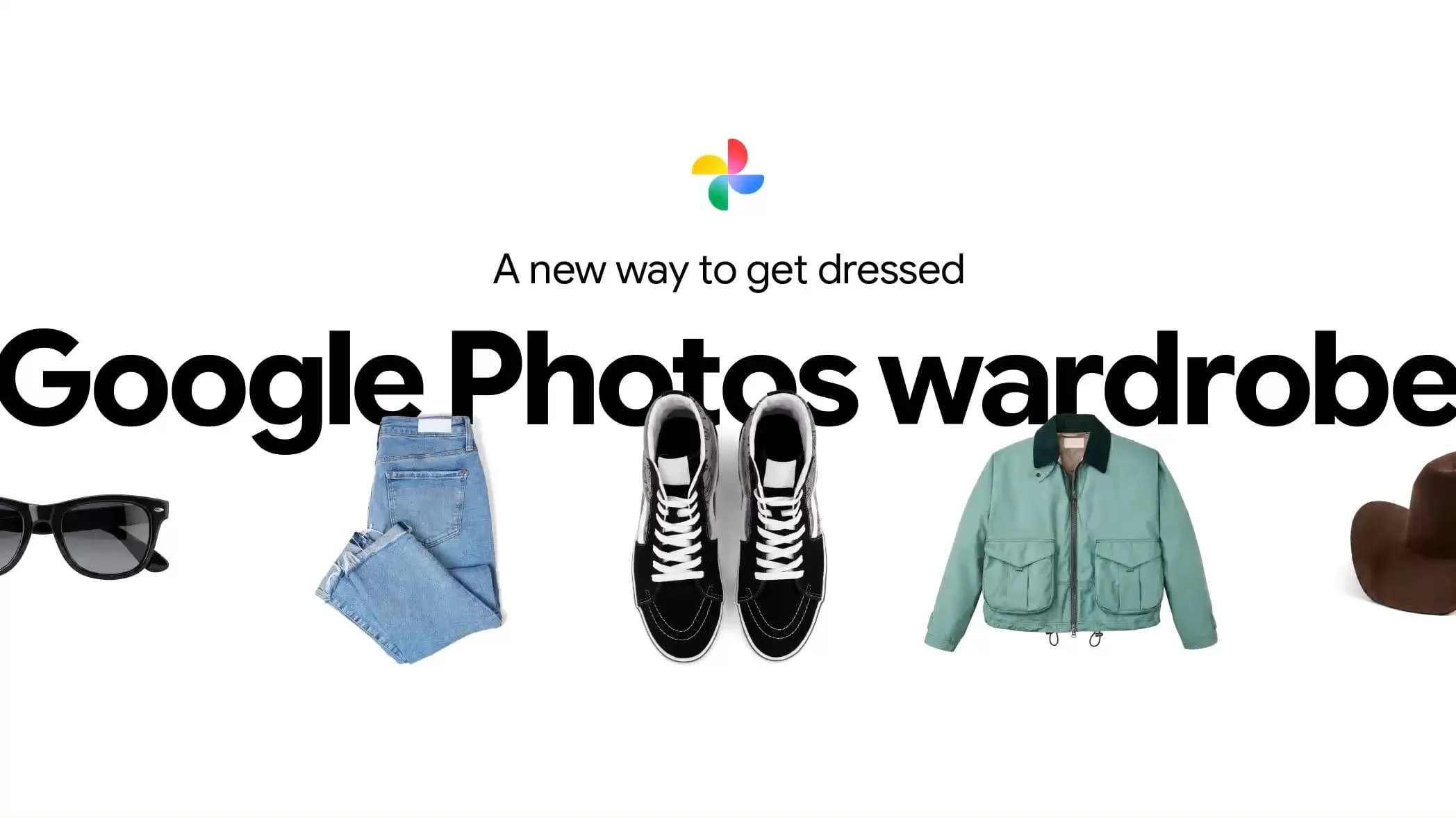
On April 29, 2026, Google announced a new AI Wardrobe feature in Google Photos. The feature uses advanced AI to automatically scan users' photo libraries for clothing images and generate a personalized “digital wardrobe,” supporting item categorization, mix‑and‑match recommendations, and virtual try‑on previews. This marks another major step for Google in AI‑driven fashion—moving from the experimental Doppl app launched in 2025 by Google Labs to a deeply integrated Photos experience used in everyday life by hundreds of millions of users, with AI evolving from a “virtual fitting room” to an “intelligent life assistant.”
According to Google, Wardrobe first arrived on Android Google Photos (summer 2026) and will roll out to iOS later. Users can find the new Wardrobe section under the “Collections” tab. The AI automatically recognizes tops, bottoms, accessories, shoes and other items in photos, organizing them into a searchable, editable digital closet. Users can easily create new outfits by mixing items and even preview them on a digital avatar to see how garments look when worn.
From Doppl to Photos: the evolution of Google's AI fashion strategy
This feature did not appear out of nowhere; it is a natural continuation of Google's earlier AI fashion explorations. In June 2025, Google Labs released the experimental app Doppl, which allowed users to upload full‑body photos and garment images to generate realistic virtual try‑on effects, even supporting animated video demonstrations. Doppl was hailed as one of 2025's notable inventions and was popular among fashion enthusiasts, but as an independent experimental app it had limited user reach and data depth.
Wardrobe in 2026 represents a qualitative leap. It leverages users' existing Google Photos—vast collections of everyday images—as the data foundation, requiring no extra photographing or uploading of clothing images to build a highly personalized digital wardrobe. This significantly lowers the barrier to use while improving relevance and practicality of recommendations. Google Photos product lead Tommy Meaney said the feature is designed to help users make better use of their existing clothes, reduce impulse purchases, and enable smarter, more sustainable dressing decisions.
Compared with Doppl, Wardrobe places greater emphasis on mining personal historical data and integrating with daily life. The AI not only recognizes garments but also learns users' style preferences to suggest practical outfit combinations. This shifts AI from a novelty tool to a regular companion in everyday life.
Wide‑ranging impacts on users, the fashion industry and e‑commerce
1. For users: more efficient, smarter outfit decisions
People often have crowded but disorganized closets and commonly face the morning dilemma of “nothing to wear.” AI Wardrobe addresses this by automatically categorizing items and enabling virtual try‑ons. Users can quickly review past outfits, experiment with new mixes, and confirm looks via virtual previews before leaving home. This not only saves time but can boost confidence and reduce waste from unused purchases.
2. More sustainable fashion consumption
The feature encourages prioritizing existing clothing for new outfit combinations, substantially reducing unnecessary new purchases. This aligns with global sustainable fashion trends. Industry data show virtual try‑on tools can lower e‑commerce return rates by up to 40%, and Wardrobe moves the try‑on scenario earlier into personal wardrobe management, potentially steering the consumption chain toward lower‑carbon, circular models.
3. Upgraded e‑commerce and brand marketing models
Google Photos' massive user base (with billions of photos stored) offers brands a significant traffic entry point. Brands can provide intelligent pairing suggestions to users' digital wardrobes for targeted marketing. When users see a brand item mixed with their own clothes during virtual try‑ons, it can increase purchase intent. This will blur the lines between social sharing, photo albums, and e‑commerce, promoting “life‑scene co‑creation” marketing.
At the same time, Google Shopping's existing AI try‑on tools and Photos Wardrobe can complement each other to create a closed loop from discovery to try‑on to purchase. This integration is expected to further boost platform conversion rates and user retention.
4. Data privacy and ethical considerations
Google Photos holds large amounts of users' personal imagery, and Wardrobe's deep AI analysis inevitably involves more granular personal data processing. Although Google emphasizes privacy protections and user opt‑in controls, ensuring data security and preventing algorithmic bias remain central industry concerns. Similar features are likely to prompt continued discussion on AI ethics and data governance.
5. Challenges and opportunities for traditional retail
Brick‑and‑mortar retailers and legacy e‑commerce must accelerate digital transformation or risk falling behind AI‑driven platforms in user experience. Conversely, this offers brands new opportunities—to collaborate with the Google ecosystem and seamlessly integrate products into users' digital wardrobes for higher‑precision sales conversion.
Conclusion: AI makes fashion more personal
Google's progression from the Doppl experiment to Photos AI Wardrobe clearly illustrates AI's pathway in fashion: from lab innovation to everyday application for hundreds of millions of users. Going forward, AI will be more than a try‑on tool; it will be a smart partner that understands personal style, helps manage wardrobes, and guides sustainable consumption.
This trend also signals broader change: AI is steadily permeating daily life, bringing convenience while raising new demands for privacy protection, technological fairness, and human creativity. Google Photos' step may be just the beginning of AI reshaping fashion and lifestyles.
Related:
Google launched the Doppl app to enable AI virtual try‑ons for fashion
▶️ Enjoyed this article? Creating it takes real effort!
Follow our YouTube channel:
AI Rosetta
Your likes, subscriptions and shares are our greatest support! 🙏
More AI news at: https://www.airosetta.com