
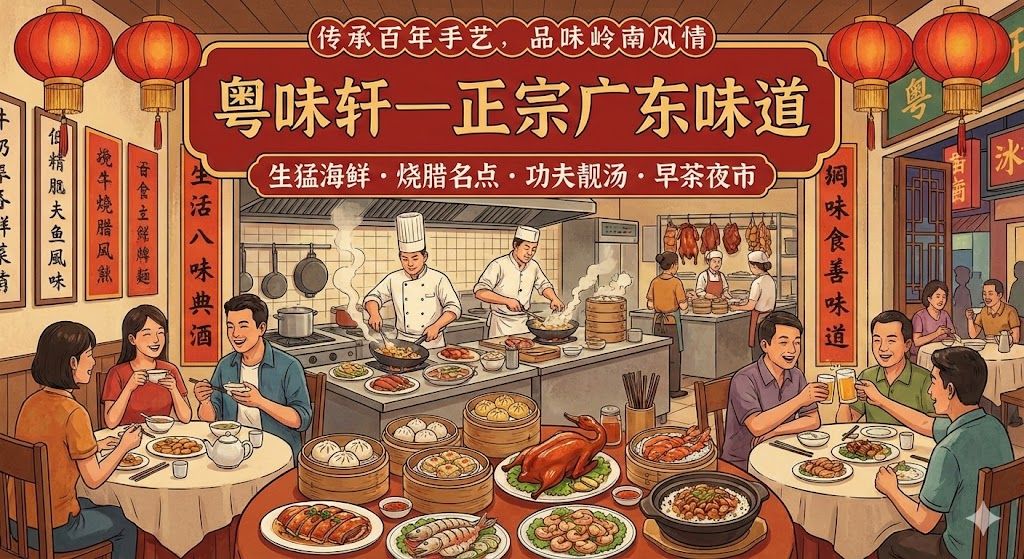
November 20, 2025 — In Wired's hands‑on review, Google's image‑generation model called "Nano Banana Pro" made its most notable advance not in more realistic skin or complex lighting but in its ability to directly generate readable text within images, which is seen as the upgrade's biggest highlight, especially in rendering non‑alphabetic scripts like Chinese and Japanese. Reviewers found that when prompts included brand names, street posters, or T‑shirt slogans, the letters in outputs were neater than before and the integrity of word shapes clearly improved.
The article lists several scenarios: rendering an English slogan into a logo, placing menu text on a café sign, and adding caption text next to cartoon characters. Previous models often produced misaligned letters, characters fused together, or symbols that merely "looked like words," while Nano Banana Pro in most samples was able to render short words such as "coffee" and "open" into recognizable glyphs. Wired recorded many outputs: short‑word success rates were high, but long paragraphs or small font sizes still showed inverted letters, repeats, or odd ligatures.
On the technical side, the report notes the model received lightweight and fine‑grained optimizations in architecture and training, making it more sensitive to glyph learning while retaining visual detail. Tests at the resolutions and in complex scenes used for the review (for example multi‑layered billboards or reflective materials) indicate the model has some "understanding" of textual semantic relationships — it tends to prioritize brand names or prompt keywords in visual focus, but sometimes deforms text to fit perspective or texture.
On speed, Wired observed on a local cloud instance that generating a medium‑resolution sample took from a few seconds up to a dozen seconds depending on detail and whether multiple resamples were enabled. Compared with larger flagship models, Nano Banana Pro is friendlier in response time, which makes it more likely to be adopted by businesses for real‑time creative tools or ad production pipelines.
However, the article cautions two risks: first, more reliable "readable text" capability lowers the threshold for forging evidence, producing false ads, or misleading materials; second, commercialization will push companies to integrate such tools into design, marketing, and e‑commerce workflows, amplifying misuse speed. Wired noted Google has added content filters and watermarking strategies in the model, but the review did not observe measures that fully prevent text‑bearing misleading image generation.
Reviewers also documented minor flaws in samples: mirrored digits in certain fonts, misplaced punctuation, and alignment issues in mixed‑language text (for example English‑Chinese combinations). These points show that while there has been a breakthrough in short words and logo generation, long‑form text, high‑fidelity typesetting, and multilingual consistency still require improvement.
In conclusion, Wired regards Nano Banana Pro as a "pragmatic" advancement: it raises the ability to generate readable text in images to a level suitable for commercial trials while keeping computational costs low. For designers, content creators, and ad agencies it is a tool for rapid visual experimentation; for regulators and platforms, it means faster updates to misuse detection and attribution frameworks are needed.
The hands‑on piece focuses on one detail: when AI begins to "write"—not just draw—its effects on creative workflows and information dissemination are more direct and easier to amplify than previously imagined.