
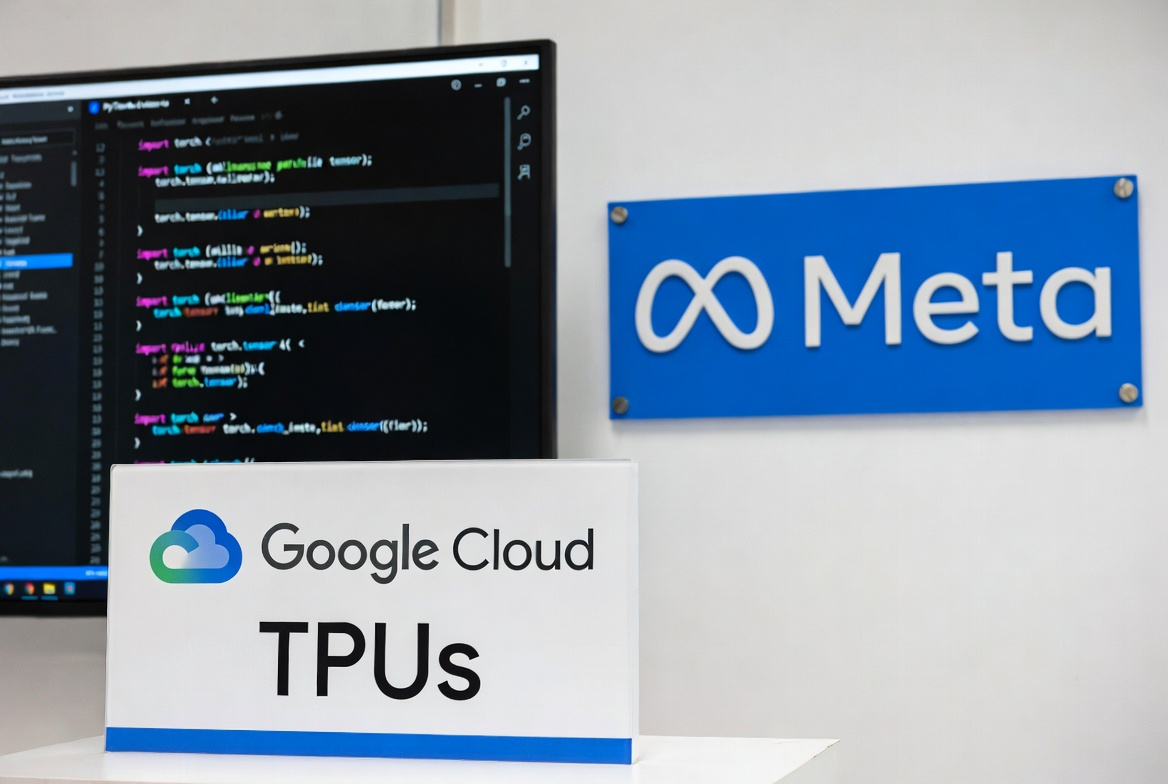
On December 18, 2025, the collaborative project TorchTPU between tech giants Google and Meta was revealed. The initiative aims to strengthen the PyTorch framework's support for Google tensor processing units (TPUs) and reduce AI developers' reliance on Nvidia's CUDA ecosystem. According to Reuters, the partnership marks intensifying competition in the AI chip market: Google seeks to use an open‑source strategy to erode Nvidia's software advantage, and Meta's participation further strengthens the alliance. The news quickly sent shockwaves through the industry, and many analysts say it could reshape AI compute dynamics and encourage more developers to adopt non‑Nvidia hardware. Against the backdrop of escalating U.S.‑China tech tensions, the collaboration is also seen as a positive signal of the open‑source community pushing back against monopoly.
Nvidia CUDA's Dominance and Challenges
Nvidia's CUDA (Compute Unified Device Architecture) platform has long dominated the AI compute market. According to Statista data, in 2025 Nvidia's share of the AI chip market exceeded 80%, and much of its success stems from CUDA's software ecosystem. CUDA provides efficient GPU programming interfaces and integrates seamlessly with frameworks such as PyTorch and TensorFlow, making it difficult for developers to migrate to other hardware like Google TPUs or AMD GPUs. This "lock‑in" effect has benefited Nvidia greatly but has also drawn industry criticism: high hardware costs and supply‑chain risks have led many companies to seek alternatives.
Google's TPUs are a core part of its cloud services and have gone through multiple generations since 2015, but compatibility issues have limited adoption. Meta, as a primary maintainer of PyTorch (developed by Meta AI), faces a similar dilemma: its large‑scale AI training relies heavily on Nvidia, creating significant cost pressure. Seeking Alpha analysts say the collaboration stems from shared interests: Google wants to expand the TPU ecosystem, while Meta aims to reduce dependence on Nvidia. As early as 2024, Google publicly stated ambitions to "erode Nvidia's software advantage," and the TorchTPU project reflects that strategy.
Details of the TorchTPU Project
TorchTPU is an internal‑codename project intended to enable PyTorch to run natively on TPUs with seamless compatibility. PyTorch is one of the world's most popular AI frameworks, led by Meta as an open‑source project with an active developer community. The project focuses on optimizing the TPU software stack so that PyTorch code can run efficiently on TPUs without major modifications. Meta's contributions include providing support to PyTorch core code and testing resources to ensure compatibility.
According to Technology.org, TorchTPU will be released as open source, allowing developers to contribute code and accelerate ecosystem development. A Google Cloud vice president said the project will "provide AI developers with more choices" and help reduce CUDA "lock‑in." Domain‑B analysts note that TorchTPU's success depends on Meta's PyTorch influence, which already reaches millions of developers worldwide. The project is expected to release a beta in early 2026 and will support TPU v5 and v6 chips.
The collaboration is not isolated. In 2025, the AI chip market showed clear diversification: AMD and Intel also promoted CUDA alternatives such as ROCm and oneAPI. The Google‑Meta partnership is viewed as a rallying of open‑source forces; AInvest reported that it could accelerate the breakdown of CUDA lock‑in.
Industry Reaction and Potential Impact
After the news, Nvidia's stock experienced a modest fluctuation, falling about 2%. Investors worried that Nvidia's software monopoly might be challenged, though the company responded that the CUDA ecosystem remains a leader. The developer community reacted positively: the r/MachineLearning subreddit discussed that this could lower training costs and foster innovation. A YouTube analysis titled "The Computing Power War Heats Up" suggested the collaboration could help TPU market share rise from the current 10% to 20%.
The impact on the AI ecosystem could be significant. Chosun Daily noted this could help Meta reduce its dependence on Nvidia, potentially cutting data‑center training costs by 10–20%. Google Cloud users could benefit from more affordable TPU services, attracting more small and medium‑sized businesses. OpenSourceForU emphasized that an open‑source approach would accelerate PyTorch's multi‑hardware support and promote industry standardization.
Challenges remain: compatibility optimization will take time, and early releases may have performance bottlenecks. In addition, U.S.‑China trade tensions could affect TPU supply chains.
Looking Ahead
The advance of TorchTPU signals further diversification of the AI chip market. By 2026, as the project matures, other frameworks such as TensorFlow or JAX may follow suit. The Google‑Meta collaboration may inspire further alliances to break Nvidia's dominance and spur open‑source innovation. Overall, the development highlights a key turning point in AI: a shift from hardware dominance toward a more balanced software ecosystem.
▶️ Enjoyed this article? Creating great content takes effort!
Subscribe to our YouTube channel:
AI Rosetta
Your likes, subscriptions and shares mean the world to us! 🙏
For more AI news, visit:
https://www.airosetta.com