
On May 19, 2026, at the Google I/O 2026 developer conference, Google officially launched the highly anticipated next‑generation multimodal model Gemini Omni. Google CEO Sundar Pichai described it in his keynote as a breakthrough model "capable of creating anything from any input," marking a major leap for Google in multimodal AI and generative media. Gemini Omni initially focuses on video generation and editing and is planned to expand gradually to full‑modal outputs including images and audio.
The core highlight of Gemini Omni is its truly native multimodal understanding and generation capabilities. Users can mix text, images, video, and audio as inputs; the model not only understands the relationships across these modalities but can also generate coherent, high‑quality video content. More revolutionary is its support for natural‑language conversational editing — users need no complex tools; simply speaking as if chatting with a person, such as "change the background to a sunset", "make the subject's motion smoother", or "add narration," the model can interpret and modify the video in real time.
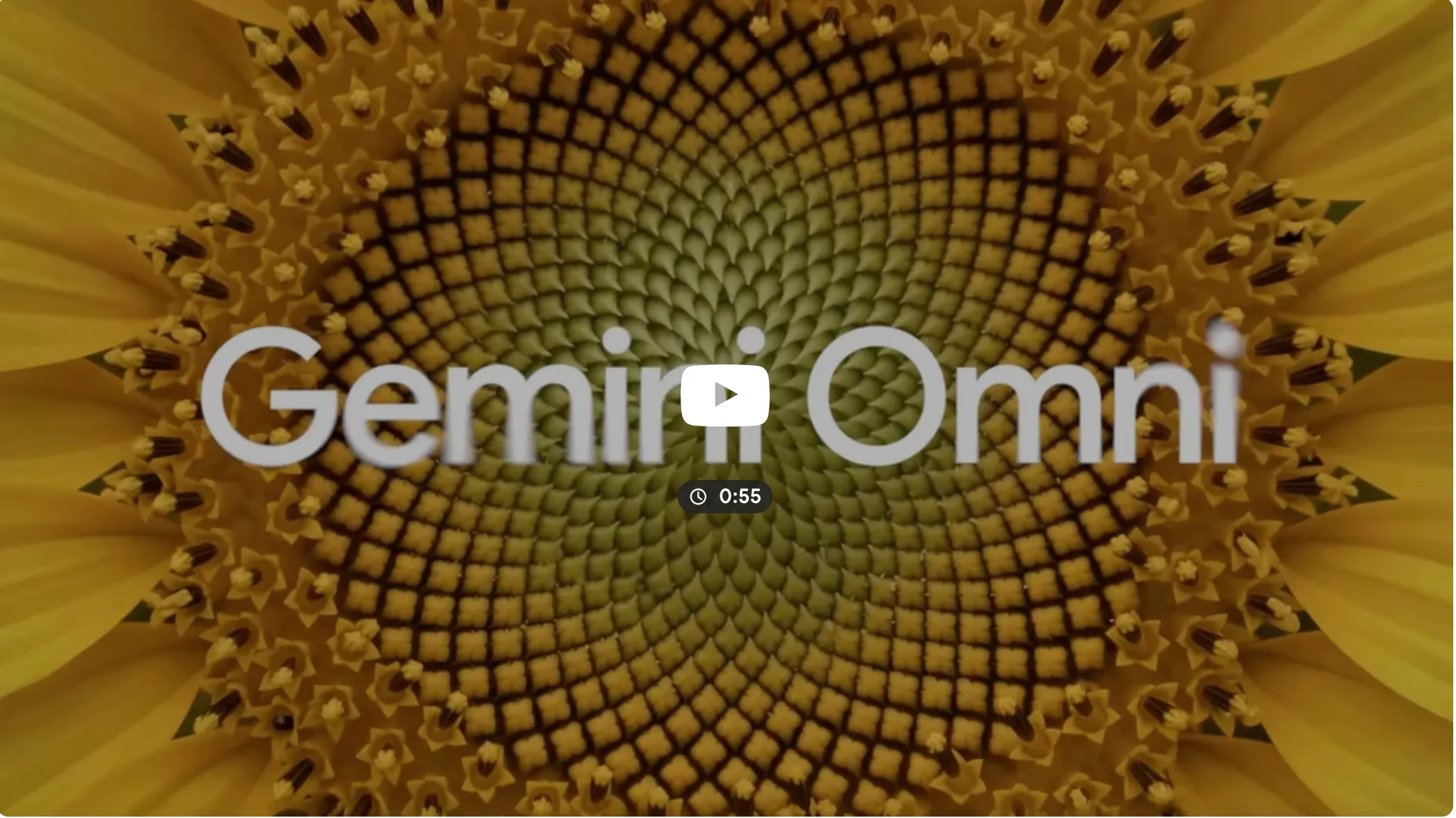 Gemini Omni Flash: First available release
Google also introduced the first member of the Gemini Omni family — Gemini Omni Flash. This version was opened to Google AI Plus, Pro and Ultra subscribers on the day of the announcement and is accessible via the Gemini App and Google Flow (AI creative studio). General users can also try some features for free through YouTube Shorts and the YouTube Create App.
Key capabilities of Gemini Omni Flash include:
- Video generation from arbitrary inputs: Supports a variety of combined inputs such as text+image, image+audio, video+text, producing longer videos with smoother motion and richer detail.
- Conversational video editing: Users can iteratively edit generated videos within a chat interface, greatly lowering the barrier to video creation.
- Templates and remix features: Provides preset templates and supports intelligent remixing of existing videos.
- Content safety and provenance: All generated videos embed Google’s invisible digital watermark SynthID and support content credential verification, aiming to reduce deepfake risks.
Google says Gemini Omni combines Gemini’s world‑understanding capabilities with the strengths of generative media models such as Veo, achieving a deep unification of "understanding" and "creation."
Technical breakthroughs and strategic significance
The launch of Gemini Omni reflects Google’s long‑term accumulation in multimodal AI. Unlike previous text‑centric models, Omni is positioned as a "world model," intended to give AI a deeper grasp of physical rules, spatiotemporal relationships, and multisensory information about the real world. This aligns closely with Google’s long‑emphasized strategy of a "universal AI assistant."
At the event, Google DeepMind CEO Demis Hassabis emphasized that Omni represents a shift from "single‑modality tools" to an "all‑purpose creative platform." In the future, Omni will progressively support image and audio generation and more complex cross‑modal interactions, becoming an important foundation for developers building the next generation of AI applications.
Far‑reaching impact on industry and users
1. Disruption in video generation and content creation
Gemini Omni’s conversational editing capabilities significantly lower the threshold for professional video production. Ordinary users can accomplish complex creations with natural language descriptions, which is likely to spur explosive growth in short video, advertising, educational content, and personal creation, while posing a challenge to traditional video editing software and film post‑production industries.
2. Reshaping multimodal competition
The release of Omni places Google in direct competition with companies such as OpenAI’s Sora and Runway in multimodal generation. Leveraging YouTube’s vast video data and Google’s powerful search capabilities, Google may have unique advantages in world understanding and could lead in video generation quality and controllability.
3. Opportunities for developers and enterprises
Gemini Omni will be opened to developers via APIs, providing strong support for building intelligent video tools, virtual hosts, immersive educational content, and more. Enterprise users can integrate it into marketing, training, and product demo workflows to significantly improve efficiency.
4. Safety and ethical challenges
Google emphasized the importance of SynthID watermarking and content credentials, but preventing malicious use to generate false videos and protecting intellectual property remain industry‑wide challenges. Regulators’ demands for provenance of AI‑generated content are also expected to increase.
Conclusion: An important step toward a general world model
The release of Gemini Omni is another strategic move by Google in multimodal AI. It not only improves the usability and quality of video generation but, more importantly, demonstrates the technical vision of "creating any output from any input."
As the Omni family gradually opens image, audio, and other capabilities, Google is likely to gain a significant edge in consumer‑level AI creative tools. In the increasingly competitive AI landscape of 2026, this announcement once again shows that multimodal understanding and generation capabilities have become a key battleground for the next generation of AI.
▶️ Enjoyed this article? Creating content takes hard work!
Follow our YouTube channel:
AI Rosetta
Your likes, subscriptions and shares are our greatest support! 🙏
For more AI news visit: https://www.airosetta.com