
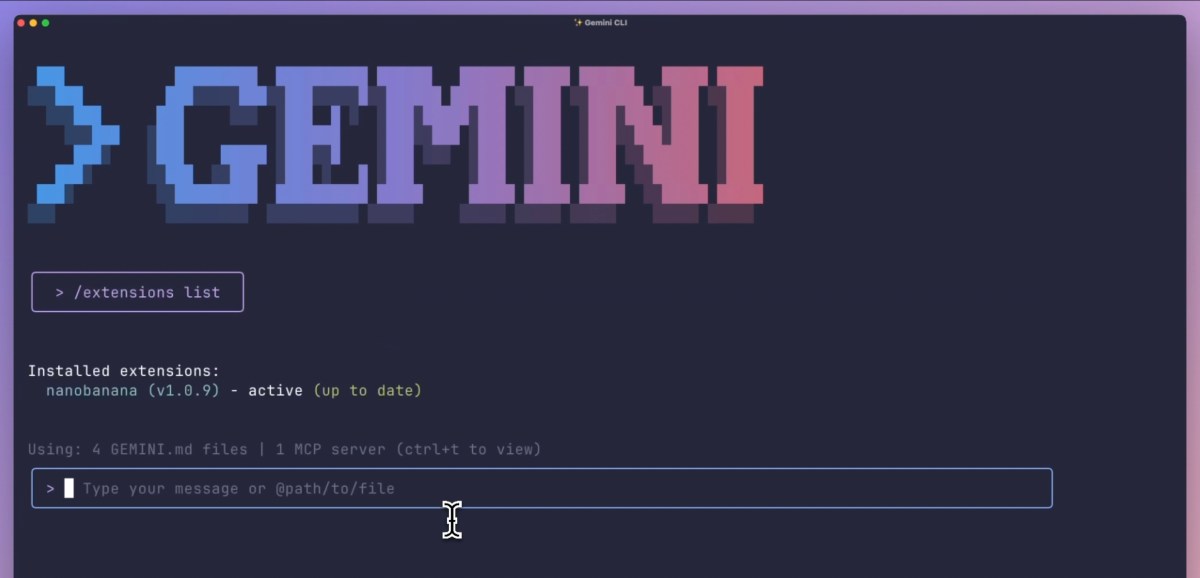
On October 8, 2025, Google officially launched an extensions system for Gemini CLI. TechCrunch reported that the change allows external vendors to integrate their tools, models or services directly into Gemini's command‑line environment, enabling developers to access third‑party capabilities without leaving the terminal.
The core of the extensions system is converting "cloud services / third‑party features" into plugins that can be installed and invoked in the local terminal. The report describes the user flow: after finding an extension in the official extensions registry, developers can download and enable it using built‑in commands. Once enabled, the extension exposes additional commands, shortcuts, or remote‑execution capabilities into Gemini CLI's command namespace, allowing users to call these functions during routine code completion, testing, or deployment workflows.
Google emphasized two points in its public messaging: first, keeping the CLI lightweight and low‑friction so developers can experience a cohesive flow "from code generation to deployment" within the terminal; second, setting permission and security boundaries for extensions. TechCrunch noted that Google designed permission declarations and runtime isolation mechanisms for extensions, aiming to allow necessary remote calls while protecting local code and credentials.
In terms of use cases, extensions can cover many development stages: integrating static analyzers, testing tools, CI/CD steps, cloud runners, or domain‑specific models into the command line; they can also surface third‑party code hosts (such as cloud IDEs or managed runtimes) in the local terminal in a more native way. TechCrunch emphasized that this strategy of "bringing services into the terminal" could shift developers' toolchain preferences and keep more traffic within Google's ecosystem.
At the same time, the article highlighted community and security concerns: when extensions can access source code, call remote APIs, or trigger deployments, preventing sensitive data leaks and standardizing review processes become critical. Google said the official extensions registry will include review and compliance steps and encouraged vendors to design extensions following the principle of least privilege.
For IT developers and startup teams, the immediate benefit of Gemini CLI extensions is efficiency: without frequently switching among browser, IDE, and terminal, developers can perform code generation, dependency fixes, test runs and deployments within the familiar command‑line environment. TechCrunch believes this further "nativizes" AI capabilities in the development process and could spur new business models—vendors reaching developers directly through CLI extensions to offer on‑demand paid features or enhanced services.
At the end of the report, TechCrunch said Google encourages community contributions to extensions and pledged to continue improving permission and review mechanisms. In the coming weeks attention will focus on quality control of the official extensions registry, the growth pace of the extension ecosystem, and responses to security incidents. For developers who prefer hands‑on work in the terminal, this change means more immediately available tools but also requires greater vigilance regarding sources and permissions of third‑party extensions.