
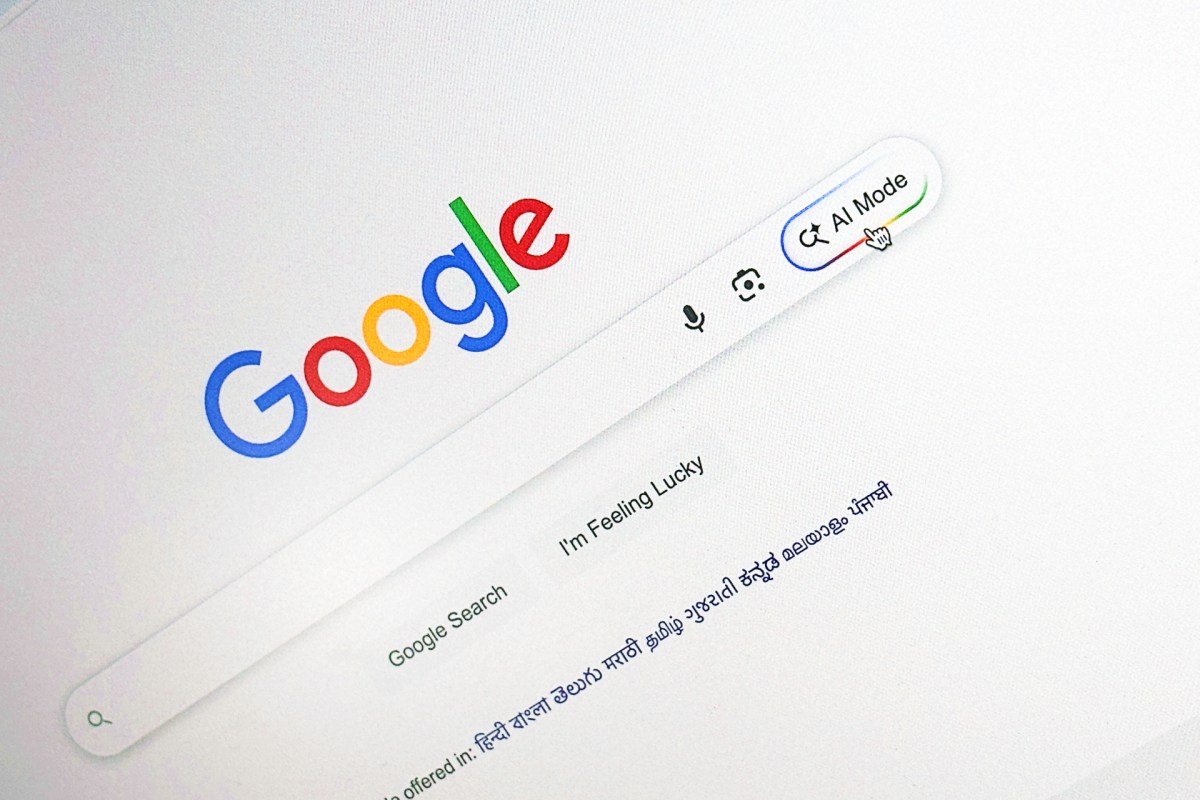
As the AI‑driven search revolution reaches deeper stages, Google on December 2 announced a global mobile test to deeply integrate its AI Overviews feature with AI Mode. The change allows users to move directly from AI‑generated summaries on the search results page into a conversational interface without switching tabs, achieving a seamless link between "snapshot" quick answers and "in‑depth" dialogue. Robby Stein, Google’s VP of Search Products, posted on X: "You shouldn't have to worry about how to ask." The announcement arrives amid reports of a "code red" at OpenAI and highlights the intense competition among search giants. Outlets including 9to5Google and Search Engine Journal report the test covers global mobile users but has not yet expanded to desktop. As a core upgrade to Google's Gemini AI ecosystem, the integration could further cement its consumer‑market dominance and has deep implications for advertising ecosystems and content creators.
The test focuses on simplifying the user journey. Traditionally, AI Overviews—launched in 2024—provided AI‑generated brief summaries above search results to help users get information quickly and has attracted 2 billion monthly users. AI Mode launched in May 2025 in the U.S. and expanded globally in August; it offers a ChatGPT‑like conversational interface supporting multi‑turn complex queries with around 100 million monthly active users concentrated in the U.S. and India. Previously, users had to manually switch to a dedicated AI Mode tab to follow up. In the new design, when users click AI Overviews' "Show more" button or scroll to the bottom, they are automatically taken into AI Mode, where a bottom "Ask anything" input bar appears to support instant dialogue. Stein emphasized: "This makes AI Overviews the starting point, then opens an AI Mode conversation on the same screen." Technically, the integration relies on the Gemini models (650 million monthly users as of November) and benefits from upgrades such as the Nano Banana image model to enable multimodal interactions, ranging from extending text summaries to image analysis or code generation. Android Headlines noted the design is optimized for mobile, reducing cognitive load and making search feel more like a "natural conversation."
Google’s test is not an isolated move but a continuation of its "search reinvention" strategy. In March 2025, a Google blog announced AI Overviews had been upgraded to Gemini 2.0 to handle more complex queries. The October earnings report showed third‑quarter search query volume grew 16%, with revenue reaching $102.3 billion, to which AI features contributed significantly. CEO Sundar Pichai said on the earnings call: "AI Overviews and AI Mode are driving overall query growth, including commercial queries, creating more monetization opportunities." Senior Vice President for Search Philipp Schindler added that investments in AI experiences are translating into longer user engagement. The test is currently limited to a subset of users and Google has not announced a rollout timeline; historically, such features typically undergo months of iteration before becoming default.
The deeper drivers of the integration stem from multiple pressures. First, user behavior is evolving: information seeking increasingly shifts from simple facts to deeper exploration. Dataconomy analysis shows 30% of AI Overviews users seek follow‑ups, but interface switching causes a 15% drop‑off. Stein bluntly stated: "Users shouldn't have to pre‑judge the type of query." Second, competition is intensifying: OpenAI’s ChatGPT Search and Anthropic’s Claude have entered the search space and are chipping away at Google’s share. Livemint reported Google aims to "keep users within its ecosystem," especially as OpenAI reportedly put certain projects on hold to focus on chat experiences amid its "code red." Third, technical maturity—Gemini 3 Pro’s international rollout (starting in early December) provides a backbone, supporting multi‑turn dialogue in 40 languages. The mobile‑first strategy is evident: about 70% of searches happen on phones worldwide, and this integration targets fragmented usage scenarios. Analyst Tom Critchlow predicted in November that Google would "aggressively merge AI Mode with AI Overviews." These factors jointly push Google from "layered search" toward a "unified AI interface."
The test’s effects are double‑edged. On the user side, experience should improve significantly: The AI Insider called it "more intuitive," forecasting a 20% rise in user satisfaction and deeper queries. Gemini consumer adoption may accelerate—2 billion AI Overviews users could be converted into AI Mode active users, helping Gemini surpass the 1 billion threshold. Google search advocate John Mueller said in July that AI Overviews produce higher‑quality clicks and longer dwell time. However, downside risks are notable: content creators may see further traffic declines. Search Engine Land warned the integration will "shorten the path from query to answer," meaning more searches may not require clicks to external links, potentially reducing traffic to small and mid‑sized sites by 10–15%. PPC Land noted this exacerbates the "zero‑click search" trend, pushing publishers to optimize content for AI.
Second, the advertising ecosystem faces reshaping. Google’s ad revenue accounts for roughly 80% of total revenue, and the integration could embed more native advertising—such as recommending sponsored links within conversations. ExchangeWire analyzed that the move "creates more monetization opportunities" but must balance user privacy and transparency—EU DSA rules require clear disclosure of AI‑generated content. On the competition front, Google will strengthen its "search + AI" moat: Technology Org predicts this could force OpenAI to accelerate search‑tool iterations, while Microsoft’s Bing (with Copilot) will need to follow on mobile optimization. In the long term, the integration could spawn an "AI‑native search" standard, shifting the industry from keyword matching to semantic dialogue, with forecasts projecting the global search market to exceed $1 trillion by 2026. But risks remain: if the test exposes hallucination issues (as early AI Overviews controversies showed), user trust could be undermined.
Looking ahead, the test signals an acceleration of the "conversational era" for Google Search. CIO Look summarized it as "making simple queries evolve into deep discussions, as seamless as breathing." Developers and users can try the feature through the Google App, and a desktop version might appear at WWDC 2026. In the AI arms race, Google’s "seamless integration" is both a technical iteration and a strategic countermove—reminding us that the future of search may not be just about "finding answers," but "dancing with intelligence." How this transformation will redraw the digital information landscape remains to be seen.