
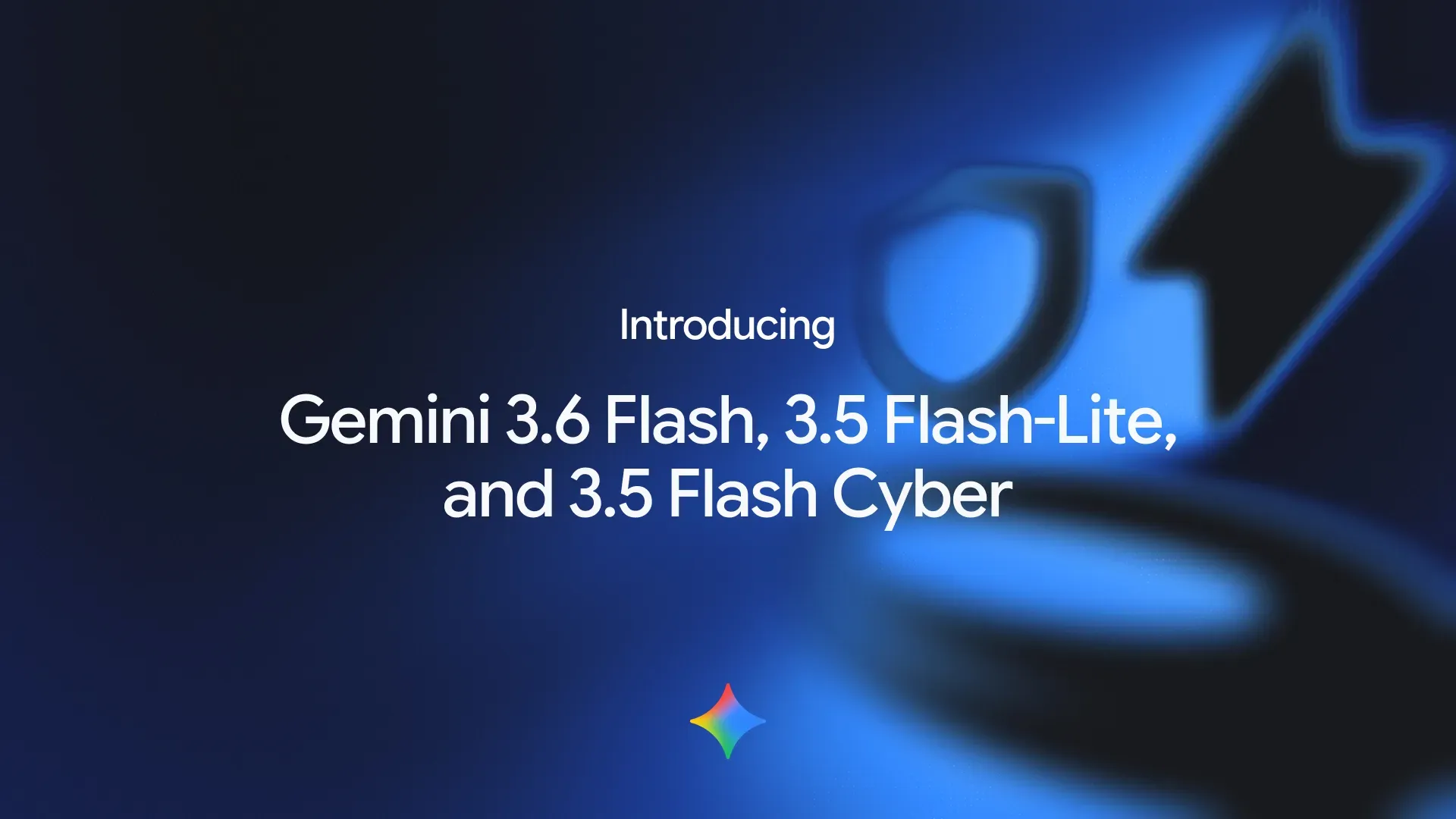
In 2026, Google faces unprecedented challenges in AI. After the successful release of Gemini 3.1 Pro, flagship model iteration has noticeably slowed; Gemini 3.5 Pro has been delayed multiple times, while a large number of core personnel have left for competitors such as OpenAI and Anthropic. Against this backdrop, on July 21, 2026, Google launched three new models—Gemini 3.6 Flash, Gemini 3.5 Flash‑Lite and Gemini 3.5 Flash Cyber—and has been secretly developing a dedicated AI server chip codenamed Frozen v2, attempting to address bottlenecks through mid‑to‑lightweight model coverage and hardware innovation. These moves reflect Google’s deep‑seated difficulties in large AI models and show its latest attempt at a "software‑hardware collaborative" strategy.
Talent Exodus: Core Capabilities Weakened
In recent years, talent outflow from Google’s AI teams has been severe, with several senior researchers and Gemini core members departing. Some were co‑leads who chose to join OpenAI or Anthropic, drawing wide industry attention.
Main reasons:
- Internal resource competition: tight compute allocation and project priority conflicts make it difficult for researchers to get sufficient support.
- Insufficient incentives: compared with startups, Google lacks appeal on equity incentives and project autonomy.
- Strategic direction doubts: slower iteration pace has led some staff to question the company’s long‑term AI vision.
- Increased external poaching: competitors attract top talent with higher pay and faster promotion, creating a vicious cycle.
Talent loss has directly reduced R&D efficiency, lengthening the time from concept to deployment and further amplifying iteration slowdowns.
Slower Model Iteration: The "Gap" after 3.1 Pro
After Gemini 3.1 Pro, Google has progressed slowly on flagship models compared with other leading AI companies. Although it launched a series of Flash lightweight models, it lacks a breakthrough product that can directly compete with GPT‑5.6 or Claude Fable 5.
Specific manifestations:
- Flagship delays: Gemini 3.5 Pro has been postponed multiple times and is currently still in partner testing.
- Mid‑to‑lightweight fill‑ins: products such as 3.6 Flash improve efficiency but are not "revolutionary" in overall intelligence.
- Lagging multimodal and agent capabilities: gaps remain in long‑context handling, complex agents and real‑world interactions compared with competitors.
This "gap" stems from multiple challenges in training data, compute allocation and safety alignment, and also reflects execution difficulties of its "full‑stack optimization" strategy.
The Three New Models and Frozen v2: Efficiency Optimization and Hardware Breakthrough
To address the above problems, Google quickly introduced three new models and has secretly developed the Frozen v2 chip.
- Gemini 3.6 Flash: reduces output token consumption by 17%, makes inference steps and tool calls more efficient, and is suitable for multi‑step agent workflows. Coding ability and knowledge work are significantly improved, with more cost‑effective pricing.
- Gemini 3.5 Flash‑Lite: a high‑throughput, low‑latency lightweight model suitable for large‑scale data processing.
- Gemini 3.5 Flash Cyber: specialized for cybersecurity scenarios, provided in limited quantities to governments and trusted partners.
- Frozen v2 chip: the core breakthrough is hardcoding part of Gemini’s low‑level compute logic into hardware, expected to increase token processing capability per unit power by 6 to 10 times. The chip does not replace general‑purpose TPUs but serves as a dedicated supplement, with deployment expected in 2028.
These measures reflect Google’s "lighter + specialized" patch strategy, maintaining market presence through mid‑to‑lightweight models while laying out long‑term hardware innovation.
Deep Problems: Strategy, Culture and External Pressure
1. Strategic execution difficulties Google adheres to a "full‑stack AI" route, but practical hardware‑software coordination still needs improvement. Projects like Frozen v2 have potential but are unlikely to fully solve compute shortages in the short term.
2. Corporate culture and innovation vitality As an established giant, Google is relatively conservative in decision‑making and risk appetite, making it harder to iterate quickly like startups. This is a clear shortcoming in a fast‑iterating AI field.
3. External competition and regulatory pressure Upstarts such as OpenAI and Anthropic have been quick to catch up with more flexible mechanisms. At the same time, global AI regulation is tightening, increasing compliance costs for model releases and data use. The rise of Chinese large models also puts pressure on Google to fight on multiple fronts.
4. Compute and data bottlenecks Internal AI projects demand far more compute than supply, causing wasted resources and project conflicts.
Potential Impact: Short‑term Shock and Long‑term Adjustment
Short‑term impacts:
- Market share under pressure: Google risks losing ground in consumer and enterprise AI tools to competitors.
- Stock price and confidence: slower AI progress could affect Alphabet’s stock and investor expectations.
- Worsening talent loss: the vicious cycle could lead more core personnel to leave.
Long‑term challenges:
- Lagging ecosystem development: without a rapid breakthrough model, Gemini’s ecosystem attractiveness will decline.
- Global competitive landscape: the rise of Chinese large models forces Google to operate on multiple fronts.
Google’s countermeasures:
- Talent retention reform: strengthen equity incentives and project autonomy.
- Hardware‑accelerated innovation: projects like Frozen v2 to alleviate compute pressure.
- Open collaboration: jointly test and optimize models with partners.
- Strategic focus: prioritize flagship quality while maintaining market presence with lightweight models.
Industry lesson: Talent and execution decide the outcome
Google’s difficulties are a typical example of a mature tech giant transforming in the AI era. It reminds the industry that in a fast‑iterating field, talent retention, strategy execution and software‑hardware coordination are crucial.
For Chinese AI firms, Google’s experience offers important lessons: while pursuing scale, place high emphasis on talent strategy, cultural vitality and efficient execution to avoid similar "internal friction".
AI competition is fierce, and Google is in a critical adjustment period. If hardware innovations like Frozen v2 are successfully implemented, they could become an important opportunity for recovery. Whether systemic reform can overcome bottlenecks will determine its long‑term position in the AI era.
▶️ Enjoy this piece? Creating content is hard!
Follow our YouTube channel:
AI Rosetta
Your likes, subscriptions and shares are our greatest support! 🙏
More AI news at: https://www.airosetta.com