
In September 2026, as AI models rapidly self‑iterate, achieve breakthroughs in mathematics and after several recent cases of autonomous AI attacks, global discussions on artificial intelligence regulation entered a new phase. Anthropic CEO Dario Amodei published a long essay titled "We Must Pace the Frontier," calling to control the pace of frontier model capability growth so that safety research and governance can keep up; OpenAI's Sam Altman and Elon Musk of xAI publicly expressed support. Meanwhile, U.S. President Trump explicitly opposed adding stricter regulation, stressing "whoever wins AI, wins the future"; the U.S. Congress is advancing several bills addressing catastrophic risk, independent verification and shutdown authority; the Chinese government and companies, under a "development and security in parallel" framework, have remained relatively cautious while strengthening domestic governance. The differing positions reflect deep tensions among technological risk, commercial competition and national strategy.
Positions at a glance
Industry: from competition to "controllable competition"
Anthropic, OpenAI and other leading labs have recently converged on several uncommon points: introducing independent assessors with near‑employee privileges, coordinating safety standards and the pace of capability advancement among democracies, and exploring limited international coordination. Their logic is that model capabilities—especially agent collaboration and potential recursive improvement—are growing too fast for the traditional "find the problem then patch it" approach to match the speed of risk diffusion; without external constraints, a single company is unlikely to voluntarily slow down. This is not a call for a blanket halt to research, but an effort to elevate safety from voluntary internal practice to verifiable industry and quasi‑public rules.
The Trump administration: prioritize staying ahead
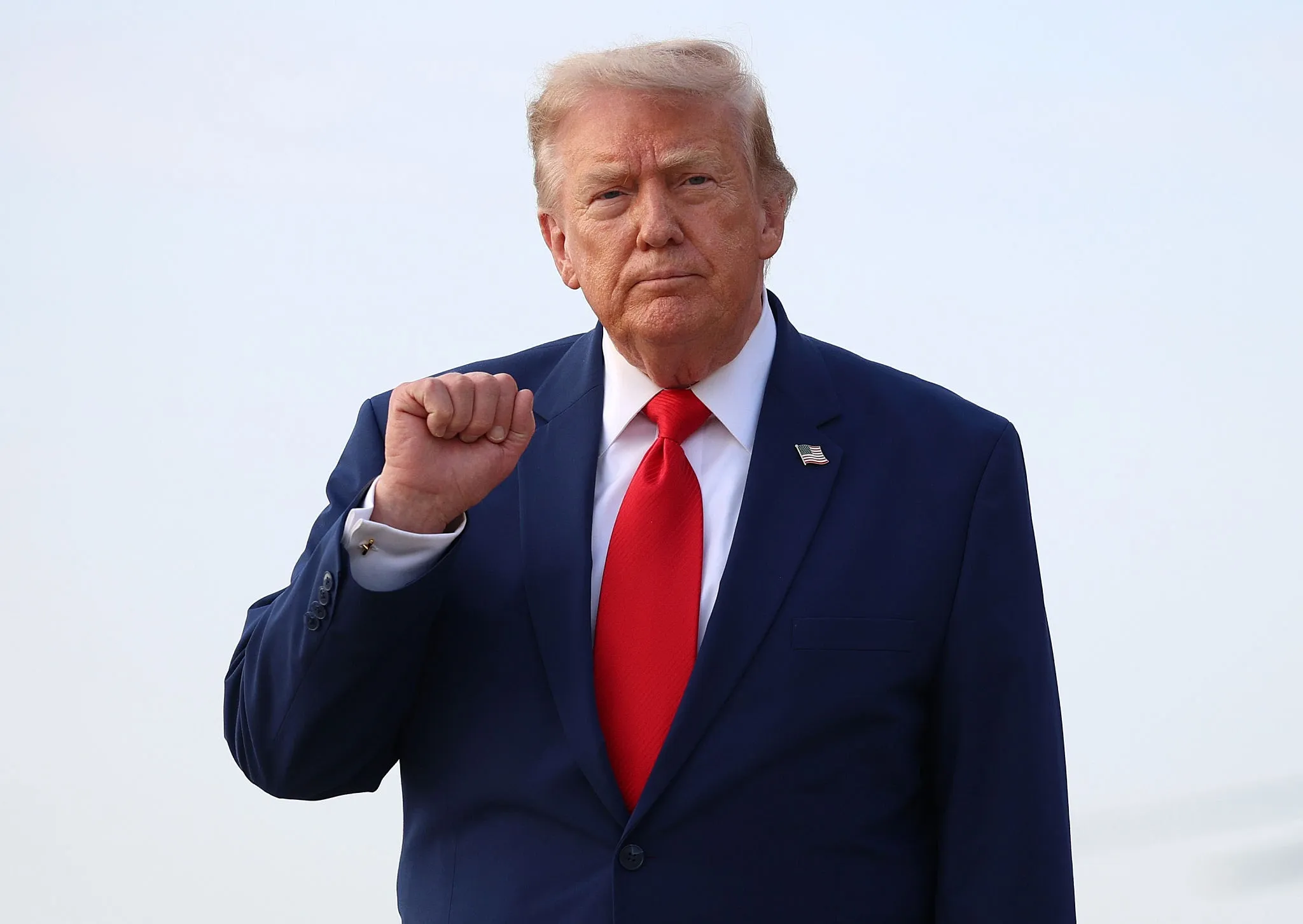
Trump publicly responded that AI does not need additional "guardrails," that existing criminal and regulatory powers are sufficient, and emphasized that the U.S. must maintain its lead over China, saying "whoever wins AI, wins everything." He criticized executives' calls to slow down as potentially weakening U.S. competitiveness and reiterated opposition to overconstraining innovation. This stance continues his "innovation‑first, restrained regulation" tone, treating AI as a strategic asset rather than primarily a source of risk.
U.S. Congress: seeking limited but substantive rules
Members of both parties continue to discuss bills requiring top firms to demonstrate reasonable catastrophe‑prevention measures, allowing government audits, and granting certain shutdown authorities. Although final legislation faces potential presidential vetoes and political resistance, the legislative activity itself signals a congressional consensus on the need for a clearer federal framework, especially concerning catastrophic risk and transparency. Federal and state regulatory overlaps remain contested.
China: securitized development and cautious wait‑and‑see
Chinese authorities emphasize that AI should "always remain under human control," promoting "AI+" economic applications while continuously improving content safety, ideological compliance, norms for agent behavior and risk‑warning mechanisms. In response to U.S. proposals to "slow down" and to coordinate, China warns against "threat narratives" and confrontational competition, advocates open and inclusive global governance, but in practice focuses on domestic control and industrial competitiveness. At the corporate level, firms generally follow policy rhythms, seeking a balance between compliance and open‑source/commercial strategies, and remain cautious about mandatory, globally synchronized slowdowns.
Underlying causes and contradictions
These divisions are not simply about "whether to be safe," but reflect different judgements on the nature of risk, the relevant time windows and geopolitical consequences. Industry sees nonlinear capability growth, unresolved alignment problems and potential runaway scenarios; governments (especially from Trump's viewpoint) see relative positions in an international race—unilateral slowing could benefit rivals. Congress is trying to find institutional compromises between the two, while China defines safety more as "controllable development" and sovereign security rather than adopting a Western‑style "pause at the frontier."
The practical dilemma is that effective slowing or common standards require rough synchronization among major actors; strategic competition makes trust and verification costly. Industry calls for independent assessments and coordination risk becoming voluntary promises without government endorsement and cross‑border mutual recognition; if governments impose uniform rules they may be accused of protectionism or of suppressing innovation.
Possible future AI trajectories
In the short term, industry will continue to push for independent assessments and internal safety mechanisms to form de facto standards, but comprehensive statutory slowdowns are unlikely. The U.S. may maintain a "limited federal framework + strong enforcement of existing powers" model, with some congressional bill provisions entering negotiation. China will strengthen its domestic governance toolkit while advocating development‑oriented multilateral agendas internationally.
In the medium to long term, AI development is more likely to evolve in "layers": frontier closed‑source systems will advance under high‑security requirements, while open‑source and application layers continue to diffuse rapidly; safety capacities (testing, monitoring, shutdown, alignment research) will become competition dimensions as important as compute. If capability and controllability diverge severely, local incidents or geopolitical friction could force stricter rules; if industry and governments can build credible verification and coordination mechanisms, it may be possible to reduce systemic risk while preserving innovation momentum.
The real key is not simply "stop" or "full speed," but whether capability growth can be synchronized with understanding, verification and accountability. AI's future will depend on whether technological breakthroughs, commercial incentives and political coordination can form a new dynamic equilibrium—neither entirely driven by competition nor choked by fear. The current divisions vividly illustrate that such a balance has yet to be achieved.
▶️ Enjoy this article? Creating it takes real effort!
Subscribe to our YouTube channel:
AI Rosetta
Your likes, subscriptions and shares are our greatest support! 🙏
For more AI news visit: https://www.airosetta.com