
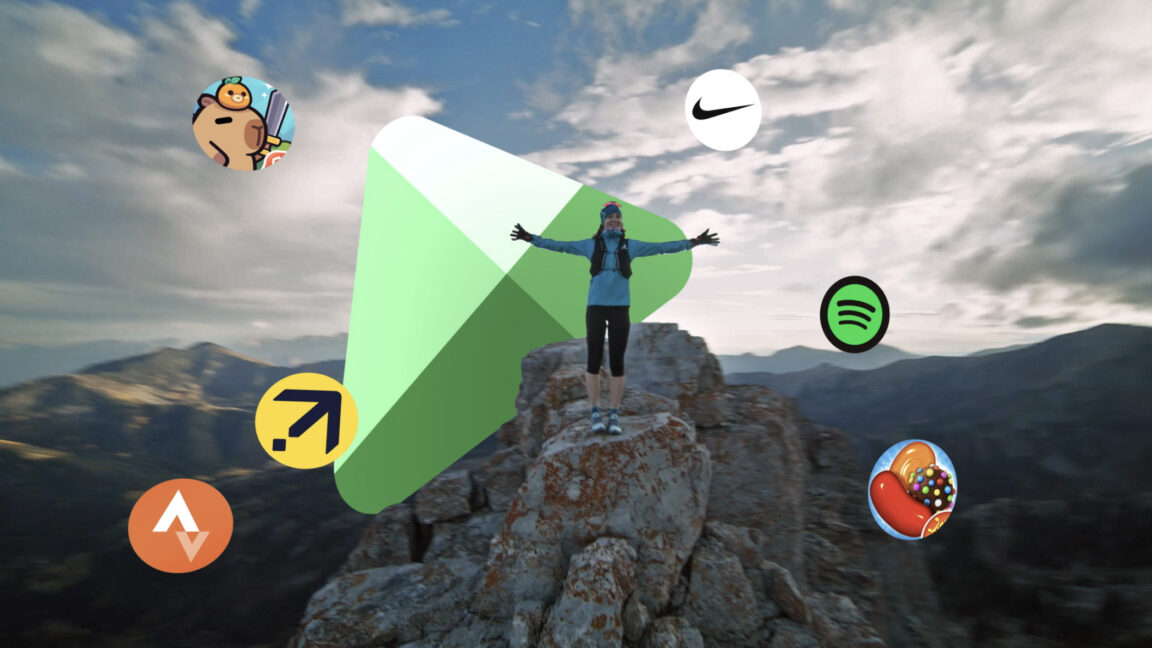
Against the backdrop of antitrust litigation, Google’s Android app store, the Google Play Store, has launched what may be its largest update yet. September 23, 2025, Google announced on its official blog that it will reshape user interaction across the Play Store with a Gemini AI–driven "Sidekick" assistant, a personalized You Tab, and enhanced gaming experiences. The update aims to transform the Play Store from a simple "app repository" into an AI‑powered entertainment ecosystem covering games, books, podcasts and short video. TechCrunch frames the move as a strategic response to competition from Apple’s App Store and pressure from EU regulators, and it could boost user retention by more than 20%. Whether Gemini’s in‑game "real‑time guidance" proves truly useful remains to be seen.
Since its launch in 2012, the Google Play Store has become the world’s largest mobile app distribution platform, with more than 2.5 billion monthly active users. In recent years, Google has faced antitrust lawsuits from Apple and scrutiny under the EU’s Digital Markets Act (DMA), forcing it to allow sideloading and third‑party payments. This update focuses on a user‑centered approach by injecting AI‑driven personalization. Google VP of Product Sameer Samat said, "The Play Store is no longer just a download tool — it’s your digital life companion, helping you discover, play and grow." Initial features will roll out this week in select markets (such as the U.S. and India), and Gemini Sidekick is expected to expand broadly over the coming months.
"You Tab": Your personal entertainment dashboard
The update’s core is the "You Tab," a new navigation entry that replaces the existing "My apps" page. The tab acts like a personalized dashboard, aggregating rewards, subscriptions, game stats and recommended content. Gadgets360 notes it covers not only games but also books, podcasts and movie suggestions. For example, if you often listen to motivational podcasts, the You Tab will surface related new episodes; if you read a lot of science fiction, it will recommend the latest e‑books.
The design borrows from Spotify’s "Discover Weekly" and Netflix’s personalized homepage, using Gemini AI to analyze user behavior. Mint reports the You Tab will leverage machine learning to predict preferences and improve discovery efficiency by about 30%. For developers, this promises higher conversion rates: Google says recommendation algorithms will prioritize local content, such as extended Cricket Hub features for Indian cricket fans.
At the same time, the Apps tab will introduce "entertainment spaces," inspired by India’s Cricket Hub and Japan’s Comics section. These spaces will aggregate short videos, TV series and comics to optimize mobile viewing. South Korea is piloting a "K‑Drama space," with the U.S. to follow with movie and TV zones. Tom’s Guide argues this turns the Play Store into a "mobile entertainment hub," challenging TikTok and YouTube Shorts.
Gaming revolution: public profiles, cross‑play and the AI "Sidekick"
Gaming is the centerpiece of this update. Google Play Games will evolve into a cross‑platform ecosystem, with the PC version exiting beta. User profiles will become public, supporting friend interactions, shared achievements and daily win streaks. Variety reports that some 200,000 games already support phone‑to‑PC compatibility, with stats like completion time synced across devices. Popular new titles such as Deep Rock Galactic: Survivor will be among the first to support cross‑platform saves, unlocking Play Points rewards.
The standout innovation is "Sidekick" — a floating game overlay. This scrollable pop‑up integrates achievements, device settings and Play Points offers, and crucially includes a Gemini Live quick access. By tapping it, Gemini can view the screen and provide real‑time guidance, such as "how to unlock the next level" or "optimize battery settings." WebProNews emphasizes that Sidekick uses Gemini’s screen‑sharing to understand game context and respond by voice.
Ars Technica’s Ryan Whitwam, after testing, noted doubts about Gemini’s in‑game usefulness: the current version’s gameplay suggestions are often generic (for example, "try turning right") and fall short of professional guides. In addition, many phones already include native overlays (such as Samsung’s Game Launcher), which could crowd the screen and require users to disable older features. Google says the first supported games will appear within months, initially focusing on popular mobile titles like Genshin Impact.
Market impact: an AI gambit amid antitrust pressure
The update arrives while Google faces multiple challenges. In August, a U.S. court found Google monopolized the Android market and fined it more than $500 million. The EU’s DMA requires opening sideloading, and Apple has pushed alternatives such as the Arc browser. Google’s counter is "AI‑first": integrating Gemini aims to create an ecosystem closed around Play Store experiences and user data. Yahoo Finance projects the update could drive Play revenue growth of around 15%, and developer revenue shares may be adjusted to attract more content.
For the games industry, the change implies deeper integration. The Play Games PC client already covers 200,000 titles, accelerating cross‑platform trends. Privacy concerns arise: Gemini’s screen‑sharing requires user permission but could expose gameplay data. Developer feedback is mostly positive: an indie studio founder told Gadgets360 that "public profiles will boost social stickiness."
Outlook: AI entertainment is the next battleground
Google’s ambitions go further. Samat hinted the features will expand to Wear OS and Android TV. Compared with Apple Vision Pro’s AR gaming, Play’s AI overlay is more down‑to‑earth and aimed at the mass market. Nevertheless, Gemini’s "gaming brain" needs iteration: moving from a "chatbot" to a true "coach" will take time.
Amid the antitrust storm, this update represents Google’s comeback. As Whitwam put it, "The Play Store is evolving from a warehouse into an AI playground." For billions of users, it promises smarter entertainment; for the industry, it signals a new era of deep AI‑mobile integration.